
Introduction:
On July 26, 2026, Daraa Governorate was shaken by a crime that shocked the entire nation. Twelve-year-old Nour Muhannad al-Dous went missing and was found dead three days later in a field. She had been brutally beaten by her uncle, a scene that reflects the ultimate betrayal of the trust that should surround a child within their family.
This incident was not isolated, but rather part of a long series of violations of children’s rights in Syria. It serves as a reminder that protecting children is not merely a moral obligation, but a national and legal responsibility that demands urgent and comprehensive action.
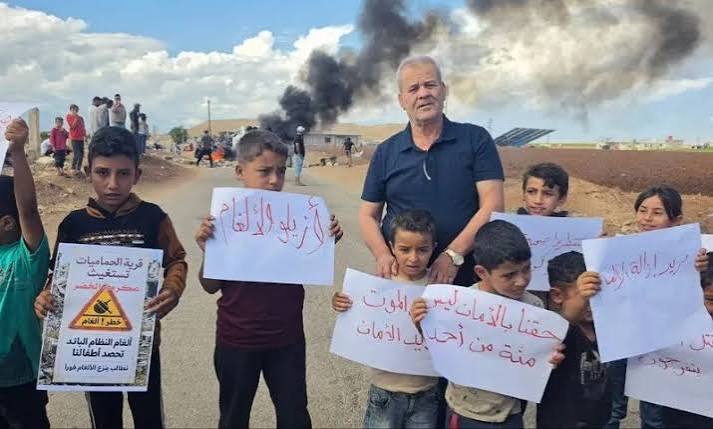
Through decades of conflict and institutionalized violence, Syrian children have been subjected to successive violations: beginning with the violence perpetrated in schools and institutions under the former regime, continuing with the suffering of displacement, camps, and harsh conditions, and culminating in the crimes against children witnessed in some areas today, such as murder, kidnapping, and child labor.
While these crimes are condemned in all circumstances, they become even more egregious when perpetrated by the family itself, which should be the child’s first and last refuge.
In this article, we examine the reality of child abuse and neglect in Syria, relying on the latest statistics and scientific studies. We present a comprehensive vision for protecting Syrian children from abuse and neglect, stemming from the Syrian Future Movement’s responsibility to build a society that protects its children and safeguards their rights.
First, a disturbing reality… figures reflecting a humanitarian crisis:
Recent scientific studies reveal the tragic extent of child abuse in Syria.
An academic study published in the Journal of Child Adolescent Trauma in March 2025, which included a sample of 508 young men and women in northern Syria, showed that 93.7% of them had experienced some form of abuse during their childhood. The figures are even more distressing when broken down:
- Physical neglect: 99.4% of participants experienced it.
- Emotional neglect: 98.8%.
- Emotional abuse: 83.1%.
- Physical abuse: 34.4%.
- Sexual abuse: 16.1%.
These figures reflect a harsh reality: the vast majority of Syrian children are growing up in an environment marred by violence and neglect in its various forms.
The same study found that 55% of participants suffer from post-traumatic stress disorder (PTSD), and that exposure to physical, emotional, and sexual abuse in childhood significantly increases the likelihood of developing this disorder in adulthood.
The Syrian Network for Human Rights estimates that the former regime is responsible for 76% of violations of children’s rights, having documented the killing of 30,686 children between March 2011 and November 2015.
Approximately 2.4 million children are out of school, and 7.5 million children are in need of humanitarian assistance.
In the first half of 2025, 2,259 children received case management services to protect them from risks. The main risks they faced were child labor, neglect, and violence against children.
According to UNICEF reports, approximately 6.2 million people remained internally displaced in Syria at the beginning of 2026, including 1.4 million in camps. This exacerbates the vulnerability of families and increases the risk of children being exposed to neglect and violence.
Secondly, the family: between protection and violation:
In our Syrian society, the family is considered the foundation of custom and tradition, and parents have the fundamental and primary right to raise their children in the ways they deem appropriate.
Society assumes that parents always act in the best interests of their children, and that the family is the child’s first refuge, safe haven, and nurturing environment.
However, as confirmed by figures and facts, reality reveals a tragic gap between assumption and truth.
When a family fails to protect its children from harm, or to provide for their basic needs, or when it becomes a source of violence and physical and psychological abuse, it becomes essential for society to assume its responsibility and intervene to protect the children’s mental and physical health.
This intervention must be bound by Syrian laws and sound, safe standards, and must prioritize the best interests of the child as the fundamental principle, as stipulated in the Convention on the Rights of the Child, to which Syria is a signatory.
However, while current Syrian legislation includes several provisions protecting children’s rights, it remains fragmented across multiple laws, making it difficult to develop a comprehensive legal framework and complicating its practical implementation.
Third, Protection Pillars: Towards a Comprehensive National Strategy:
Based on our national responsibility, and in the name of the Syrian Future Movement, we aim to ensure the safety of children from abuse and neglect in this complex reality by focusing on three key pillars:
First Pillar: Legal Protection:
First: Activating rapid reporting mechanisms. It is imperative to establish confidential and secure hotlines for reporting cases of kidnapping and domestic violence, without endangering the reporter.
Many cases of domestic violence remain hidden due to the fear of victims or witnesses regarding the consequences. Establishing safe and secure communication channels is the first step in breaking the wall of silence.
Second: Security awareness for families, through training children on basic safety rules, teaching them emergency numbers, and how to act in dangerous situations, while involving parents in this awareness process to ensure its continuity.
Third: Applying the strictest penalties. Any assault on a child, by anyone, even within the family, must be met with the most severe penalties stipulated by law, without leniency or compromise, to deter anyone who might consider harming children.
The second focus: Psychological and social support:
First: Dismantling the culture of violence. This must begin within the family, shifting from violent parenting to positive parenting, and then extend to schools. The previous regime had legalized and reinforced physical and verbal abuse in schools, necessitating today the retraining of educational staff and teaching methods to be based on respect and dialogue instead of violence and repression.
Second: Psychological support centers, and their establishment
Child-friendly spaces and facilities equipped to treat trauma resulting from kidnapping attempts, exposure to violence, sexual assault, or the loss of parents. Studies confirm that Syrian children suffer from accumulated trauma due to years of conflict and violence, and they need specialized psychological support to recover.
Third: Parental education, through awareness courses for parents on the dangers of emotional and physical neglect, training them in positive parenting methods, and educating them about the dangers of using violence against children as a means of relieving stress and economic pressures.
Families that learn to manage their stress in healthy ways are less likely to turn their children into victims of that stress.
Third axis: The institutional and legislative framework:
First: Unifying legislation and working towards issuing a comprehensive child protection law that consolidates the provisions scattered across multiple laws into a single legislative framework, defines implementation, monitoring, and follow-up mechanisms, and ensures coordination among all relevant parties.
Second: Strengthening the capacities of institutions by training personnel working in the child protection sector (judges, police, social workers, and teachers) to handle cases of violence and neglect according to the latest international standards.
Third: Establishing a National Council for Childhood, or a supreme national body comprising all entities concerned with child protection, to formulate policies, monitor implementation, evaluate performance, and ensure the sustainability of efforts.
Fourth: Towards a Safe Future for Syrian Children:
The continued exposure of Syrian children to violence and neglect at these alarming rates is not inevitable, but rather the cumulative result of decades of repressive policies, war, economic collapse, and weak institutions.
Change is possible, provided there is political will, the necessary resources, and community partnership.
If the family is sound, the entire society will be sound, producing psychologically healthy individuals who are intellectually, scientifically, and culturally productive. Investing in the protection of Syrian children today is an investment in the future of Syria. Every child rescued from the cycle of violence and neglect is a human being capable of building and contributing, while every child left prey to it is a loss for the nation and for humanity.
The World Health Organization reminds us that approximately 6 out of 10 children under the age of five worldwide—that is, 400 million children—are regularly subjected to physical punishment and/or psychological violence by parents and caregivers.
Syria, which has suffered the ravages of war for over a decade, is no exception. In fact, it is among the countries most in need of urgent and fundamental interventions in this area.
Conclusion:
The crime committed against the child Nour in Daraa is a grave warning to the entire nation.
It is a painful reminder that protecting children is not the sole responsibility of families, but rather the responsibility of society in all its institutions, the state in all its agencies, and its laws in all their provisions.
At the Syrian Future Movement, we believe that Syrian children deserve more than just to survive; they deserve to grow up in a safe environment, free from violence, and filled with love and care.
This requires all of us—government, institutions, families, and individuals—to work together to dismantle the culture of violence, build a culture of protection, and enshrine the principle of the best interests of the child in all decisions and policies.
Let Nour’s crime be a catalyst for change, a shock that awakens consciences, and a starting point toward a Syria that protects its children, safeguards their childhood, and builds their future. The safety of children is not a luxury; it is a fundamental right, a national duty, and a humanitarian responsibility that cannot be postponed.