

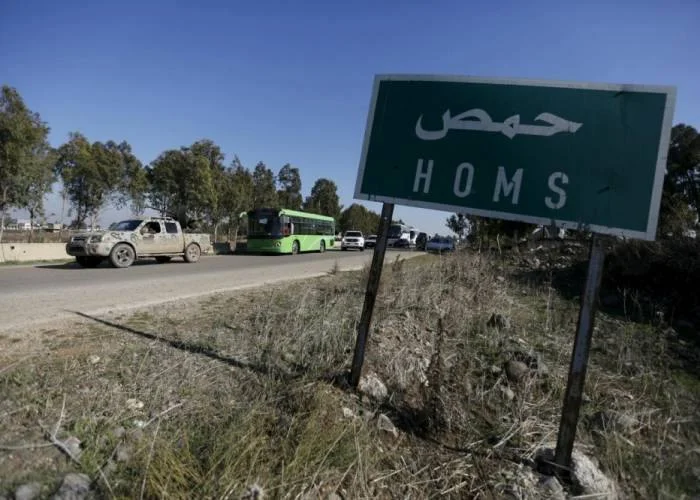
The Syrian Future Movement welcomes the swift action taken by the Syrian police to investigate the murder of a woman in the Akrama residential neighborhood of Homs, in an incident suspected to be an honor killing stemming from family disputes. We affirm that this initial step reflects the state’s return to exercising its sovereign security role in protecting citizens, especially women, during this sensitive transitional phase.
The Syrian Future Movement emphasizes the necessity of protecting vulnerable groups and confronting systematic violence against women as part of transitional justice. We warn against the perpetuation of harmful traditions as a legacy of years of chaos and tyranny.
The Syrian Future Movement appreciates the security efforts to uncover and hold perpetrators accountable, especially given the statistics from the Syrian Network for Human Rights (SNHR), which documented the killing of 8 women out of 161 victims in January 2026 alone, and the organization “Syrians for Truth and Justice” (STJ), which recorded 185 so-called honor killings since 2019, along with 561 cases of assault and battery. Between 40% and 50% of the killings of women in traditionally conservative governorates are linked to these crimes, up to August 2025.
The Syrian Future Movement emphasizes that these crimes are not merely isolated incidents, but rather a structural phenomenon fueled by the weakness of the rule of law, the disintegration of families after the war, and tribal traditions in areas such as Homs, Daraa, and Idlib. This threatens the building of a new Syria and the culture of citizenship to which we aspire.
The Syrian Future Movement calls for the enactment of an emergency law to combat honor killings, classifying domestic murder as a form of domestic terrorism with severe penalties, and establishing a national protection hotline supported by a confidential reporting application.
The Syrian Future Movement emphasizes the formation of joint transitional protection committees comprising the judiciary, police, women’s rights activists, and civil society to monitor investigations and ensure fair trials within 90 days, along with awareness programs in schools and places of worship focusing on gender equality as a national value.
The Syrian Future Movement calls for a community rehabilitation program that includes compensation for surviving victims (a minimum of 10 million Syrian pounds), training for 5,000 police officers on women’s rights, and international partnerships with the United Nations and friendly countries to fund “Syria Protects Its Women” campaigns.
The Syrian Future Movement urges the Syrian transitional government to adopt these recommendations as an urgent national policy, to turn this tragic crime into a turning point for building a society that protects the dignity of women as the foundation for a Syria with strong institutions and a strong people, affirming its full commitment to defending the rights of every Syrian citizen, to build a homeland that preserves the lives of its children and establishes a culture of justice and equality.