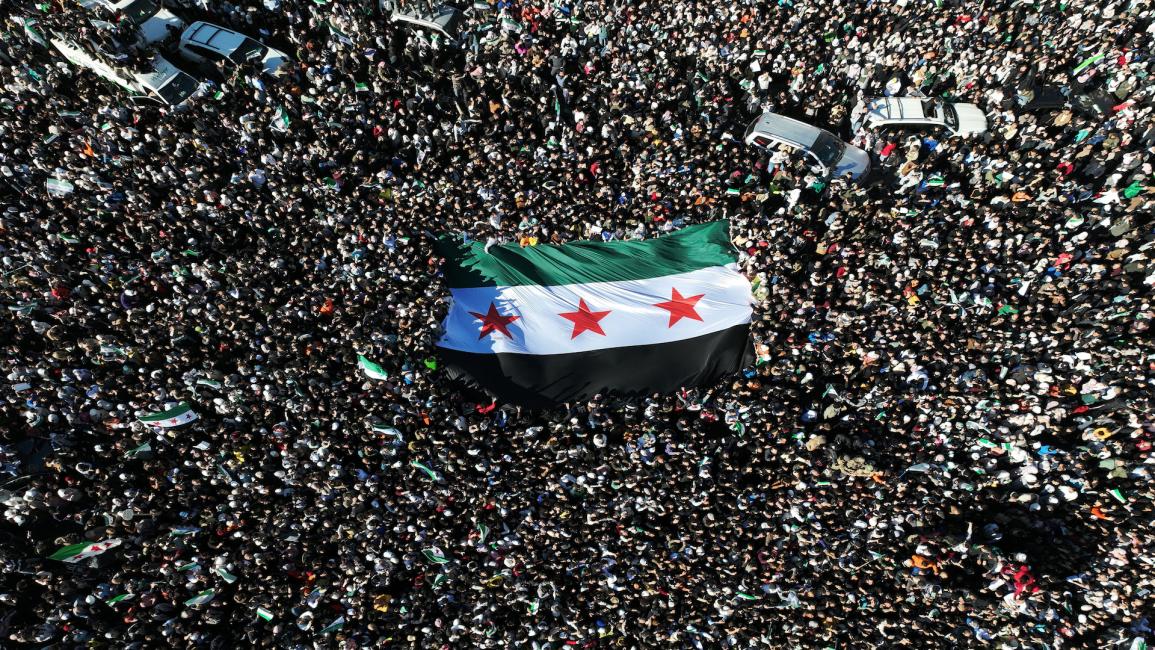
The major questions become questions of survival in the moment of national founding following a prolonged collapse. Perhaps the question of the complex relationship between a society’s value system and state-building is a question about the very viability of the political entity. The modern state is not cultivated solely in the laboratories of constitutions and laws, but rather in the soil of public morality and the atmosphere of shared values. In Syria, where the moral fabric has been systematically torn apart for decades, this question takes on an existential character that cannot be postponed.
On the Nature of the Moral Crisis:
Before questioning the role of the state, the philosophical approach necessitates questioning the nature of what has been lost. Here, we are confronted with the intellectual confrontation between two modernist approaches to defining morality.
The first, which can be called “the morality of the code,” reduces the value system to a list of legal rules and prohibitions. However, the French philosopher Michel Foucault transcended this understanding, stating that the true essence of morality is not compliance with an external law, but rather “the aesthetic working of the self on itself”—that is, a conscious and continuous practice of shaping the human psyche according to existential principles of its own choosing.
In contrast, the Moroccan philosopher Taha Abderrahmane’s work on what he calls “trust” presents a twofold critique: on the one hand, he rejects reducing Western ethics to mere rationalization, and on the other, he rejects surrendering to a traditional reading of religious texts. He offers an alternative: the “moral covenant,” where humankind is not simply a rational being, but a “trusted being,” whose existence in this world is a trust that entails responsibility towards the Creator, the universe, and society. In this context, we realize that the previous despotic state did not merely violate laws, but also practiced a systematic moral destruction targeting this “trusted responsibility,” transforming the citizen into a submissive follower or a cunning conspirator.
Here, the numbers become a description of the depth of the wound. The latest data from the 2025 Corruption Perceptions Index places Syria at an extremely low ranking (172 out of 182), which reflects not just administrative shortcomings, but the triumph of a culture of immorality and the closing of the horizon for “practicing the virtuous self,” a concept discussed by both Foucault and Abderrahmane.
Durkheimian Anomie:
This systematic destruction of values leads us to the heart of sociological theory with Émile Durkheim and his famous warning about the state of “moral anarchy and disintegration,” or in his words, “anomie.” It is not merely chaos, but specifically a state of collapse of moral rules and governing standards that give individuals a sense of belonging, meaning, and purpose. A society in a state of anomie is one in which the organic bonds that make it a cohesive entity disintegrate.
If we turn to the Syrian situation, we find that the description of anomie is almost an inescapable match.
The Global Peace Index issued by the Institute for Economics and Peace for 2025 not only places Syria among the ten least peaceful countries in the world, but also deepens the analysis, pointing to “weak governance, institutional disintegration, and a sharp decline in trust” as the primary causes of the absence of peace. These are precisely the symptoms of anomie. Syria’s ranking of 158 out of 160 on the ESCWA/UNCTAD 2024 Development Challenges Index is a direct consequence of a society where 90% of its members live below the poverty line (UN statistics 2024), where human dignity withers and the values of mutual support and solidarity fade in the face of dire need. It is as if the Syrian social fabric has lost its moral immune system.
The Debate Between State and Society:
Faced with this moral vacuum, the most difficult question arises: What is the role of the state? Is it sufficient to be a neutral legal framework that guarantees freedoms, or is it required to do more?
The contemporary American philosopher Michael Sandel offers a profound critique of classical liberalism, asking: How can a state that claims complete neutrality between conceptions of the “good life” produce the virtuous citizens that any democratic system needs?
This liberal flaw necessitates that the state adopt a moral project. In Islamic thought, Taha Abd al-Rahman goes much further in this regard, rejecting the idea of the state as merely a “night watchman” or an administrative apparatus. For him, the state is a “moral entity” whose historical mission is to safeguard the ethical covenant that precedes the socio-political contract. The state is not simply the product of an agreement on interests, but rather the fruit of societal evolution that reflects a comprehensive value system.
Here, we recall the warning of the Algerian thinker Mohammed Arkoun against the dangers of Muslim societies becoming accustomed to coexisting with a “state without ethics,” and his critique of regimes that have transformed religion into a mere instrument of political legitimacy instead of a liberating spiritual and moral force.
Similarly, we recall Mohammed Abed al-Jabri’s diagnosis of the ailment of the “Arab political mind,” which lies in the vast gap between the discourse of values and the exercise of power. According to al-Jabri and Arkoun, a state that serves as “the mind of society” and the guardian of its values cannot perpetuate moral duplicity; rather, it must break with it by establishing a political practice where action aligns with words.
But how can this foundation be established when 66% of the population lives in abject poverty?
The economist and philosopher Amartya Sen answers that development is “an expansion of fundamental freedoms.” Freedom of moral thought, freedom of political participation, and freedom to live in dignity are interdependent. We cannot expect someone deprived of bread and dignity to be an ethically active citizen. Bread and dignity, and freedom of conscience, are inseparable in establishing a new social contract.
Conclusion: Based on this complex philosophical diagnosis, we can offer practical recommendations that constitute a roadmap for reproducing the value system as the foundation of the modern Syrian state:
- Establishing a “National Commission for Truth and Moral Reconciliation” that does not merely pursue legal justice, but works to narrate the truth, dismantle the legacy of grand lies, and document the violations that have affected individual and collective conscience, paving the way for a national reconciliation that establishes a shared moral memory.
- Launching the “National Charter of Values” by drafting a participatory national document representing the minimum common ground of supreme values (dignity, justice, citizenship, pluralism, rejection of violence) to serve as a reference The ethical framework of the state and society, inspired by intellectual and philosophical discussions representing all segments of Syrian society.
- Rebuilding education on the philosophy of “ethical citizenship,” developing educational curricula based not on rote learning but on applied ethical philosophy, instilling the values of critical thinking, individual and collective responsibility, and viewing history as lessons for conscience, not merely a narrative of victories.
- Institutionalizing the fight against corruption as an existential and ethical battle, beginning with the enactment of laws guaranteeing absolute transparency and the establishment of an independent, supreme anti-corruption body comprised of national figures renowned for their moral integrity, in addition to their professional competence.
- A state of welfare and dignity, investing in moral capital through economic and social policies whose stated goal is to eradicate extreme poverty and guarantee the basic dignity of the citizen, recognizing that dignity is the material prerequisite for any free and ethical existence; there can be no ethical state built on the ruins of hunger.
- Reforming the religious establishment towards a discourse of “public trust,” and initiating a profound national dialogue on the role of religion in the public sphere, based on the critical approaches of Taha Abd al-Rahman and Mohammed Arkoun, aims to renew religious discourse so that it supports the values of citizenship, pluralism, and ethical trust, rather than becoming a tool for conflict and excommunication.
The path to a modern state in Syria is not paved solely with money and weapons, despite their importance, but is illuminated first and foremost by philosophy and ethics. While it is indeed a political journey, it is more akin to a collective ritual of redefining who we are and why we deserve to have a homeland.