
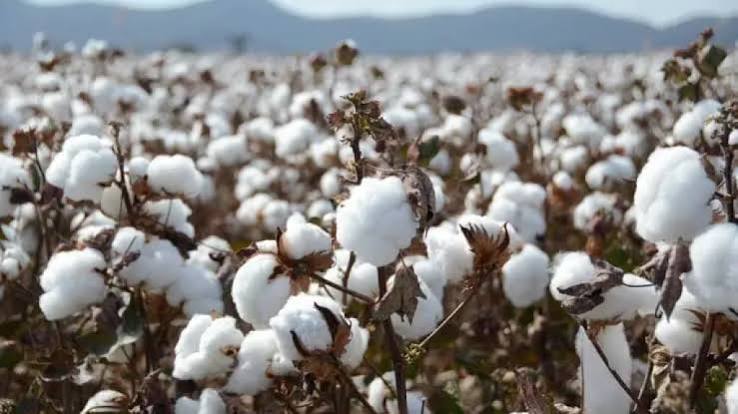
October 7th marks World Cotton Day, an international observance officially adopted by the UN General Assembly in August 2021 via Resolution A/RES/75/318, following a proposal by the “Cotton Four” nations (Burkina Faso, Benin, Chad, and Mali). This year, the occasion is observed under the UN-adopted theme “Cotton for Good,” highlighting the role of this strategic crop, which supports over 24 million farmers worldwide and provides livelihoods for more than 100 million families in some of the regions most in need of development.
In the Syrian context, this occasion serves as an economic alarm bell. According to agricultural and economic reports and statistical data, the country’s cotton cultivation areas have shrunk drastically; the land actually under cultivation now stands at only around 25,000 hectares, a sharp decline from the historical figure of approximately 250,000 hectares.
Although production forecasts for the current season anticipate an output of about 79,000 tons of seed cotton, these figures remain far below pre-2011 levels—which exceeded one million tons annually. This represents a structural decline that hampers the operational capacity of public and private cotton gins and textile spinning mills in Aleppo and other governorates. In this pivotal developmental context,
the Syrian Future Movement addresses farmers, workers, and economic experts, emphasizing the following principles and visions:
The Syrian Future Movement asserts that restoring agricultural and industrial security regarding “white gold” is a paramount sovereign and economic priority. International trade data indicates that Syrian exports of cotton and textiles have recently amounted to only about $52.2 million (with 99% destined for Turkey); this clearly signals a contraction in export markets and a failure of the domestic production infrastructure, resulting from years of monopoly, authoritarianism, and the suppression of the country’s economic foundations.
The Syrian Future Movement views the accumulated crises facing Syrian farmers—such as the scarcity of diesel fuel for pumps, the drop in Euphrates River water levels, the poor quality of subsidized fertilizers, and the inability to secure the 12 to 13 irrigation cycles required for full crop growth—as the direct result of infrastructure neglect and the destruction of the economic development system for the benefit of narrow, self-serving entities.
The Syrian Future Movement considers that addressing the crisis of shrinking cotton cultivation areas requires an urgent rescue package; It calls for an immediate increase in the incentive price paid to farmers for cotton—currently estimated at around 8,500 Syrian pounds (equivalent to just $0.70)—to a fair, competitive rate that covers high labor and agricultural input costs and prevents farmers from switching to alternative crops.
The Syrian Future Movement emphasizes the need to revitalize and enhance the roles of the General Commission for Scientific Agricultural Research and the Cotton Bureau. It also advocates supporting young agricultural engineers in developing and adopting improved, short-duration local cotton varieties that are more resilient to water stress, thereby adapting to the drought and climate change affecting the region.
Grounded in its civil and progressive vision, the Syrian Future Movement proposes a development roadmap to revitalize the “White Gold” sector:
- A sustainable shift toward modern irrigation: Launching a comprehensive national plan to equip fields with drip irrigation systems—replacing traditional flood irrigation—to address acute groundwater and water resource shortages and reduce production costs.
- A value-added maximization strategy: Prohibiting the export of raw or ginned cotton (except for surplus amounts) and directing total production toward local spinning and textile companies.
- This aims to maximize investment returns and create thousands of sustainable jobs within the garment sector. Combating Trade-Distorting Subsidies: Adhering to the WTO negotiating standards championed by the “Cotton-4” nations to eliminate price-distorting subsidies in global markets. This ensures fair competition for Syrian producers once international trade routes are restored following the achievement of necessary political change.
- Technological and Digital Localization: Leveraging advanced digital technologies to digitize agricultural holdings and track the quality of Syrian cotton fibers, thereby facilitating access for national products to high-value global markets.
The Syrian Future Movement extends its greetings and appreciation to every farmer and worker—whether at the loom or in the factory—who remains steadfast on their land. We salute those who believe that restoring the prosperity of Syria’s “White Gold” is a key gateway toward a Syria defined by freedom, justice, and developmental renewal.