
Introduction:
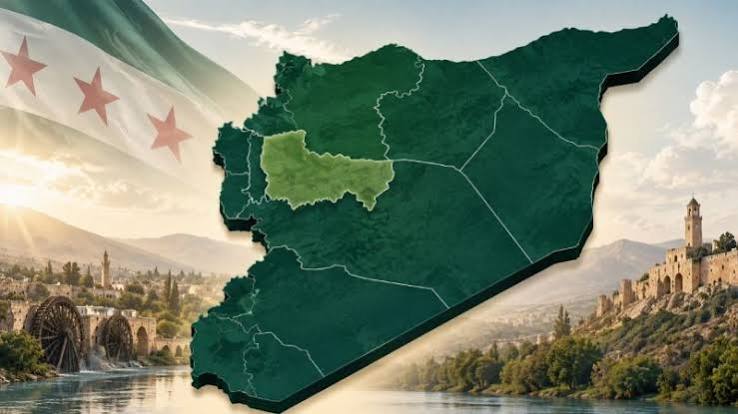
On April 9, 2026, the Syrian Ministry of Culture signed a contract worth 6.3 billion Syrian pounds (approximately $456,000) with “Al-Taer Commercial Company”—a firm with no prior experience in restoring historical monuments—to renovate the historic Al-Zahrawi Palace in Homs.
This event reveals a deeper crisis regarding the state’s philosophy in dealing with cultural heritage.
Does the new Syrian state treat heritage as “public property” requiring protection and participatory engagement, or as an “investment asset” subject to market logic and special privileges?
First: From Heritage as Authority to Heritage as a Right:
John Tunbridge and Gregory Ashworth introduced the concept of “dissonant heritage,” suggesting that heritage is a battleground for competing narratives and that decisions to preserve or destroy it are inherently political.
Ashworth asserts that “all decisions regarding heritage preservation or reconstruction are subject to political control; they serve not so much to rescue the past as to shape images in the present.”
In the context of armed conflict, Rob Nixon introduces the concept of “slow violence,” referring to forms of gradual, invisible destruction—such as organized looting, property seizure, and systemic neglect—that are not typically classified as war crimes. This concept applies precisely to cases like Al-Zahrawi Palace, where there is no “bombing” or “explosion,” but rather “restoration,” “contracting,” and “investment”—instruments of slow violence that strip heritage of its public significance and transform it into a commodity.
The book Narrating Heritage: Rights, Abuses and Cultural Resistance notes that cultural heritage is inextricably linked to human rights, and that forms of violence—both direct and slow—directed against it constitute a violation of cultural rights guaranteed under international law.
Second: Al-Zahrawi Palace:
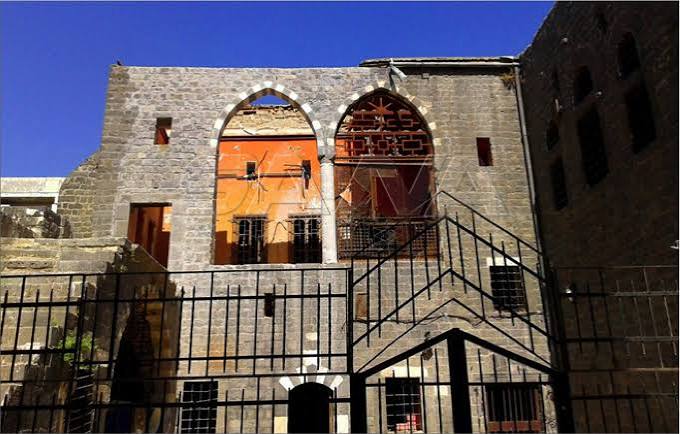
Al-Zahrawi Palace in Homs is not merely a historic building; it is the living memory of an ancient city.
The property was acquired by the state in 1977 for the Directorate-General of Antiquities and Museums, with the aim of converting it into a museum.
However, current developments raise fundamental questions regarding the fate of this heritage.
The first issue is a lack of transparency and expertise; according to official documents, the executing company, “Al-Taer Commercial,” possesses no history or specialization in the restoration of historical landmarks.
With its Mamluk and Ottoman architecture and intricate details, Al-Zahrawi Palace requires experts in archaeological restoration, not commercial contractors.
Documents indicate that previous restoration efforts (in the 1980s, 2008, and 2020) were carried out by the technical staff of the Directorate of Antiquities and were never previously tendered as commercial contracts to private companies.
The second issue is the exceeding of legal authority. The contract was valued at 6.3 billion Syrian pounds—a figure exceeding the administrative and legal limits of the Minister of Culture’s authority. This necessitated approval from the State Council, a step that was notably absent from the contracting file.
The details point to a “bizarre scenario”: the Minister signed the commencement order first, and only then was the document sent to the Director of Antiquities for signature. This procedural flaw represents more than just a legal violation; it reveals a mindset of “haste” that fundamentally conflicts with the principles of heritage preservation—a process requiring time, specialized expertise, and consultation.
A third issue concerns the investment aspect: given that the palace was expropriated for the benefit of the Directorate General of Antiquities and Museums, is it permissible to use it for commercial investment purposes? Legal expert Shawqi Asim Al-Zahrawi noted in an official statement that “using the property for commercial investment purposes strips the expropriation of the legal legitimacy granted to it on the basis of public interest.”
Third: “The Throne of Bilqis”
On the other side of the Arab world, the Awam Temple (Mahram Bilqis) in Ma’rib, Yemen, faces an equally tragic fate.
The site was added to the List of World Heritage in Danger in 2023, alongside other landmarks of the ancient Kingdom of Sheba. Yet, listing alone offers no protection.
A video circulating on December 25, 2025, showed an archaeological inscription—dating back more than 3,000 years—lying on the ground, serving as a backrest for individuals chewing qat within the temple precincts. Yemen’s Ambassador to UNESCO, Mohammed Jumeh, described the scene as follows: “The disregard and negligence—manifested in the consumption of qat—that occurred at the Awam Temple should never have happened. The monuments of the Kingdom of Saba, inscribed on the UNESCO World Heritage List in early 2023, remain open, allowing vandals to enter without oversight or accountability.”
UNESCO reports reveal that the World Heritage Committee placed the “Landmarks of the Ancient Kingdom of Saba” on the List of World Heritage in Danger during its 18th extraordinary session held in Paris in 2023. However, this listing—despite its significance—does not translate into actual protection given the absence of security and central authority. This presents Yemen with a dilemma: does inclusion on the “in danger” list serve as a tool for international pressure, or merely as an official acknowledgment of helplessness?
We cite this incident—despite the geographical distance—to draw a parallel with the reality of fragmented states, serving as a warning for Syria to avoid a similar fate.
Fourth, the broader context:
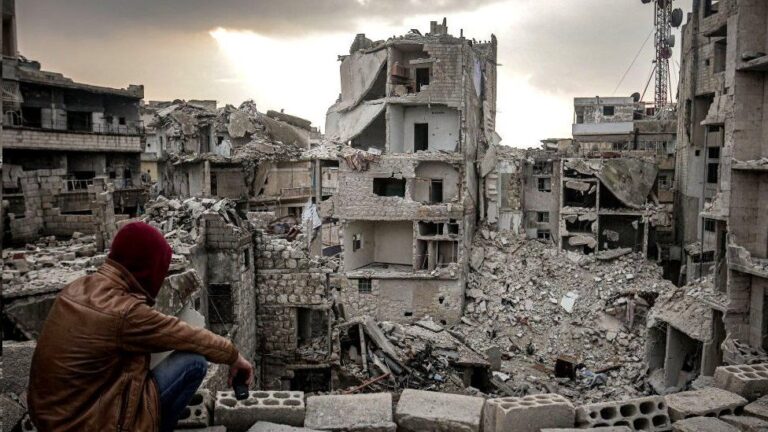
Recent studies reveal the immense scale of destruction inflicted upon Syria’s cultural heritage. According to a study published in the peer-reviewed journal Heritage in July 2026, 59% of archaeological sites in Syria were subjected to looting or destruction between 2015 and 2025, compared to only 13% between 2011 and 2016. Satellite imagery was used to analyze 199 sites, revealing that 116 of them (59%) had suffered various forms of looting and destruction, including “traditional looting,” “mechanical looting using bulldozers,” “militarization,” and the “establishment of encampments.”
More alarmingly, the same study found a link between mechanical looting—which involves using bulldozers to scrape away the entire surface—and military activity; researcher Jesse Casana notes that “the [Assad] army, which is supposed to protect the people rather than destroy archaeological sites, is committing a war crime.”
This pattern was particularly well-documented in the Ain Dara area, where systematic bulldozing began in 2019; by 2022, the site had been “almost completely” leveled, with the exception of a stone temple dating back to the first millennium BCE.
In this context, the incident involving Al-Zahrawi Palace—which might appear “minor” compared to such massive destruction—serves as an indicator of a broader pattern: a pattern that treats heritage not as a cultural value requiring protection, but as a commercial or real estate asset to be exploited.
If this pattern persists, it will generate what Nixon calls “slow violence”—a gradual form of destruction that is not classified as a crime yet strips cities of their memory and deprives future generations of their right to know their history.
Fifth: Towards a heritage policy based on rights and participation:
Based on this analysis, the Syrian Future Movement makes the following recommendations:
First: Enact a modern cultural heritage law. This law must clearly define public assets that cannot be commercially exploited, establish mechanisms for community participation in restoration decisions, set contractor selection criteria, and ensure contractual transparency. It must be grounded in the principle of “heritage as a right” rather than “heritage as a commodity.”
Second: Establish an independent national heritage authority. Modeled after anti-corruption bodies, this independent authority should oversee all restoration and rehabilitation projects. It should comprise experts in archaeology, engineering, and law; possess binding decision-making power; and report directly to the People’s Assembly and the general public.
Third: Engage local communities. We recommend that local communities—including the families that historically owned these properties—be partners in heritage preservation decisions, rather than mere spectators. This requires clear mechanisms for public consultation, the right to object, and the review of decisions.
Fourth: Leveraging international expertise. The Syrian government should utilize UNESCO grants and expertise for the restoration of historical landmarks, rather than turning to inexperienced commercial firms.
Documents indicate that the Ministry failed to utilize these grants, despite their availability.
Fifth: Enhancing financial transparency by publishing all restoration contracts, identifying funding sources, and subjecting them to oversight by the Court of Audit and the Supreme Audit Institution. Public funds allocated for heritage are a trust for future generations, not a source of privileges or cronyism.
Sixth: Regional and international cooperation. Syria must collaborate with international organizations—such as UNESCO, ICOMOS, and specialized NGOs—to protect shared heritage, exchange expertise, and ensure that restoration efforts align with international standards.
Conclusion:
Al-Zahrawi Palace in Homs and the “Throne of Bilqis” in Marib represent more than just archaeological sites; they serve as a true test of the state’s commitment to the philosophy of heritage preservation as a public right, rather than an investment commodity.
Heritage preservation is not a cultural luxury; it is an essential component of building national identity, fostering social cohesion, and achieving sustainable development.
Heritage that is not respected today will not exist tomorrow.
Future generations will not forgive those who squandered their collective memory. The Syrian government must recognize that heritage is not private property but a public asset shared by all segments of society, and that its protection is not the sole responsibility of the Ministry of Culture, but rather a collective national responsibility.
References:
- Zamanalwsl. (2026, October 1). بالمستندات الرسمية: وزير الثقافة يورّط وزارته بعقد بمليارات الليرات لشركة بلا خبرة في ترميم آثار حمص. https://www.zamanalwsl.net/news/article/179180
- Deutsche Welle (DW). (2025, December 25). صدمة في اليمن: استخدام نقش أثري كمسند خلال جلسة قات. https://www.dw.com/ar/صدمة-في-اليمن-استخدام-نقش-أثري-كمسند-خلال-جلسة-قات/a-75306966
- Casana, J., et al. (2026). Looting and Damage to Archaeological Sites in Syria: A Satellite Imagery Analysis. Heritage, 9(6), 209. https://www.mdpi.com/2571-9408/9/6/209
- EurekAlert. (2026, July 23). Study shows extent of damage to historic sites in Syria. https://www.eurekalert.org/news-releases/1137378
- UNESCO World Heritage Centre. (2026). Landmarks of the Ancient Kingdom of Saba, Marib. https://whc.unesco.org/en/list/1700/
- Tunbridge, J. E., & Ashworth, G. J. (1996). Dissonant Heritage: The Management of the Past as a Resource in Conflict. John Wiley & Sons.
- Nixon, R. (2011). Slow Violence and the Environmentalism of the Poor. Harvard University Press.