
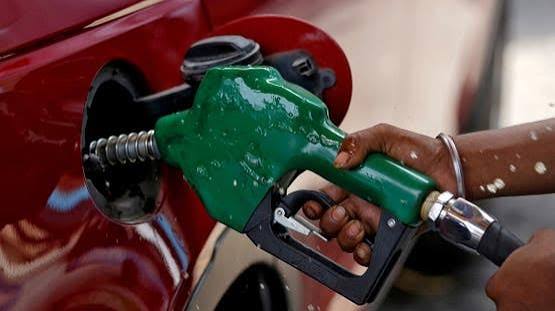
The Syrian Future Movement is following with deep concern and condemnation the mounting wave of complaints from thousands of drivers in Damascus and other governorates regarding a sharp decline in gasoline quality. This deterioration has caused sudden breakdowns and rendered dozens of vehicles—particularly newer models—inoperable.
The Syrian Future Movement views this crisis—which began to escalate in early July 2026—not merely as a technical glitch, but as the inevitable result of accumulated administrative failure, suspected hidden corruption, and flagrant regulatory negligence. These issues demand accountability from the transitional government and the Ministry of Energy at the highest levels.
The Syrian Future Movement notes that this crisis coincides with documented instances of corruption in the fuel sector. Most recently, on August 13, 2026, the Central Agency for Control and Inspection revealed financial irregularities exceeding 3.396 billion Syrian pounds in contracts involving the Baniyas Refinery Company between 2021 and 2024.
On August 22, 2026, the Agency disclosed serious violations at oil fields in Deir ez-Zor and detained nine officials.
Subsequently, on September 29, 2026, a precautionary seizure was imposed on approximately $104 million in assets belonging to companies under investigation regarding oil sector contracts. The Syrian Future Movement considers that these combined facts reveal an environment conducive to corruption in the fuel sector—one that threatens to introduce adulterated or substandard products into consumer markets. It emphasizes that the responsibility does not lie with any single station or distributor but is systemic, requiring a comprehensive review of the entire supply chain.
The Syrian Future Movement has been monitoring the Syrian Ministry of Energy’s response to the crisis, characterizing it as improvised, delayed, and limited to mere promises:
- July 12, 2026: Syria TV reported the first complaints regarding vehicle breakdowns following refueling in Damascus.
- July 18, 2026: Minister of Energy Mohammed Al-Bashir ordered intensified inspections and sample collection, vowing to hold those involved accountable.
- July 23, 2026: The Ministry announced the issuance of over 300 violation citations and the closure of eight stations within a single week.
- August 18, 2026: The Syrian Petroleum Company denied the “widespread prevalence of poor-quality gasoline,” dismissing the incidents as “individual and isolated cases.”
The Syrian Future Movement maintains that this response—despite the inclusion of regulatory measures—has failed to halt the crisis or address its root causes. Instead, it has devolved into repetitive statements of condemnation that yield no tangible results, while citizens continue to bear the costs of vehicle breakdowns and endure hours of waiting for fuel of questionable quality. The Syrian Future Movement notes that the crisis of fuel adulteration is not unique to Syria; many other countries have faced this issue and successfully addressed it through rigorous oversight programs.
In the United States, for instance, the fuel quality assurance program relies on analyzing samples from refineries and retail stations, alongside imposing heavy financial penalties on violators.
Japan’s model relies on government-funded testing and strict centralized oversight, whereas the British model relies on industry self-regulation coupled with independent government verification.
In Jordan, the Energy and Minerals Regulatory Commission has penalized 12 stations since the beginning of the year and taken legal action against them.
The Syrian Future Movement believes Syria can draw upon these experiences to establish an effective oversight system, rather than merely reacting belatedly to incidents.
Acting out of a sense of national responsibility, the Syrian Future Movement makes the following recommendations:
- Forming an independent national inquiry committee—chaired by a judge and comprising experts in petroleum engineering and standardization—to investigate the source of the adulterated gasoline, determine individual accountability, and disclose the findings to the public.
- Periodically publishing laboratory analysis results and making data on samples collected from fuel stations publicly available to enhance transparency and public trust.
- Launching an electronic monitoring system—modeled on the Jordanian experience—that enables citizens to report stations selling non-compliant fuel and allows for tracking the status of complaints until they are resolved.
- Compensating affected parties and holding violators accountable by establishing a national fund to reimburse owners of damaged vehicles, while permanently revoking the licenses of non-compliant stations and shutting them down.
- Updating Syrian standard specifications for gasoline and mandating their enforcement across all refineries and distribution stations, accompanied by the imposition of deterrent fines.
The Syrian Future Movement reiterates its condemnation of all parties responsible for this crisis and holds the transitional government and the Ministry of Energy fully accountable for consumer protection.
The Syrian Future Movement asserts that the crisis of adulterated gasoline is not merely a technical issue; rather, it is a genuine test of the transitional authority’s seriousness regarding the protection of its people, the fight against corruption, and the establishment of regulatory institutions capable of asserting their authority.
For its part, the Syrian Future Movement will continue to support measures that advance citizens’ interests and rights, critique shortcomings, and monitor on-the-ground developments, all in pursuit of the new Syria that its people deserve.