According to a report by the Al-Afaf and Takaful Charity Association in Aleppo—based on data extracted directly from the records of the governorate’s Sharia courts—there were 8,504 divorces recorded against 16,228 marriage contracts in 2025.
In the first half of 2026, 416 divorces and 1,358 cases of khul’ (divorce initiated by the wife) were recorded. This reflects a shift in the nature of how marital relationships are terminated, with women increasingly turning to the courts to seek khul’ rather than traditional divorce.
These figures reflect a profound transformation in the fabric of the Syrian family—a structure already strained by years of war, displacement, and poverty. This article, however, poses a critical question: how can children be protected when a divorce occurs?
The central premise of this article is that divorce does not negate parenthood. It argues that “familial citizenship”—rooted in cooperation and mutual respect—is the true pathway to safeguarding children following a separation.
The Child at the Center of Ecological Systems:
To understand the impact of divorce on children, one cannot simply look at the dissolved marital relationship. A child’s life is shaped by a complex network of relationships and environments. In his well-known “ecological systems theory,” psychologist Urie Bronfenbrenner provides a vital perspective: a child develops within a multi-layered ecological system. This begins with the microsystem—encompassing family, school, and friends—and extends to the mesosystem (the interplay between family and school), the exosystem (such as parents’ employment and economic conditions), and finally the macrosystem, which includes cultural values and national policies. This theory has been applied to divorce, which is described as a series of environmental transitions that affect not only the family structure but also the relationships constituting the family system, as well as the involvement of family members in other ecological systems.
This means that divorce does not merely affect the couple; it reshapes the entire environment in which a child grows—from the home and school to social relationships and economic stability.
Within this framework, the concept of “co-parenting” emerges as a critical factor.
Studies have confirmed that parental cooperation in raising children is one of the most significant contributors to a child’s harmonious development, even following a separation.
Researchers point out that co-parents must work together to avoid conflict, share resources, and respect and support one another in their parenting roles. Communication between them should be frequent and effective, ensuring that rules, discipline, and child-rearing approaches remain consistent across both households.
Herein lies the paradox: while divorce may be necessary to end a painful marriage, it need not—and should not—mean the end of the parenting partnership.
When a marriage cannot be saved, the parenting partnership must be preserved. This is achieved by transitioning the relationship from a marital one to a contractual one—governed by clear rules, mutual respect, and a shared goal: the best interests of the child.
A Critical Reading of the Figures:
Before proceeding to analyze the implications, it is essential to conduct a critical reading of the aforementioned figures; numbers do not speak for themselves—they require careful interpretation. What the numbers say: In 2025, there were 8,504 recorded divorces in Aleppo—a figure representing approximately 52% of the 16,228 marriage contracts registered that same year.
This indicates a high prevalence of divorce within Aleppine society—which serves as a microcosm for Syrian society as a whole—a concerning trend that warrants serious attention.
What the numbers do not say: This figure does not mean that 52% of the marriages contracted in 2025 ended in divorce within that same year.
The cases recorded in 2025 include marriages that took place in previous years, or perhaps even decades earlier.
Furthermore, these figures do not account for divorces that go unregistered, informal separations, or khula (divorce initiated by the wife), which are recorded separately.
More precisely, the ratio of divorces to marriages is a descriptive indicator of the scale of the phenomenon; it is not a causal indicator of the likelihood that any specific marriage will fail.
Why is this distinction important? Because it protects public discourse from alarmism—which can lead to the stigmatization of divorced individuals or foster a sense of pessimism that discourages young people from marrying. Indeed, some reports suggest that 60% of Syrian youth are shying away from marriage due to difficult economic conditions and high dowry requirements.
The goal is not to frighten people about divorce, but rather to ensure the protection of children when it does occur.
What Happens to Children When Adults Fail?:
The magnitude of the impact cannot be overstated. According to the largest American study of its kind—a joint working paper by the U.S. Census Bureau, the Social Security Administration, and the U.S. Department of the Treasury, published by the National Bureau of Economic Research (NBER) and tracking over a million children over fifty years—children of divorce suffer from long-term economic, social, and health-related consequences. Their household income was less than half that of their peers in stable families; by their late twenties, they were earning 13% less than their counterparts—a gap equivalent to the loss of an entire year of education.
More alarmingly, they were 60% more likely to experience teenage pregnancy, 40% more likely to face incarceration, and 45% more likely to die prematurely. A recent Dutch study found that 67% of children whose parents separated continued to experience the effects of that separation years later—a figure that rises to 78% among those who did not receive adequate support during childhood. This confirms that the impact does not simply fade away on its own; rather, it depends on the quality of support a child receives following the separation.
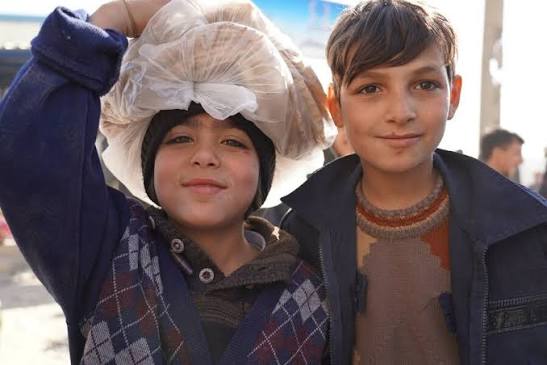
In the Syrian context—where 6.9 million children have humanitarian needs, 2.45 million are out of school, and over 80% of the population lives below the poverty line—divorce imposes an additional burden on children already suffering from the traumas of war and displacement. Consequently, in Syria, divorce acts as a multiplier of vulnerability, leaving children increasingly exposed to exploitation, violence, and school dropout. Lessons from Northern Europe:
Developed nations do not view divorce as an end, but rather as a transition that requires management. The Scandinavian experience offers highly significant lessons for Syria.
For instance, in Sweden, when parents are married, they automatically receive joint custody upon the birth of their child.
Regarding a child, if parents separate, they both retain joint custody without the need for a court ruling. This means that parenthood does not end with the dissolution of a marriage; rather, it continues as both a right and a duty for each parent, unless there is a legal reason to prevent this.
In Norway, parents with children under the age of 16 are required to attend mandatory mediation sessions before they can proceed with a separation or divorce. The goal of this mediation is not to repair the marriage, but to assist parents in drafting a written agreement for co-parenting. Experience has shown that such mediation plays a pivotal role in reducing conflict between separated parents.
The Netherlands has developed a multi-family program called “No Kids in the Middle”—a structured group intervention designed for families experiencing intense conflict following a divorce. The program consists of eight organized sessions, featuring parallel meetings for parents and children, all supervised by therapists. It aims to reduce parental conflict, strengthen co-parenting relationships, and alleviate the psychosocial adjustment difficulties faced by children.
Lessons for Syria:
First, joint custody should be the norm, not the exception.
Second, mandatory mediation prior to litigation can reduce conflict and protect children.
Third, group-based programs that involve both parents and children can be more effective than individual sessions.
Fourth, children’s voices should be heard in decisions that affect them, as is the practice in Sweden and Norway. Islamic Foundations:
These modern approaches do not conflict with the Islamic perspective; rather, they resonate with its core principles.
In Islamic jurisprudence, child custody (hadana) is neither the right of the father nor the mother; it is the right of the child—the person being cared for.
Al-Azhar Al-Sharif has affirmed that prioritizing the child’s best interests is the primary objective of custody—and, indeed, that securing such interests is the overarching purpose of all legislation.
Since custody is the child’s right—not the caregiver’s—any judge presiding over such cases is duty-bound to prioritize the child’s well-being.
The jurisprudential maxim, “no harm and no reciprocating harm” (la darar wa la dirar), dictates that no family arrangement should cause harm to the child.
While divorce itself may constitute a form of harm, the persistence of conflict following a divorce inflicts even greater harm.
Consequently, cooperation between separated parents is not merely a civilized choice; it is a religious obligation (wajib shar’i), as it serves the child’s best interests and shields them from harm.
In this context, the concept of “familial citizenship” emerges as an encompassing framework.
Just as citizenship within a state entails reciprocal rights and duties between the citizen and the state, “familial citizenship” following a divorce entails reciprocal rights and duties between parents—all aimed at securing the child’s best interests.
This framework is built upon respect rather than defamation, cooperation rather than rivalry, transparency rather than manipulation, and accountability rather than impunity.
Challenges in the Syrian Context:
Scandinavian models cannot be transplanted to Syria in their entirety, as the Syrian context differs significantly in legal, social, and economic terms. Therefore, these models must be adapted to the local context through a precise understanding of the existing challenges.
The first challenge: The current legal framework does not recognize “shared parenting.” The Syrian Personal Status Law of 1953—and its subsequent amendments—governs child custody based on the concepts of a “custodian” and a “child under custody,” rather than through the lens of shared parental responsibility.
Custody is typically granted to the mother during the child’s early years; at a certain age, the child is given the choice between parents, after which custody may shift to the father or another party. This implies that parenthood is viewed as an exclusive right rather than a shared responsibility. Any legislative reform must redefine custody as the child’s right to maintain a relationship with both parents, rather than as a right held by one parent over the other.
The second challenge: The absence of formal family mediation. There are no structured family mediation centers in Syria, nor is there a legal requirement to pursue mediation before resorting to litigation.
Consequently, courts often turn into arenas of conflict, where parents compete in defaming and accusing one another, with the child emerging as the primary victim. Any reform should begin by easing the burden on the judiciary through mandatory mediation, required before any divorce or custody proceedings can commence.
The third challenge: Poverty and economic pressure. Amid a severe living crisis, divorce becomes even more painful; alimony payments may prove insufficient, housing may be unavailable, and a mother may find herself left without any means of support.
Any reform must address this economic dimension—for instance, by establishing a support fund for separated families, implementing economic empowerment programs for divorced women, and ensuring the effective enforcement of alimony rulings. The fourth challenge: A culture of defamation and stigmatization. In many cases, divorce turns into a battle over dignity, with each party seeking to tarnish the other’s reputation—whether through social media platforms or gossip.
This compounds the impact of divorce on children, as they end up hearing and seeing things they should not be exposed to. Any reform must therefore include awareness campaigns, responsible media discourse, and ethical guidelines for handling divorce-related matters.
The fifth challenge: A lack of psychological support. In Syria, there is no organized network of psychological support for children and parents following a divorce.
As a result, children are left to navigate their emotions alone, while parents are left to grapple with their own struggles in isolation.
Any reform should incorporate psychological support centers within schools and healthcare facilities, alongside dedicated programs for both children and parents.
The sixth challenge: It must be clearly understood that establishing joint custody as the default arrangement does not mean it applies to every case.
In instances involving domestic violence, neglect, or substance abuse, granting joint custody would pose a risk to the child.
Consequently, any legislative reform must include clear legal safeguards—such as excluding cases involving domestic violence, establishing mechanisms for the periodic assessment of the child’s best interests, and allowing for the modification of custody arrangements should circumstances change.
Without these safeguards, joint custody could shift from a means of protecting the child to yet another tool for conflict.
Towards a National Charter for Post-Separation Parenting:
Based on this analysis, this article proposes a National Charter for Post-Separation Parenting, founded on five core principles and five implementation mechanisms. The Five Principles:
First, the principle of the continuity of parenthood: divorce ends a marriage, not parenthood. Every child has the right to a safe and ongoing relationship with both parents, unless there is a legal reason to prevent this.
Second, the principle of The best interests of the child: Every decision concerning a child—whether regarding custody, financial support (maintenance), education, or housing—must be measured against a single standard: Does it serve the child’s best interests?
Third, the principle of “do no harm”: A child must not be used as a weapon in conflicts between parents, nor should they be drawn into disputes or exposed to disparagement directed at the other parent.
Fourth, the principle of transparency and accountability: Parents are accountable to both the child and society for upholding parenting agreements and ensuring no harm comes to the child.
Fifth, the principle of resolution before litigation: Family mediation must be a mandatory step prior to resorting to the courts, in order to minimize conflict and reduce the burden on the judicial system.
The Five Mechanisms:
First, the establishment of family mediation centers in every governorate—operated through a partnership between the Ministry of Justice and the Ministry of Social Affairs—to provide free services to separated parents. The goal is to develop a written parenting agreement that defines custody, financial support, visitation arrangements, and communication protocols.
Second, the adoption of joint custody as the default standard under Syrian law, incorporating safeguards modeled after the Swedish system. Joint custody shall be the standard upon separation, unless legal grounds exist to preclude it—such as instances of violence, neglect, or addiction.
The law must also include mechanisms for the periodic assessment of the child’s best interests, as well as provisions for modifying arrangements should circumstances change. Third, mandating that parents attend an awareness program prior to divorce—modeled after the Norwegian approach—requires parents with children to participate in a session on the impact of divorce on children and how to manage conflict responsibly.
Fourth, launching psychological support programs for children and parents—modeled after the Dutch approach—involves establishing support groups for parents and children, overseen by specialists, to help them navigate conflict and build healthy relationships.
Fifth, creating a national registry for parenting agreements, where every such agreement is recorded and its implementation monitored by a family counselor, with accountability mechanisms in place for cases of non-compliance.
Conclusion:
In a new Syria, divorce has become a matter of national importance, for today’s children are the citizens of tomorrow. The goal is not to prevent divorce—which remains a personal decision—but rather to manage its consequences by transitioning the relationship between parents from a marital one to a familial one, rooted in the principles of citizenship rather than hostility.
A child who sees their parents cooperating after a separation—even amidst the pain—learns that disagreement does not equate to enmity, and that separation does not mean a complete severance of ties.
This lesson serves as the foundation for any civil society, as citizenship itself is predicated on respecting others despite differences.
If Syria aspires to build a state based on citizenship, then “familial citizenship” is the cornerstone.
For those who do not learn the essence of citizenship within their own family, they will not learn it within their nation. What is needed is not a sermon on the family, but rather policies, laws, and institutions that protect children following a separation, ensure they maintain a secure relationship with both parents, and teach adults that divorce is not the end of parenthood—but rather a new beginning for a more mature and responsible family dynamic.