Introduction and Methodology:
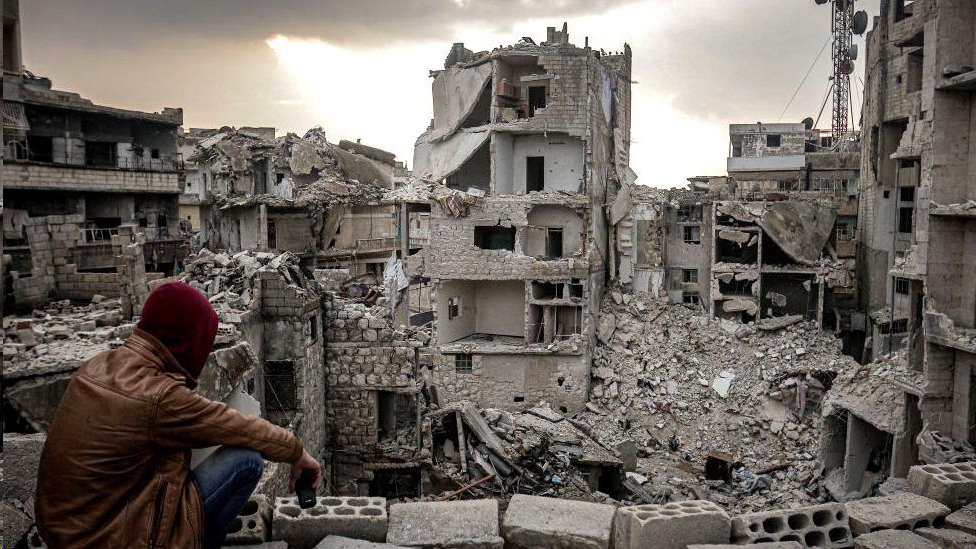
Wars in Syria did not end when the fighting ceased; the most dangerous legacy of war is the destruction of the human being—an individual whose consciousness was forged amidst chaos.
An entire generation grew up in a dysfunctional environment, learning the “rules” of life from the barrel of a gun and the arena of disorder, rather than from schools, families, or the state.
In Syria—as in all nations that have endured prolonged conflict—a generation has emerged that was either born or came of age during an extraordinary era, yet came to perceive this state of affairs as the “new normal.”
Those who were ten years old when the revolution first ignited are now in their mid-twenties—a period critical to psychological, moral, and intellectual development, and arguably the most formative stage in the making of a human being.
The core of the problem is that these formative years unfolded against the backdrop of a near-total collapse of legal, educational, and moral systems, as well as the mechanisms of social order.
This generation has never witnessed a functioning state, a stable society, or a coherent moral discourse. Instead, they have known only the opposite: unchecked weaponry, daily violence, death without accountability, and transgressions that go unpunished.
This article employs an analytical, comparative, and maqasidi (purposive/teleological) methodology. It draws upon three categories of sources: quantitative data (such as UNICEF reports and peer-reviewed studies); theoretical literature (including the psychology of collective trauma and the theory of “post-traumatic growth”); and maqasidi texts—specifically the Islamic concept of istikhlaf (stewardship or trusteeship).
The objective is to provide an analytical reading of this generation’s tragedy, to establish a maqasidi framework for understanding the responsibilities toward them, and to offer a forward-looking vision for their future—viewing them not merely as a security burden, but as a sacred trust (amanah) and a responsibility of stewardship. The article compares the situation in Syria with the experiences of other countries that have emerged from similar conflicts, aiming to draw lessons that could inform future policies for Syria.
First, the scale of the phenomenon:
Recent data reveal the tragic scale of this generation. While the figures require precise estimation, UNICEF (2020) reports that 4.8 million children have been born in Syria since the conflict began, while another million Syrian children have been born as refugees in neighboring countries.
This means that approximately 5.8 million Syrian children—both inside and outside Syria—belong to the “war generation,” a figure that represents a significant proportion of all Syrian children.
As of the end of September 2026, 6.9 million Syrian children were in need of humanitarian assistance, according to UNICEF Executive Director Catherine Russell.
Regarding education, 2.45 million children remain out of school, while another 1.6 million are at risk of dropping out due to the destruction of infrastructure, rampant poverty, and ongoing displacement (UNICEF, August 2026).
Furthermore, 5 million children live in areas contaminated by landmines and remnants of war—with 324,000 unexploded devices scattered across roads, fields, homes, and schools—making such dangers a part of their daily lives. These figures describe a distorted formative environment—one that has produced a generation that did not learn morality within a natural framework. Instead, they learned that might makes right, that impunity is the norm, and that chaos is not a flaw to be corrected, but a way of life.
Consequently, understanding this generation begins with examining the “nature of the environment” that shaped their consciousness.
Second: Psychological and Behavioral Impact
The “war generation” cannot be understood in isolation from the psychological literature on collective trauma. What these individuals have experienced is a form of collective trauma—which arises when an entire group faces an existential threat, leading them to construct their collective identity around a “narrative of wounding.”
This explains why they cannot be viewed merely as individuals in need of psychological therapy; rather, they represent a social fabric that requires reconstruction.
Field studies reveal alarming statistics.
A large-scale study of Syrian refugee children (a sample of 1,600) found that 39.6% suffer from post-traumatic stress disorder (PTSD), 20.1% from severe depression, 47.8% from some form of anxiety disorder, and 26.9% from externalizing behavioral disorders (Pluess et al., 2026).
Within Syria itself, other studies indicate that one in every four children exhibits clear signs of post-traumatic stress disorder. More alarming still are the findings of a peer-reviewed study published in Scientific Reports (2024) regarding the “lost generation” of Syrian children: 74.67% of children aged 2–4 and 61.29% of those aged 5–17 were found to be experiencing behavioral difficulties, with emotional challenges being the most prevalent.
These difficulties have been linked to experiences such as abduction, the loss of family members, a lack of access to schooling, low levels of parental education, and a poor quality of life.
These figures do not imply that this generation is inherently “ill” or “deviant”; rather, they are the natural product of an abnormal environment.
As some researchers point out, this generation “cannot be viewed as a single, homogeneous bloc, nor should they be held collectively responsible.” Instead, the core issue lies in “the failure of the state and society to invest in their potential”—a generation that possesses “significant experience gained throughout the years of war.”
Thirdly, the Maqasidi (purposive/teleological) perspective:
Within the Islamic Maqasidi framework, a human being is not perceived as a passive entity whose identity is forcibly imposed, but rather as a khalifah (steward/vicegerent) entrusted with the responsibility of ‘imarah (cultivating and developing the earth).
Islamic educational studies have emphasized that the concept of istikhlaf (stewardship) serves as the Islamic paradigm for development—one that aligns with a comprehensive vision of humanity, the universe, and life itself.
Furthermore, the “cultivation of the human being as a steward” stands as the paramount endeavor for the Ummah (community). This process of istikhlaf “begins within the home and culminates in the development of the earth, guided by justice and moral values.” This means that the “war generation”—despite the chaotic circumstances of its formation—is not destined to remain trapped within a cycle of chaos.
The role of stewardship (istikhlaf) is not a privilege reserved for generations living in stability; rather, it is a responsibility incumbent upon every generation, including those forged in the shadow of war.
The objective is not merely to “rescue” this generation from its past, but to “empower” it for its future—by transforming its energies and experiences from forces of destruction into forces of construction.
In this context, the concept of “post-traumatic growth” emerges as a fitting theoretical framework.
Studies have indicated that collective trauma does not exclusively result in pathological symptoms; it can also foster psychological and spiritual growth. Some individuals may develop greater resilience, a deeper sense of purpose in life, and more profound interpersonal relationships.
This aligns with the Islamic perspective, which views “trial” (ibtila’) as a school for personal development, and the “alternation of days” (mudawalah)—the shifting of fortunes among people—as a divine law.
For the purpose of nation-building.
What is required, therefore, is not merely the “healing” of the war generation, but its “rehabilitation”—enabling its members to become “stewards” on earth, tasked with the responsibility of construction, having previously borne the burden of destruction.
This necessitates a new educational discourse—one that does not view this generation as a “threat” to be contained, but rather as a “source of energy” to be channeled.
Fourth: Lessons from International Experiences
The situation in Syria cannot be understood in isolation from the experiences of other nations that have emerged from similar conflicts and succeeded in transforming a “war generation” from a liability into an asset.
The Rwandan Experience (1994–2024): In the aftermath of the genocide, Rwanda faced an entire generation that had grown up amidst systemic violence. The country adopted a strategy of “national reconciliation,” combining Gacaca courts (community-based justice mechanisms) with peace education programs in schools. Three decades later, data indicates that Rwanda has achieved rapid economic growth—averaging 7% annually—and a significant decline in crime rates, emerging as an African model for post-conflict state-building.
The Colombian Experience (2016–2024): Following the peace agreement with the FARC, Colombia faced a generation that had come of age during a five-decade-long armed conflict. The nation adopted a “transitional justice” strategy that integrated accountability, reparations, and reintegration, alongside vocational training programs for former combatants. These efforts have resulted in “lower rates of violence” and the “reintegration of more than 13,000 fighters” into civilian life.
The experience of Ukraine (2022–2026): Amidst the war, Ukraine launched “psychological support programs” for children, “digital educational platforms” to replace destroyed schools, and “vocational training programs” for youth. The United Nations Industrial Development Organization (UNIDO) has noted that these programs are “not used as isolated solutions, but rather as a driver for comprehensive, systemic transformation.”
Lessons for Syria:
(1) Reconciliation does not mean “forgetting”; rather, it entails “acknowledgment,” “reparation,” and “reintegration.”
(2) Education is the “fundamental gateway” to rebuilding a post-conflict generation.
(3) Vocational programs serve as a “bridge” between a “militarized childhood” and “productive citizenship.”
(4) Psychological support must be “integrated” into education and training, rather than provided as a “separate service.”
Fifth: A Forward-Looking Vision
Based on this analysis, five pillars can be proposed for a national educational discourse aimed at the “war generation”:
First: A shift from a “security-focused discourse” to an “educational discourse.”
The phenomenon of the “war generation” cannot be addressed through a security-based approach alone, as such an approach targets only the “symptoms” rather than the “root causes.”
What is required is a comprehensive educational discourse that integrates “formal education,” “vocational training,” “psychological support,” and “moral guidance” into a unified framework. Second: Building an alternative “familial environment.”
Following the disintegration of families due to war and displacement, the family unit alone can no longer be relied upon for moral reconstruction. Instead, there is a need for “substitute families” or “educational care institutions” capable of recreating the “nurturing environment” that these individuals have lost.
Educational studies have affirmed that the family is the “foundational building block, the repository of values, and the starting point for human stewardship on earth.”
If the family is absent, society must step in to “adopt” these individuals through institutional frameworks.
Third: Reintegrating the “war generation” into the political process.
The concept of “stewardship” cannot be realized without “participation.” A generation deprived of citizenship throughout the years of war requires “substantive citizenship,” not merely “symbolic citizenship.”
This can be achieved through local councils, youth programs, and development funds that empower them to contribute to the rebuilding of their communities.
Fourth: Channeling—rather than suppressing—their “energy.”
The war generation possesses unique “field experience”—in leadership, crisis management, and self-reliance—that can serve as “capital” for reconstruction efforts. The goal is to transition these experiences from the “sphere of conflict” to the “sphere of construction” through training programs and productive projects that harness their skills.
Fifth: Developing an “inclusive national discourse” rather than a “factional” one. The discourse directed at this generation must be “national” in character—not sectarian or regional. Having never truly experienced the “state,” they require a new narrative that redefines their relationship with it—one rooted in “citizenship,” “dignity,” and “responsibility,” rather than “fear” and “exclusion.”
Sixth: Proposed Implementation Mechanisms
The aforementioned recommendations must not remain mere “slogans”; they must be translated into concrete, measurable, and monitorable mechanisms, including:
- Establishing a “National Fund for the Rehabilitation of the War Generation”—an independent fund, financed by the government and international donors, dedicated to supporting programs for “alternative education,” “vocational training,” and “psychological support” for individuals aged 12–25.
It is proposed that the fund be governed by a board comprising representatives from the government, civil society, the private sector, and international organizations to ensure transparency. - Integrating “resilience education” into school curricula. Simply returning children to classrooms is insufficient; curricula must be restructured to incorporate “trauma-coping skills,” “critical thinking,” and “citizenship,” alongside traditional subjects.
This integration should be implemented gradually, beginning at the primary education level and rolling out over a three-year period. - Launching a “National Youth Service Program”—a civilian initiative that allows young people (aged 18–25) to spend one year working on projects such as “reconstruction efforts,” “literacy campaigns,” or “providing psychological support to children,” in exchange for a “monthly stipend” and a “certificate of experience.” This achieves two objectives: “reintegration” and “harnessing energy.”
- Establishing “community centers for psychosocial support” in every governorate—operated through a partnership between the Ministry of Health and civil society organizations—to provide free services to children and adolescents, alongside awareness programs for families on how to cope with trauma.
- Developing a “national media discourse” aimed at the war-affected generation, utilizing digital platforms and television programs to showcase success stories from within this cohort, while offering awareness initiatives regarding the dangers of extremism and violence, as well as providing spaces for them to express their views.
Seventh: Future scenarios linked to these mechanisms:
Scenario One: Accelerated Success (The Optimistic Scenario).
If the five aforementioned mechanisms are implemented in an integrated manner and receive sufficient international support, the war-affected generation could transform into a “constructive force” within 5–7 years.
This requires “security stability,” “sustainable funding” (estimated at approximately $500 million annually for the National Fund alone), “political will,” and “community engagement.”
Under this scenario, rates of “school dropout” could fall below 10%, “unemployment” below 20%, and “extremism” could return to pre-conflict levels.
Second Scenario: Gradual Recovery (the most likely scenario).
In this scenario, “some” mechanisms—such as the National Fund and psychosocial support programs—are implemented, but not in a “comprehensive” manner.
“School dropout,” “early child labor,” and “extremism” remain “persistent risks,” though they stay relatively “under control.”
Recovery would take “10–15 years” rather than 5–7.
Third Scenario: Stagnation (the pessimistic scenario).
If the mechanisms are “not implemented” or are only “partially implemented”—compounded by an ongoing “economic crisis,” “weak institutions,” and a “lack of funding”—the war generation could effectively become a “lost generation,” characterized by “rising crime rates,” “extremism,” and “emigration.”
This scenario would be “catastrophic” for Syria’s future, and overcoming it could take an “entire generation.”
Conclusion:
The “war generation” in Syria is a “sacred trust”—a responsibility that must be nurtured and cared for. While it is true that this generation was shaped in an environment of chaos—learning more from the barrel of a gun than from a classroom—it nonetheless possesses experiences, energy, and a strength of will that could serve as a foundation for building a new Syria.
The goal should not be to “discard” this generation, but rather to “invest” in it—through an educational and national discourse that restores their self-confidence, a sense of citizenship within their homeland, and a recognition of their role as stewards of their own land.
However, such a transformation is not inevitable; it is contingent upon political will, sustainable funding, community engagement, and security stability. International precedents—from Rwanda and Colombia to Ukraine—demonstrate that a “war generation” can evolve from a “burden” into an “asset,” provided the right conditions are met.
Syria, exhausted by war, cannot afford the luxury of losing this generation. If we succeed in transitioning them from the “chaos of their upbringing” to the “responsibility of stewardship,” we will have succeeded in building the “Syria of the future” on a solid foundation. Conversely, should we fail, we will have squandered the nation’s most precious resource: its youth.
References:
- Pluess, M., et al. (2026). The effects of war and displacement on Syrian refugee children: Risk and resilience. European Journal of Developmental Psychology. https://doi.org/10.1080/17405629.2026.2743620
- Alsharif, A., Al Habbal, O., Gabadian, A., El Maamoun, R., Al Faraj, Al Faraj, A., kamr aldin, T., Aldammad, O. H., Alkayakhi, A., & Al Habbal, A. (2024). Behavioral difficulties and associated factors among the ‘lost generation’ of Syrian children and adolescents. Scientific Reports, 14, Article 9286. https://doi.org/10.1038/s41598-024-59784-z
- UNICEF. (2026). Syrian crisis: After 15 years of conflict and crisis, children continue to pay the heaviest price. https://www.unicef.org/emergencies/syrian-crisis
- European Union Agency for Asylum (EUAA). (2026). 2.10. Children. Syria Country Focus. https://www.euaa.europa.eu/syria-country-focus/210-children
- 963media. (2026). درعا نموذجاً: جيل الحرب بين الفوضى والانفلات الاجتماعي. منصة +963 الرقمية. https://963media.com/archives/62607