
First: Introduction:
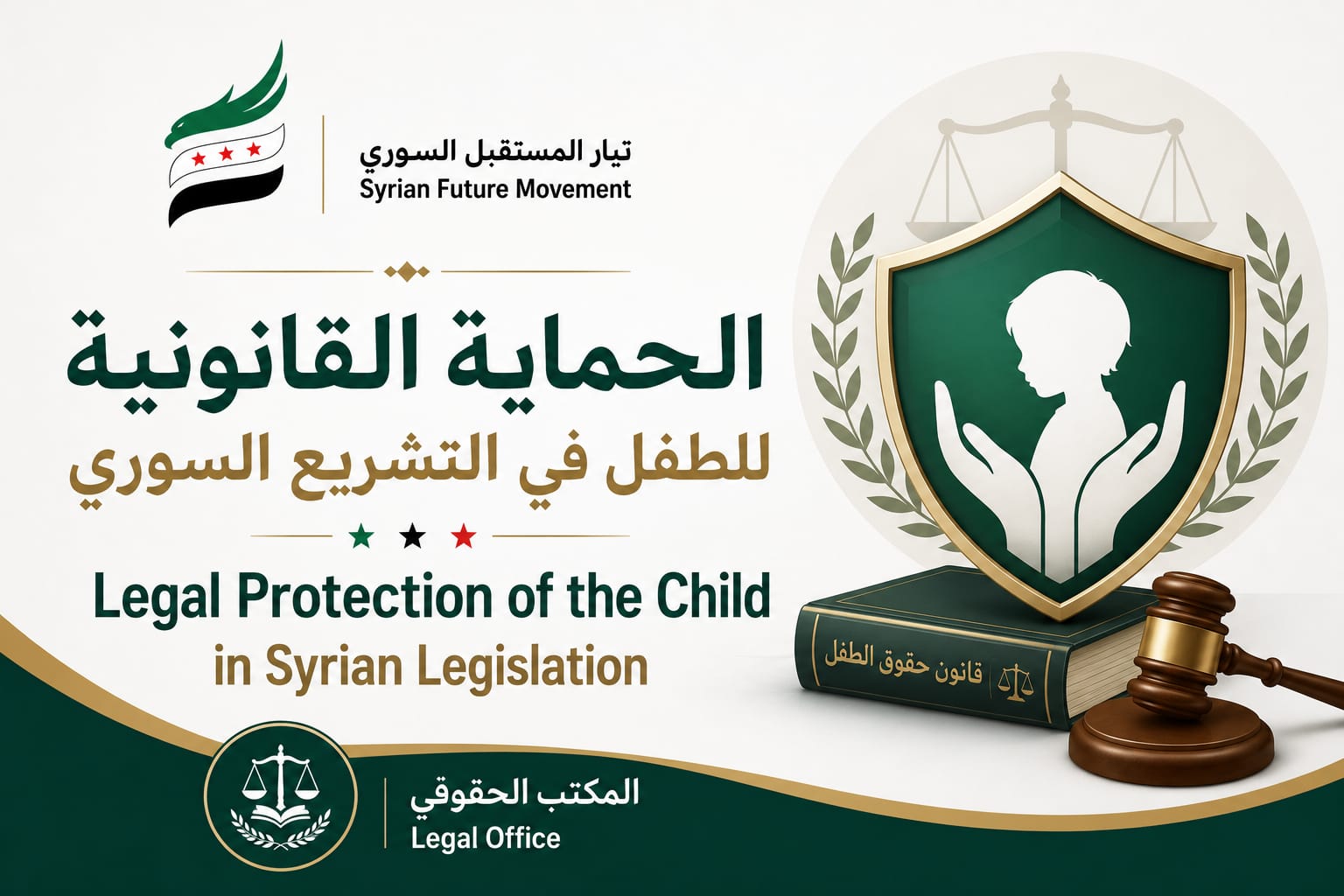
The child is the cornerstone of the development process and the fundamental pillar of the family, which in turn is the building block of society and the state. Therefore, the degree of legal, social, health, and educational protection afforded to children directly reflects the level of development of the state and the rule of law within it.
Childhood is not merely a passing phase of life; rather, it is the stage in which a person’s character, values, behavior, and future capacity to contribute to building their nation are formed. Any disruption to this stage will subsequently affect the entire society, whether in social, economic, security, or cultural aspects.
Modern legislation has recognized this fact, shifting from viewing the child as simply subject to the authority of the family to recognizing them as an independent individual with a comprehensive set of rights that the state, society, and the family are obligated to protect and guarantee.
The progress of nations is no longer measured solely by rates of economic growth or urban development, but also by their ability to protect their children from violence, exploitation, neglect, and discrimination, and to ensure their right to education, healthcare, legal identity, and a dignified life.
In the Syrian case, the importance of child protection has increased after years of war and armed conflict, resulting in displacement, refuge, loss of breadwinners, rising poverty rates, school dropout rates, child labor, and an increasing number of children without official documentation or separated from their families. This makes child protection a national imperative, not merely a legal obligation.
Although Syrian legislation includes numerous provisions protecting children’s rights, these provisions remain scattered across multiple laws. This makes it difficult to develop a comprehensive legal framework and complicates their practical implementation due to overlapping jurisdictions among different entities.
Hence the importance of this study, which aims not only to review legal texts but also to analyze them, assess their adequacy, identify existing gaps, and offer a reform vision based on the principles of the rule of law and aligned with the needs of Syrian society during the reconstruction phase.
Second: The Legal and International Framework for Child Protection:
Child protection is not based solely on national legislation, but also on a comprehensive system of international conventions and treaties that have become an essential part of contemporary legal thought. These conventions view the child as possessing inherent rights that cannot be diminished.
The 1989 Convention on the Rights of the Child is the most important international reference in this field. It established four fundamental principles that have become the governing framework for all legislation related to childhood:
- The principle of non-discrimination among children for any reason.
- The principle of the best interests of the child in all decisions concerning them.
- The right of the child to life, survival, and development.
- The right of the child to express their views and to be heard in a manner appropriate to their age and maturity.
The Syrian Arab Republic has acceded to the Convention on the Rights of the Child, which makes its provisions an important reference point when developing national legislation, taking into account the reservations declared by the Syrian state upon accession and any future revisions that may be required in light of legal and constitutional developments.
Child protection is also linked to several other international agreements, most notably:
- The Convention against Torture.
- The International Covenant on Civil and Political Rights.
- The International Covenant on Economic, Social and Cultural Rights.
- The International Labour Organization (ILO) Conventions on the Prevention and Punishment of the Worst Forms of Child Labour.
- The Optional Protocol to the Convention on the Rights of the Child on the involvement of children in armed conflict.
- The Optional Protocol on the Sale of Children, Child Prostitution and Child Pornography.
All these agreements affirm that children have rights independent of their parents’ rights, and that the state bears a direct responsibility to provide them with legal protection whenever the family fails to do so or neglects its duties.
From this perspective, child protection is no longer a matter of charity or social welfare, but rather a legal, constitutional, and moral obligation incumbent upon all state institutions.
Third: The Syrian Legislative Framework for Child Protection:
Although there is no single piece of legislation that encompasses all provisions related to children in detail, the Syrian legal system includes a broad network of texts that complement each other to provide legal protection for children.
These provisions are distributed across the Child Rights Law, the Penal Code, the Labor Law, education laws, health laws, personal status laws, the Juvenile Law, and legislation related to combating human trafficking.
However, this legislative distribution, despite its relative comprehensiveness, presents practical challenges, namely overlapping jurisdictions and the difficulty of encompassing all relevant texts. This necessitates a comprehensive review of the legal system to enhance its clarity and ease of application.
We will now examine the most prominent aspects of legal protection afforded to children by the Syrian legislature, highlighting its key strengths and areas that still require development.
Fourth: Legislative Protection of Children in Syrian Laws
Protection from Violence, Abuse, and Neglect:
The Syrian legislature has given special attention to protecting children from all forms of violence, particularly after the issuance of the Child Rights Law No. (21) of 2021, which represented a qualitative leap in regulating children’s rights more comprehensively.
Article (14) of the law prohibits all forms of violence and abuse to which a child may be subjected, whether physical, psychological, verbal, or sexual. It also prohibits neglect, exploitation, mistreatment, and degradation, and obligates the competent authorities to take the necessary measures to protect children at risk.
This text is of great importance because it no longer focuses solely on criminalizing abuse after it has occurred, but rather expands the concept of protection to include prevention and early intervention, recognizing that child protection begins before the fact.
The harm must occur, not be remedied.
However, practical application still requires clearer mechanisms for reporting cases of violence, the provision of specialized protection units, and the training of personnel capable of dealing with abused children. This would ensure rapid intervention and minimize the psychological and social consequences of such violations.
Criminal Protection in the Penal Code:
The Syrian Penal Code does not leave crimes against children unaddressed. It includes several provisions that increase penalties when the victim is a child, particularly in crimes affecting life, physical safety, freedom, or public morals.
The law also strengthens liability in cases where the perpetrator is someone responsible for the child’s care or holds authority or guardianship over them. In such cases, the assault constitutes a breach of the duty of care before it is a crime against the victim.
The importance of these provisions lies in their view of children as a group deserving of enhanced criminal protection due to their limited ability to defend themselves. However, this protection requires continuous review to keep pace with emerging crimes, especially cybercrimes and exploitation through social media.
Combating Child Trafficking and Exploitation:
Child trafficking is one of the most serious organized crimes of the modern era, as it constitutes a flagrant violation of human dignity and fundamental rights.
Legislative Decree No. (3) of 2010, concerning combating trafficking in persons, addresses this crime and increases penalties when the victim is a child, given the severity of exploiting children in forced labor, sexual exploitation, organized begging, or other forms of exploitation.
This legislation is consistent with Syria’s international obligations in combating human trafficking. However, recent developments, particularly cyber trafficking, necessitate updating the methods of combating this crime, strengthening judicial and security cooperation mechanisms, and enhancing the protection and rehabilitation of victims.
Protecting Children from Economic Exploitation (Child Labor):
The employment of children before they reach maturity represents one of the most serious violations of children’s rights, due to its long-term health, psychological, and educational consequences.
Therefore, Syrian Labor Law No. (17) of 2010 prohibits the employment of children under the age of fifteen. It also prohibits the employment of minors in hazardous or unhealthy occupations and imposes fines and penalties on violating employers.
This regulation represents an important step in protecting children from economic exploitation. However, the economic conditions that Syria has experienced during the years of war have led to a rise in child labor, making it imperative to strengthen oversight and provide economic support to impoverished families. This is crucial to prevent poverty from forcing children into the labor market at the expense of their education and health.
The Right to Education:
Education is one of the most fundamental rights of the child, as it represents the true foundation for human development and empowers them to exercise their other rights.
The Child Rights Law guarantees the child’s right to free education, and the Compulsory Education Law obligates parents to enroll their children in schools during the compulsory education period, stipulating legal consequences for non-compliance.
However, the Syrian reality has presented significant challenges, including damage to schools, displacement, poverty, and high dropout rates. Addressing this phenomenon is a national responsibility requiring integrated educational, social, and economic policies, not merely legal penalties.
The Right to Health and Mental Well-being:
Legal protection extends beyond educational and criminal aspects to include the right to healthcare.
The Child Rights Law obligates health authorities to provide essential vaccinations, medical care, treatment, and disease prevention, in addition to addressing the mental health of children, particularly those affected by war, displacement, or trauma.
This aspect is especially crucial in Syria, where thousands of children require specialized psychological support and rehabilitation programs. The effects of war extend beyond physical destruction to impact the mental health of future generations.
Protection in Personal Status Laws:
Personal status laws play a fundamental role in regulating a child’s life within the family through provisions concerning lineage, custody, alimony, guardianship, and care.
Although the primary aim of these provisions is to ensure the best interests of the child, some texts still require periodic review to align with social developments and guarantee that the child’s best interests remain the governing standard in all judicial and administrative decisions concerning them, free from any other considerations.
Juvenile Justice:
Syrian legislation distinguishes between juvenile delinquents and adults, based on the principle that children need reform and rehabilitation more than punishment.
Therefore, the legislator has established specific rules for the trial of juveniles, taking into account their age and psychological and social circumstances, and aiming to reintegrate them into society while minimizing the use of custodial sentences as much as possible.
However, the development of juvenile justice still requires strengthening specialized courts, training judges, prosecutors, lawyers, and police officers to deal with children according to international standards, and expanding the scope of alternative measures to custodial sentences.
The Right to Legal Identity:
Registering a child in the civil registry is the first step in legal recognition of their existence. It entails granting them a name, nationality, and official documents, and enabling them to access education, healthcare, and all other civil rights.
The years of conflict in Syria have created significant challenges in this area, resulting from the loss of documents, the failure to register births, and the separation of children from their families. Addressing these issues has become a legislative and humanitarian priority to ensure that no child is deprived of their legal identity and fundamental rights.
Challenges and Gaps in the Child Protection System:
Although Syrian legislation includes a large number of provisions… While there are legal texts guaranteeing child protection, the effectiveness of the legal system is not measured by the number of laws, but rather by its ability to provide genuine protection on the ground.
By reviewing existing legislation and comparing it to the challenges posed by the Syrian situation in recent years, several issues requiring review and development can be identified.
Fragmentation of Legal Texts:
Provisions related to children are scattered across a large number of laws, such as the Child Rights Law, the Penal Code, the Labor Law, the Compulsory Education Law, personal status laws, and others.
Although this diversity provides a degree of protection, it makes it difficult to be familiar with all provisions, increases the likelihood of conflicting jurisdictions, and complicates access to legal protection for both citizens and relevant authorities.
The Gap Between Text and Implementation:
Practical experience shows that the fundamental problem does not always lie in the absence of legal texts, but rather in their weak implementation.
Many cases of child labor, school dropout, domestic violence, and economic exploitation stem not so much from a lack of legislation as from weak oversight, insufficient resources, and overlapping responsibilities among different institutions.
Therefore, the success of any legislative reform remains contingent upon the existence of institutions capable of effectively enforcing the law.
The absence of a comprehensive national child protection system:
The bodies responsible for child protection remain scattered across multiple ministries and agencies, lacking a unified case management system, a national database, or a central entity to coordinate among the various institutions.
This often leads to slow intervention, diffusion of responsibility, or duplication of procedures.
The effects of war and displacement:
The years of war have created unprecedented challenges, including a surge in the number of children without parental care, displaced and refugee children, and children without official documentation, in addition to the decline in health and education services in many areas.
These circumstances necessitate the adoption of exceptional legal and social policies that take into account the specific nature of the transitional phase that Syria is undergoing.
Protection in the Digital Environment:
Social media and cyberspace have become a new environment where children may be exposed to blackmail, bullying, sexual exploitation, privacy violations, or recruitment by criminal groups.
Despite the seriousness of these crimes, current legislation still needs to develop more specialized provisions to address these modern challenges.
Children with Disabilities:
Protecting children with disabilities requires ensuring their access to education, healthcare, rehabilitation, and public services without discrimination, while removing barriers that prevent their full integration into society.
Missing and Separated Children:
One of the most prominent consequences of the Syrian conflict is the emergence of numerous cases of children who have lost their parents, been separated from their families, or lost their official documents.
These cases necessitate the establishment of national mechanisms to search for missing children, reunite families, protect children’s legal identity, and prevent any exploitation they may face.
Early Marriage:
The phenomenon of early marriage continues to pose a social and legal challenge due to its health, psychological, and educational consequences, especially for girls.
It is essential to review relevant legal provisions to ensure child protection and prioritize the child’s best interests above all other considerations.
Sixth: The Vision of the Legal Office of the Syrian Future Movement:
The Legal Office of the Syrian Future Movement believes that child protection is not merely a social issue, but a national and strategic one, as it pertains to building the individual who will bear the responsibility of rebuilding the Syrian state in the future.
The Office also emphasizes that child protection is not achieved simply by enacting laws, but rather through the integration of three key elements:
- Modern and clear legislation.
- Strong and effective institutions.
- A societal culture that respects children’s rights and safeguards their dignity.
The Office believes that children are not objects of care or charity, but rather possess inherent rights guaranteed by national laws and international conventions. Their best interests must be the foundation upon which all public policies are built.
Seventh: Recommendations of the Legal Office of the Syrian Future Movement:
Based on the above, the Legal Office of the Syrian Future Movement recommends the following:
- Reviewing and developing the Child Rights Law No. (21) of 2021 to enhance its integration with other legislation and address existing gaps.
- Unifying the legal framework related to children and compiling or clearly referencing scattered provisions to facilitate implementation and prevent overlapping jurisdictions.
- Establishing an independent national child protection authority, or activating the existing one, to coordinate among relevant bodies, receive complaints, and monitor the implementation of legislation.
- Developing a national system for reporting cases of violence, neglect, and exploitation, while protecting whistleblowers and ensuring the confidentiality of procedures.
- Establishing a national database for missing and separated children and developing effective family reunification programs.
- Developing legislation to combat cybercrimes against children, and criminalizing extortion, bullying, and digital exploitation in greater detail.
- Strengthening the protection of children from domestic violence through clear legal provisions that empower the judiciary to take immediate protective measures, including temporarily restricting guardianship or custody when necessary.
- Developing the juvenile justice system, expanding rehabilitative measures and alternatives to detention, and strengthening specialized courts and prosecution offices.
- Reviewing legislation related to child labor and early marriage to ensure greater protection for children, taking into account social and economic circumstances.
- Guaranteeing the right to education and health for all children, including displaced and refugee children and children with disabilities, and ensuring that economic conditions do not deprive them of their fundamental rights.
- Allocating independent budgets for child protection, including programs for psychological support and social rehabilitation.
- Legal services, with a strengthened role for social workers and psychologists in schools.
- Launching national legal awareness campaigns, in partnership with civil society organizations, to inform families, teachers, and children of their rights, responsibilities, and legal protection mechanisms.
Issuing an annual national report on the situation of children in Syria, including accurate indicators on education, health, violence, child labor, and school dropout rates, to help formulate public policies on a scientific basis.
Eighth: Conclusion:
Child protection is not a legislative luxury, nor an issue postponed until after stability is achieved; rather, it is one of the most important criteria for building a modern state.
Every child whose dignity is preserved, who is protected from violence, and who receives a quality education, appropriate healthcare, and a safe family environment represents a true investment in Syria’s future.
The Legal Office of the Syrian Future Movement believes that the next stage requires moving beyond simply enacting laws to building a comprehensive national system for child protection, based on the rule of law, institutional efficiency, and partnership with society, so that the best interests of the child become the governing standard in legislation, administration, and the judiciary.
Building the new Syria does not begin with rebuilding the stones alone, but rather begins before that with rebuilding the human being.
This cannot be achieved without providing a legal and institutional environment that guarantees every child their right to a dignified life, education, health, safety, and justice, so that they can be a true partner in shaping the future of their country.