

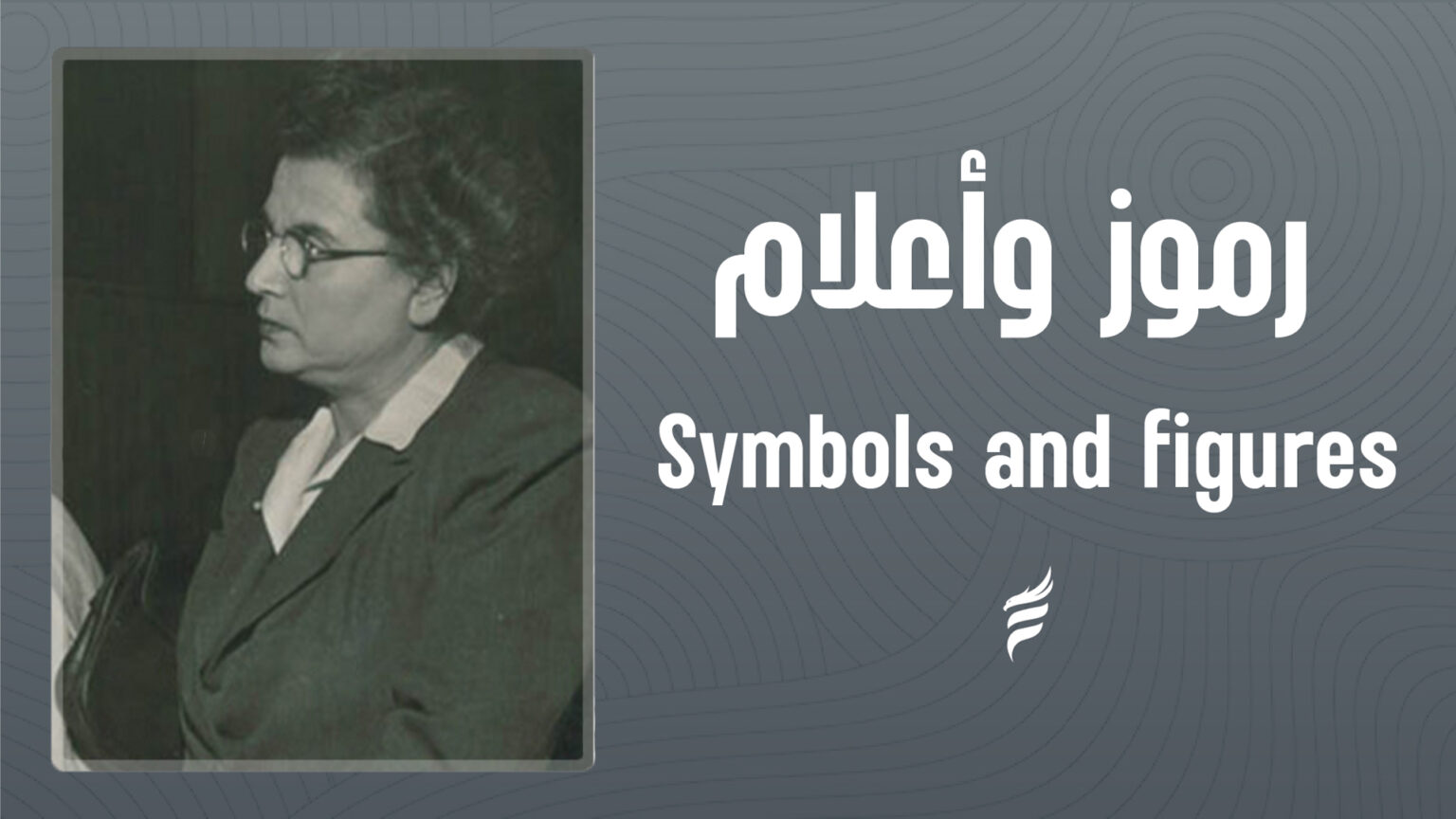
Alice Kandalaft is considered one of the most prominent women in modern Syrian history. Her name is linked to Syria’s presence on the international stage after independence, as she was the first Arab woman to represent her country at the United Nations and the first Syrian and Arab diplomat to enter the halls of the international organization in the 1940s.
Damascene Roots and Educational Background:
Alice Mitri Kandalaft was born in Damascus in 1892 to a prominent Damascene family from the Qaymariyya neighborhood in Old Damascus. She belonged to the Orthodox community.
Her father, the writer and poet Mitri Kandalaft, was one of the Syrian figures who contributed to the founding of the Arabic Language Academy in Damascus.
She received her primary and preparatory education at the Orthodox Patriarchal School in Damascus, then moved to Beirut where she completed her secondary education at the Syrian Protestant College, now known as the American University of Beirut.
Wilson Scholarship and Specialization Path:
In 1919, through the King-Crane Commission, which visited Syria, US President Woodrow Wilson awarded two scholarships to two Syrian women to pursue graduate studies in the United States.
The nationalist leader Abd al-Rahman Shahbandar nominated Nazik al-Abid and Alice Qandalaft for these scholarships.
While Nazik al-Abid’s father refused to allow his daughter to travel, saying, “This is America, not Homs,” Alice’s father agreed.
She traveled to New York, where she earned a master’s degree in educational psychology and school administration from Teachers College at Columbia University around 1921. She then returned to Syria to contribute to the development of girls’ education.
Engagement in Educational and Diplomatic Work:
During the 1920s and 1930s, she worked in teaching and school administration in Syria, Lebanon, and Iraq.
She served as a professor of education at the Teachers College in Damascus, as well as principal of the government teachers’ training school in Baghdad, principal of the private Ahliya School for Girls in Beirut, and principal of the Arts and Crafts High School in Damascus.
With the beginnings of the formation of the independent Syrian state, Fares al-Khoury chose her to be Syria’s representative to the United Nations, making her the first Arab woman to represent her country at the international organization.
In 1945, she attended the United Nations session on the status of women worldwide and delivered a speech addressing the situation of women in the Arab world in general, and in Syria in particular. She also advocated for Syria’s complete independence and the end of the French Mandate.
The Cultural and Political Salon:
In addition to her diplomatic activities, Alice Qandalaft established a cultural and social salon in 1942 at the Grand Umayyad Hotel in Marjeh Square, Damascus, which she owned at the time.
This salon quickly became a meeting place for a number of prominent Syrian political and cultural figures, including: Abd al-Rahman Shahbandar, Fares al-Khoury, Michel Aflaq, Salah al-Din al-Bitar, and Fakhri al-Baroudi, as well as a select group of writers and poets, including Omar Abu Risha.
Her Final Years and Legacy:
In 1947, she was Syria’s delegate to the first session of the United Nations Commission on the Status of Women.
She also contributed to the founding of the National League of Arab Women in 1945. After the union between Syria and Egypt in 1958 and the dissolution of political parties, her political life came to an abrupt end, and she left Syria for Lebanon.
It is worth noting that, for undisclosed reasons, her name was later erased from the records of the Syrian Ministry of Foreign Affairs.
She remained in Beirut until her death in the mid-1960s, where she was buried.
The Position of the Syrian Future Movement:
We in the Syrian Future Movement, while invoking the symbols of the Syrian state, believe that Alice Kandalaft represents a pioneering model of the Syrian woman who earned her place in political, diplomatic, and cultural work through competence and merit, not through any favor, benefiting from a rich Damascene cultural and social environment.
The Syrian Future Movement believes that reviving these historical figures is not merely a documentary act, but a national and political necessity for rebuilding Syrian national consciousness, based on accumulated experiences and lessons learned from the past to shape the country’s future.
The Movement views the “Symbols and Flags of the State in Syria” series as part of a national project to restore the prestige of the Syrian state, revive the model of statesmen and women capable of managing critical moments, preserving the country’s unity, and restoring its cultural and political standing.
Finally, despite her name being erased from official records at a later stage, Alice Kandalaft’s presence in the Syrian memory remains a landmark in the history of Arab and international women’s diplomacy.