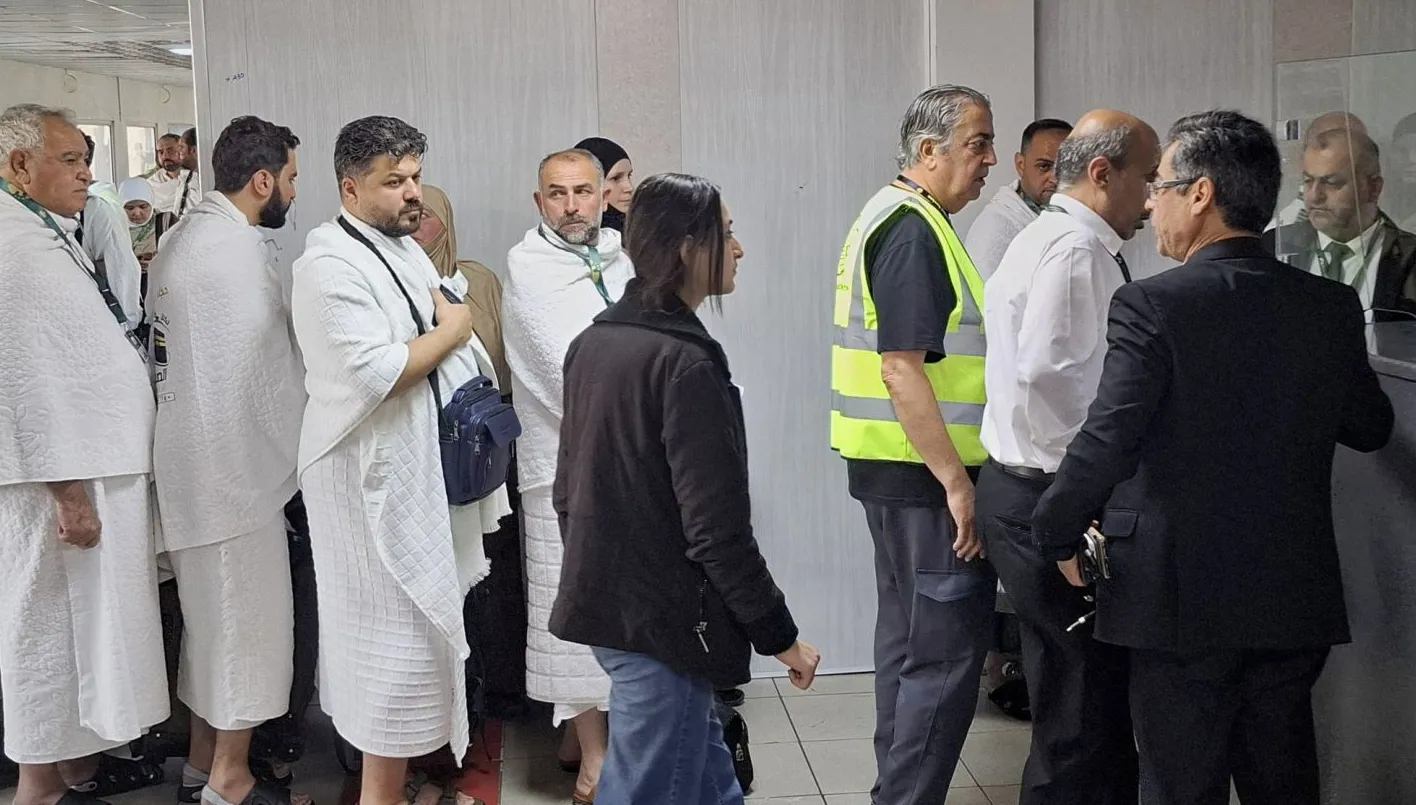
The Religious Office of the Syrian Future Movement is following with great appreciation and interest the announcement made by the Syrian Ministry of Religious Endowments and the General Authority of Civil Aviation and Air Transport, in coordination with the relevant authorities in the Kingdom of Saudi Arabia, regarding the resumption of flights for Syrian pilgrims for the 1447 AH/2026 CE Hajj season, confirming their continuation until May 21st.
These developments coincide with the announcement of the coordination for implementing the “Makkah Route” project starting next year, which will represent a significant leap forward in facilitating the performance of this religious duty.
The Religious Office of the Syrian Future Movement commends the considerable organizational efforts exerted by the Syrian Ministry of Religious Endowments and all relevant authorities to create a suitable environment for pilgrims’ travel this year. A remarkable smoothness was noted in the departure procedures from Damascus and Aleppo International Airports, described by sources as “among the smoothest in recent years.”
In this context, the Religious Affairs Office particularly commends the practical measures that reflected a high level of seriousness in addressing the pilgrims’ needs:
- Organized Transportation: The first flights departed from Aleppo Airport on Sunday, May 10, 2026, carrying 9,000 pilgrims, as part of a broader plan to transport the total number of pilgrims, which is 22,500.
- Supporting Infrastructure: A fully equipped hall has been designated at Damascus Airport, accommodating approximately 450 pilgrims and including dedicated areas for ihram (the state of ritual consecration), ablution, and prayer. This will contribute to enhancing the spiritual experience for pilgrims from the moment they leave their homeland.
The Syrian Future Movement commends the Syrian-Saudi cooperation in implementing the “Makkah Route” project, starting next year (2027/1448 AH). This project aims to enable pilgrims to complete all entry procedures to the Holy Land directly from Damascus or Aleppo airports, through specialized teams, allowing them to enter the Kingdom immediately upon arrival without any delays. This project, which is implemented in a limited number of countries, will represent a significant improvement to the Syrian pilgrim’s journey, provided it is implemented according to the highest standards.
It is worth noting that the experience of implementing similar projects in other countries has revealed the importance of prior training for Syrian personnel responsible for completing the procedures, to ensure that the “Makkah Route” does not become a new obstacle instead of a solution.
In fulfilling its constructive oversight role and out of respect for the sanctity of the Hajj pilgrimage, the Syrian Future Movement emphasizes the need to continue working to address some current practical obstacles, most importantly:
- Continued Coordination: Activating mechanisms for continuous coordination with the Saudi authorities throughout the Hajj season (not just during departure) to monitor the conditions of pilgrims in the holy sites, thus enabling a rapid response to any health or logistical emergencies.
- Equal Opportunities: Ensuring access to high-quality services (such as direct flights and modern terminals) for all pilgrims arriving from various Syrian governorates, especially those from the eastern and northeastern regions, which suffer from inadequate airport infrastructure.
The Syrian Future Movement hopes that the Ministry of Religious Endowments’ efforts will not be limited to the Hajj season alone, but will extend to developing the performance of all its affiliated facilities throughout the year, particularly concerning endowment matters, improving the discourse of the pulpits, and the financial management of religious institutions.
Based on the steadfast vision of the Syrian Future Movement, repeatedly expressed by its Religious Affairs Office in its statements and periodic research, it calls for:
- Managing the Hajj and Umrah pilgrimage according to quality and governance standards, and expanding the use of digital technologies to facilitate registration, follow-up, and the equitable distribution of pilgrims based on merit, not favoritism.
- Preparing a specialized national cadre, in cooperation with relevant universities, to train religious and social guides to accompany pilgrims. These guides should be proficient in languages (especially for serving the elderly), skilled in handling emergencies, and serve as ambassadors for the new Syrian civilization and its refined morals.
- Initiating planning for the launch of a comprehensive national Hajj platform that provides year-round services (including online awareness lectures, workshops on Hajj rituals, and a system for handling complaints from pilgrims’ families) in preparation for the upcoming season.
- Celebrating the return of pilgrims by hosting open meetings with the community (in places of worship and cultural centers) to share their experiences and relive the spirit of collective Hajj, thus strengthening social bonds and fostering spiritual refinement.
In conclusion: The Syrian Future Movement remains supportive of everything that would facilitate the pilgrims of the Sacred House of God and enable them to perform their religious duty with ease and dignity, and is engaged in strengthening cooperation with our brothers in the Kingdom of Saudi Arabia to achieve this noble goal, asking God Almighty to accept the pilgrimage of our pilgrims, to return them to the homeland safe and sound, and to bestow upon Syria goodness, prosperity and blessings.