
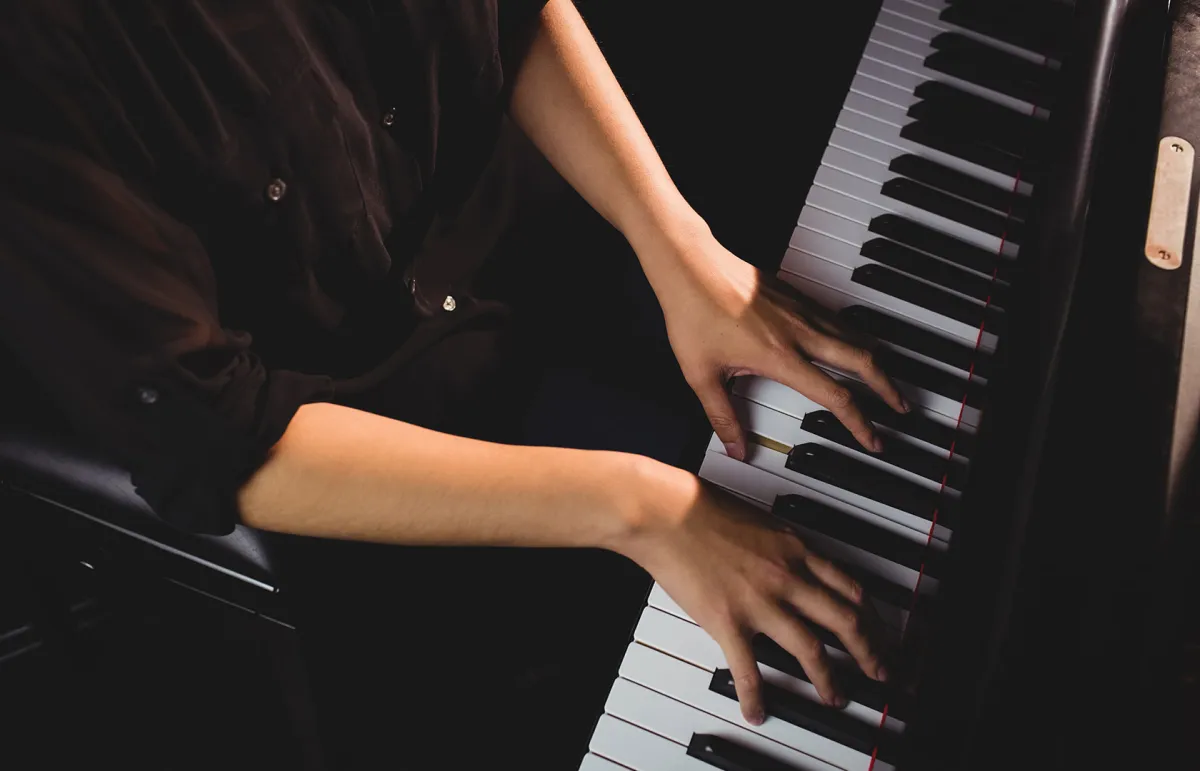
The Syrian Future Movement commends the global celebration of World Piano Day, which falls on Sunday, March 29, 2026, the 88th day of the year, named after the 88 keys of the piano. This day was established in 2015 by the German pianist and composer Niels Frahm, with the aim of celebrating the piano as a universal instrument of expression, promoting musical creativity, and holding events, performances, and educational programs worldwide.
The Syrian Future Movement appreciates the profound artistic and human value of this day, which embodies the convergence of Eastern traditions with Western innovation. It reminds us of Syria’s rich musical heritage, in which the piano is intertwined with authentic Syrian maqams, as seen in the works of the internationally renowned Syrian composer Malek Jandali – founder of “Piano for Peace” – who reinterpreted the oldest Syrian musical notation (Echoes of Ugarit) on the piano, transforming it into a message of peace and creativity that transcends borders.
The Syrian Future Movement affirms that the piano, in addition to being a musical instrument, is a globally recognized scientific and psychological tool. Neuroscience studies have proven that playing the piano activates both hemispheres of the brain, enhancing short-term and long-term memory, and improving attention, decision-making, and problem-solving abilities. Research from the University of Edinburgh and other studies have also shown that learning piano in childhood raises performance levels in mathematics and science, while in adulthood it reduces symptoms of depression and improves quality of life. In post-conflict contexts, World Health Organization reports and specialized music therapy studies have confirmed that group piano playing contributes to reducing symptoms of post-traumatic stress disorder (PTSD) by up to 70% in some cases, by promoting emotional regulation and social cohesion.
The Syrian Future Movement emphasizes that Piano Day comes at a pivotal moment in Syria’s transitional phase, as music represents a bridge to collective healing and national reconciliation. Syrians—with their cultural heritage dating back thousands of years—have the ability to transform this day into a symbol of rebuilding cultural identity, fostering youthful creativity, and confronting the effects of psychological trauma with sophisticated artistic tools.
Based on its comprehensive national vision and forward-looking perspective for building a unified Syria, the Syrian Future Movement proposes the following:
- Integrating piano and classical music education into the official school curriculum, along with establishing free programs in the provinces for youth and children, to foster emotional and cognitive intelligence as an investment in human capital, while respecting the religious beliefs of those who decline such programs.
- Supporting Syrian music institutes and establishing “Piano for Peace” centers, modeled after Malek Jandali’s initiative, dedicated to music therapy for victims of the conflict and community cohesion programs.
- Organizing annual national events on Piano Day, featuring joint performances by Syrian and international musicians, with a focus on integrating Syrian maqams with modern techniques to promote cultural diplomacy.
- Allocating resources for scientific research on the impact of music on psychological healing, in cooperation with international institutions, to position Syria as an Arab model for using the arts as a tool for sustainable development.
The Syrian Future Movement affirms that Piano Day is an invitation to rediscover Syria as a land of creativity and harmony. And the Syrians, with their ability to transform wounds into melodies, are capable of building a future that combines the authenticity of the past with the innovation of the future, in a modern state that upholds the values of beauty, peace, and equal citizenship.