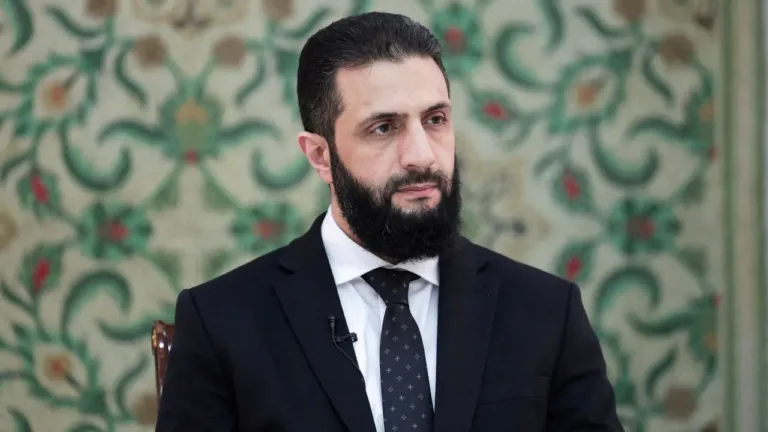
“The international community has failed Syria today, just as it has for the past 14 years… No international conference for Syria’s reconstruction has been held to date… Syria requires approximately $300 billion for reconstruction… and the government’s plan relies on reconstruction through investment.” — Raed Al-Saleh, Minister of Emergency and Disaster Management, speaking to Alhurra TV.
These statements frame the issue directly: Syria needs massive funds, yet the international community is not providing enough. However, attributing the delay in reconstruction solely to external “abandonment” fails to explain why the political opening toward the “new Syria” has not translated into a massive, sustainable international program. The question is not merely “Why isn’t the world paying?” but also: “Does the Syrian state possess the plan, institutions, and regulatory framework to receive and efficiently manage hundreds of billions of dollars?”
The scale of the challenge is indeed immense. According to World Bank estimates from October 2025, the cost of rebuilding damaged physical assets is approximately $216 billion—falling within a range of $140 billion to $345 billion. Thus, the discussion is not about a series of isolated projects, but rather the reconstruction of an entire country’s economy, infrastructure, and institutions.
First: From “Supporting Syrians” to Dealing with the Syrian State
Funds pledged at the Brussels conferences during the Assad era should not be viewed as financing for the Syrian state or as a vote of confidence in its institutional structure. The Seventh Brussels Conference (2023) and the Eighth Brussels Conference (2024) were primarily aimed at addressing the needs of Syrians within the country and supporting refugees, host countries, and host communities through the United Nations and international organizations. During this period, the regime remained politically isolated from Europe, and funding for comprehensive reconstruction remained outside the scope of cooperation with it.
The political landscape shifted following the fall of Assad. At the Ninth Brussels Conference on March 17, 2025, the transitional government—represented by Foreign Minister Asaad Al-Shaibani—participated in the Syrian government’s first official appearance in this series of conferences; the event was retitled “Standing with Syria: Meeting the Needs of a Successful Transition.” Yet, there was no surge in funding directed toward reconstruction. Total pledges amounted to approximately €7.5 billion in 2024 and €5.8 billion in 2025—sums that remained a mix of humanitarian aid and socio-economic recovery support for Syria and neighboring countries, rather than a comprehensive international reconstruction fund, as evidenced by the official 2025 financial pledge statement.
Furthermore, humanitarian funding itself remained under strain. In May 2026, the World Food Programme announced a 50 percent reduction in its emergency food assistance in Syria due to funding shortages. This demonstrates that donor fatigue, multiple crises, and budgetary pressures are genuine factors in the situation, though they alone do not explain the absence of a broad-scale reconstruction mechanism.
Second: The Question Changed After Assad’s Fall
During the Assad era, the political obstacle took precedence over the institutional one; Western nations were fundamentally unwilling to finance reconstruction led by that regime. However, following the political transition and the opening up to Damascus, the question became more direct: Does the new state possess the institutions, plans, and regulations necessary to manage massive financial inflows with efficiency and transparency?
This requirement is not unique to Syria. Since the 1990s, funding and aid institutions have increasingly linked support to “national ownership,” results, and institutional capacity. The Paris Declaration on Aid Effectiveness stipulates that recipient nations should lead their own development strategies and translate them into prioritized, monitorable programs. This brings “absorptive capacity” into play—the ability of institutions and the economy to receive funds and to implement and monitor projects without the financial inflow resulting in waste, corruption, or bottlenecks.
Third: Priorities Do Not Constitute a Comprehensive Roadmap
It is fair to acknowledge that the Syrian government did not remain without a declared framework. In March 2026, it issued the “Statement on Recovery Priorities for International Cooperation”—officially launched on April 2—which outlined four broad areas for recovery: restoring critical infrastructure, resuming essential services, strengthening socio-economic resilience, and rebuilding public institutions, all alongside the removal of landmines and remnants of war.
However, this framework emerged approximately fifteen months after the fall of the previous regime and more than a year after the Brussels 2025 conference, where the issue of recovery had already been formally raised. Most importantly, outlining general directions is not the same as having an actionable roadmap for the reconstruction of a country the size of Syria. A comprehensive plan requires an up-to-date damage assessment, the prioritization of projects by sector and geography, a phased timeline, cost estimates and funding sources, clearly defined responsibilities, a legal framework, and mechanisms for measurement, review, and accountability.
In fact, an official from the Ministry of Foreign Affairs’ International Cooperation Department stated in May 2026—during a meeting with representatives from 23 donor nations—that many projects remained small, fragmented, and disconnected from a comprehensive national recovery strategy. This statement clearly distinguishes between having mere “priorities” and possessing a national strategy that aligns projects, funding, and implementation into a unified path.
In March 2026, the World Bank approved a project to strengthen public financial management and government procurement in Syria. It noted that financial systems and processes still face significant challenges and that disciplined, transparent management of public funds is essential for building trust and mobilizing external financing. In other words, institution-building should not wait for physical reconstruction to conclude; rather, it must proceed in tandem from the very beginning.
In my December 2024 paper, “Strategic Reconstruction in Syria: Turning Challenges into Opportunities,” I outlined what creating such a roadmap entails: establishing short-, medium-, and long-term horizons; creating a unified database; developing multiple scenarios; linking the energy, water, transport, housing, and social services sectors; and subsequently comparing alternatives, identifying funding constraints, and periodically reviewing outcomes. The paper is not a ready-made plan for Syria’s reconstruction; rather, it outlines the methodology for developing such a plan, ensuring that urgent needs do not turn into… …isolated decisions lacking a long-term direction.
Fourth: Law and Trust Are Part of Financing
Reconstruction is not merely about cement and power plants. Long-term projects require clarity regarding property rights, compensation, procurement, arbitration, taxation, and the relationship between the investor, the state, and the local community. This sensitivity is particularly evident in matters of housing, land, and ownership. In a report issued on September 27, 2026, Human Rights Watch noted that some reconstruction deals were proceeding ahead of a comprehensive legal framework that would guarantee participation, compensation, and grievance mechanisms. This does not imply a total legal vacuum, but rather that the legal certainty required for a large-scale reconstruction process remains incomplete.
Fifth: Lessons from Other Experiences
International experiences do not offer a ready-made formula, yet they illustrate why donors insist on planning and institutional frameworks. In Afghanistan, reports by SIGAR on the lessons of twenty years of reconstruction revealed that spending which exceeded the state’s and the economy’s absorptive capacity contributed to waste, corruption, and poor outcomes. In Lebanon, funding from the 2018 “CEDAR” conference was contingent upon reforms in the electricity, public finance, and governance sectors; the International Monetary Fund emphasized that implementing these reforms was essential to unlock the funds, yet the stalling of these reforms prevented pledges from translating into an investment program of the announced scale.
As for Ukraine—despite the exceptional political and security priority it holds for Europe—it presents a counter-example to the “money first, plan later” approach. The “Ukraine Facility” links payments to the implementation of the “Ukraine Plan” and to specific reforms and objectives. Rwanda’s experience offers a lesson in a more specific area: the national coordination of aid and its alignment with state plans. The OECD has documented Rwanda’s transition toward government-led aid coordination that links external funding to national priorities, all while the state continued to strengthen financial management and domestic revenue mobilization. The lesson here is not that Rwanda “eliminated corruption,” but rather that aid and investment operated within a framework where the state led the planning and built its own financial and administrative capacities.
Sixth: Can Syria be rebuilt through foreign investment alone?
This is where the clearest problem arises with the notion that “the government’s philosophy is based on reconstruction through investment.” While foreign investment is essential for a country requiring hundreds of billions—funds its own treasury cannot provide—it is not synonymous with reconstruction financing, nor can it replace the state, public funding, or concessional finance.
The reason is economic rather than ideological. Private capital seeks projects capable of recouping the initial investment and generating a return within an acceptable risk profile. Consequently, sectors like energy, telecommunications, ports, and certain real estate or industrial ventures appear more attractive than a school in a ruined village, a sewage network in an impoverished area, a public hospital, or a local road that generates no direct revenue. While the social value of such projects may be immense, their commercial return is often weak or long-term.
Even international institutions that strongly advocate for private sector participation do not propose it as a complete substitute for the state. The World Bank’s “Maximizing Finance for Development” approach is based on attracting private finance wherever it is feasible and sustainable, while utilizing public resources where private-sector solutions are unsuitable. Similarly, the International Monetary Fund views public and private infrastructure investment as complementary rather than mutually exclusive. In fragile states, the OECD notes that risks—along with weaknesses in the regulatory environment, institutions, and infrastructure itself—limit the capacity of private capital to bridge the financing gap.
This lies at the heart of the argument I presented in the paper “The Neoliberal Economy in the Land of the Syrian Ordeal: A Disaster to Be Avoided”: the problem lies not with the private sector or foreign investment per se, but with turning them into a substitute for the state at a time when its institutions are at their weakest. Rebuilding Syria requires a unified national plan that combines public revenues, grants, concessional financing, public investment in infrastructure and services, and—where feasible—domestic and foreign private investment and partnerships. Leaving reconstruction solely to the profit motive would channel funds toward the most profitable sectors rather than the areas and sectors in greatest need.
In Summary
The stalled reconstruction of Syria cannot be reduced to the notion of the international community “letting the country down.” External funding remains far below the scale of the catastrophe, humanitarian aid itself faces severe shortfalls, and donor nations act according to their own interests, priorities, and political calculations. However, this does not absolve the transitional authority of responsibility for the tasks within its own purview: building institutions, establishing clear rules, formulating an actionable national strategy, and determining how, where, and in what order funds will be utilized once they arrive.
It took the government over a year to present a general framework for recovery priorities, yet these priorities have yet to be translated into a comprehensive roadmap detailing projects, costs, timelines, funding sources, responsibilities, and oversight mechanisms. Furthermore, relying on foreign investment as the primary engine for reconstruction is insufficient for a country facing the scale of destruction seen in Syria; private investment naturally gravitates toward sectors offering the highest returns, whereas state reconstruction requires long-term public and developmental funding for infrastructure, services, and areas less attractive to capital.
Responsibility for the delay is shared, though not equally. The international community is called upon to provide greater and more sustainable funding, while the Syrian authority must ensure that such funding is viable and effectively utilizable—rather than waiting for the funds to arrive before deciding how to spend them. Reconstruction does not begin the day the money arrives; it begins beforehand with the construction of a state capable of defining its priorities, managing its resources, and holding itself accountable for outcomes.
More than a year and a half after the fall of the previous regime, continuing to manage these issues through a patchwork of isolated initiatives and sporadic contracts is becoming increasingly dangerous.
The longer the national plan is delayed, the greater the likelihood that the direction of reconstruction will be dictated by projects proposed by investors, rather than by the state first determining Syria’s needs and then seeking the best means to finance and implement them.
In that scenario, the question becomes not only “Who let Syria down?” but also “Did the Syrian state do everything necessary to ensure it would not be let down again?”