
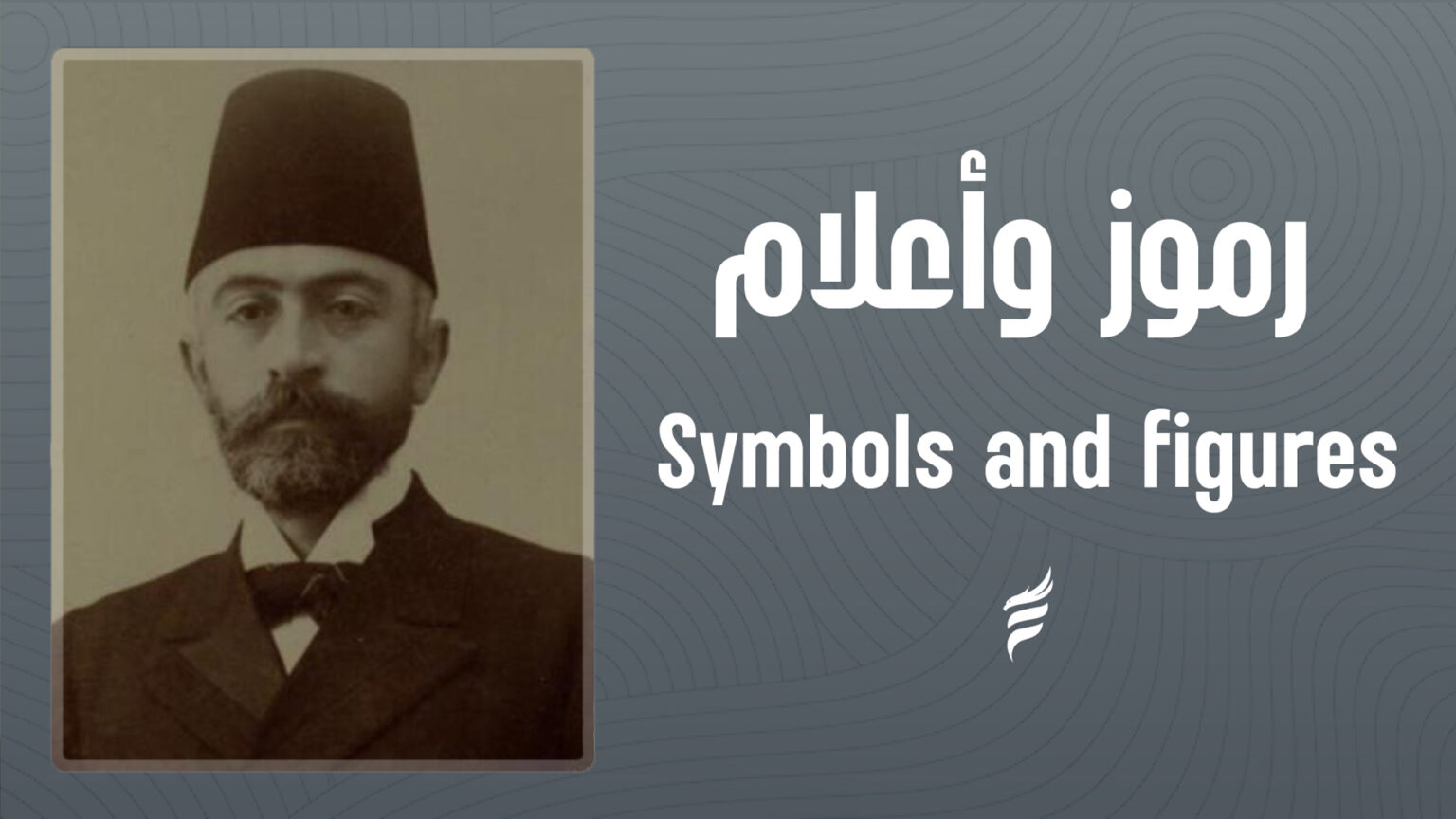
Muhammad Fawzi Pasha al-Azm is considered one of the most prominent figures who combined Ottoman administrative expertise with Syrian national consciousness during a pivotal period in the country’s history.
His name is associated with major construction projects in Damascus, as well as a pioneering political and legislative role that culminated in his election as the first president of the Syrian General Congress, the first elected legislative body in modern Syrian history.
Early Life and Education:
Muhammad Fawzi Pasha al-Azm was born in Damascus in 1858 into the distinguished al-Azm family, which played a prominent role in the administration of Damascus during the Ottoman era.
Sources differ on his father’s name; some mention Muhammad Pasha al-Azm, while others indicate Ali Pasha al-Azm. His father was a member of the Syrian Provincial Council.
He received his education in Ottoman government schools, eventually obtaining the Rushdiya certificate, equivalent to a secondary school diploma, and mastered Arabic, Turkish, and French.
His Administrative Career:
He began his career in 1879 as a clerk in the office of the Syrian Provincial Council.
He remained in this position until 1885, before progressing through a number of important administrative posts.
He was appointed Director of Populations for the province of Syria between 1886 and 1891.
Then he assumed the mayorship of Damascus between 1892 and 1900, a position that witnessed his most prominent administrative and urban development achievements.
An Urban Renaissance in Damascus:
Muhammad Fawzi Pasha al-Azm left a clear mark on the development of Damascus during his tenure as mayor.
Among the most prominent projects he oversaw were:
- Restoration of the Umayyad Mosque:
He supervised the restoration of the Umayyad Mosque after the great fire that struck it in 1893, and the reconstruction of its damaged sections.
- Development of the al-Hamidiyah Souq:
He replaced the traditional wooden roof of the souq with an iron and zinc roof, with the aim of reducing fire hazards and improving the urban structure.
- Construction of Al-Hamidi Hospital:
He oversaw the construction of Al-Hamidi Hospital in the Baramkeh neighborhood, which later became known as the National Hospital or the Strangers’ Hospital.
- Ain al-Fijah Water Project:
He contributed to bringing water from Ain al-Fijah to Damascus, one of the most important service projects in the city’s modern history.
- Construction of the Municipality Building:
In 1896, he oversaw the construction of the Damascus Municipality Building on the western side of Marjeh Square.
His Role in the Hejaz Railway:
He was appointed Director of Construction for the Hejaz Railway project between 1901 and 1909.
He contributed to the implementation of one of the largest strategic projects in the Levant during that period.
His Status in the Ottoman State:
Muhammad Fawzi Pasha al-Azm was among the Arab figures who enjoyed the trust of the Ottoman Sultan Abdul Hamid II.
He rose through the ranks of the civil service until he was granted the title of Pasha in 1896.
Then, in 1901, he was promoted to the rank of Rumeli Beylerbeyi, one of the highest civil ranks in the Ottoman Empire, equivalent to the military rank of Lieutenant General.
He also received a number of prestigious decorations, most notably:
The Order of the Ottoman Empire with Collar, Third Class (1893).
The Order of the Medjidie with Sash, First Class (1904).
From Istanbul to the Ottoman Parliament:
In 1911, he was appointed Mayor of the Beyoğlu district in Istanbul.
In 1912, he was elected as a representative for Damascus in the Ottoman Parliament.
He also assumed the position of Minister of Religious Endowments (Awqaf) in the government of Ahmed Muhtar Pasha on July 21, 1912, but the government lasted only a few months.
He was re-elected as a member of parliament in 1914.
First Speaker of the First Syrian Parliament:
After the end of World War I and the fall of the Ottoman Empire in 1918, he became an advisor to King Faisal bin Hussein.
On June 3, 1919, the Syrian General Congress convened in Damascus, becoming the first elected legislative body in Syrian history.
The Congress comprised 120 members representing the various regions of Greater Syria.
In its first session, the Congress elected Muhammad Fawzi Pasha al-Azm as its Speaker and Abd al-Rahman al-Yusuf as its Deputy Speaker.
He remained in office until his death in Damascus on November 14, 1919.
He was succeeded as Speaker by Hashim al-Atassi and Muhammad Rashid Rida.
His Death and Political Legacy:
Muhammad Fawzi Pasha al-Azm died in Damascus in 1919 at the age of 61.
Although some sources indicate his death in 1920, most historical studies suggest 1919.
The political leadership of the family then passed to his only son, Khalid al-Azm, who later became one of the most prominent Syrian prime ministers, serving six terms between 1940 and 1962.
Historical Significance:
Muhammad Fawzi Pasha al-Azm represents a distinguished example of a statesman who successfully transitioned from Ottoman administration to the era of Syrian national establishment without losing his competence or political presence.
He combined administrative, architectural, and legislative roles, contributing to the building of the first Syrian state institutions. He also left behind architectural landmarks that remain visible in Damascus to this day.
His election as president of the General Syrian Congress remains a pivotal moment in the history of Syrian constitutional and parliamentary life.
The Syrian Future Movement’s Position:
We in the Syrian Future Movement, while recalling the symbols of the Syrian state, consider Muhammad Fawzi Pasha al-Azm a pioneering example of the early statesmen who successfully employed their high administrative and legislative competence to lay the foundations of Syrian national institutions, efficiently and deservedly transitioning the country from Ottoman administration to the realm of Arab founding sovereignty.
The Syrian Future Movement believes that revisiting these historical figures is not merely a documentary act, but a national and political necessity for rebuilding Syrian state consciousness, based on accumulated experiences and lessons learned from the past, to understand the dialectical relationship between administration and rights during the transitional phases of building the country’s future.
The Syrian Future Movement views the “Symbols and Figures of the State in Syria” series as part of a national project to restore the concept of the Syrian state, revive the model of statesmen and women capable of guiding legislative processes in critical moments, preserve the country’s unity, and restore its standing.
This is its cultural and political development through genuine representative institutions.
Finally, despite subsequent attempts to erase Syrian institutional and historical memory, the presence of Muhammad Fawzi Pasha al-Azm as the first speaker of the first Syrian parliament remains a landmark in the history of constitutional and parliamentary establishment, and a testament to the profound early legal and political awareness of Syria’s leading figures.