
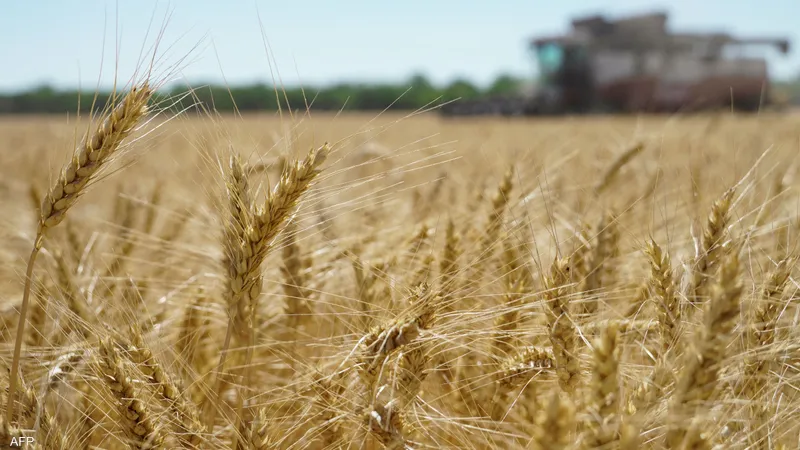
The Syrian Future Movement is closely following Decision No. 94 of 2026 issued by the Ministry of Economy and Industry, which set the purchase price of a ton of first-grade durum wheat at 46,000 Syrian pounds (equivalent to approximately $300-$340 USD at the parallel exchange rate), in preparation for the 2026 harvest season.
This decision coincided with the Syrian Grain Corporation’s announcement of a plan to rehabilitate 37 silos, 98 storage facilities, 14 warehouses, and 27 open-air storage centers, with the aim of strengthening strategic reserves and achieving self-sufficiency, thus eliminating the need for imports.
Based on the Syrian Future Movement’s methodology of “supporting national solutions without endorsing any party unconditionally, and criticizing what threatens the state-building process without antagonism,” this statement is issued to assess this decision within its economic and social context, taking into account the challenges facing the agricultural sector during this recovery phase.
First, the Syrian Future Movement acknowledges the positive intentions behind this decision, namely the pursuit of food security and reduced reliance on imports. The Movement also appreciates the government’s efforts in developing storage infrastructure as a necessary step for receiving and preserving the harvest. However, we note that these intentions remain insufficient unless accompanied by equitable policies that take into account the realities faced by farmers and the escalating costs of production.
Second, the Syrian Future Movement warns of a significant gap between the set price and actual production costs.
While the set price for wheat has increased by 30% compared to last year (32,000 Syrian pounds in 2025), the costs of production inputs (fertilizers, improved seeds, fuel, and labor) have multiplied several times over in recent years, while the purchasing power of the Syrian pound continues to erode. This gap, as demonstrated by the reactions of farmers in the Hasakah, Deir ez-Zor, and Raqqa governorates, threatens to undermine the sustainability of the agricultural sector and encourage farmers to abandon cultivating this strategic crop or smuggle their produce to higher-priced areas or abroad, thus jeopardizing food security.
Third, the Syrian Future Movement recalls its previous statements and research published on its official website, which emphasized the necessity of adopting integrated and equitable agricultural policies, including:
- The study “Priorities for Reconstruction in Syria” (dated December 19, 2024), which called for restructuring agricultural subsidies and ensuring they reach those who deserve them.
- The statement “The Worsening Waste Crisis in Aleppo” (dated May 17, 2026), which stressed that fundamental solutions cannot be achieved through centralized decisions alone, but rather through the involvement of the local community and experts.
Fourth, the Syrian Future Movement bases its assessment on on-the-ground observations and regional and international comparisons:
- Compared to the Turkish market (March 2026): The price of wheat ranges between €327-€374 per ton with significant government subsidies, creating an incentive gap that favors Turkish farmers.
- Compared to global prices: The global price of wheat is around $260 per ton, lower than the Syrian price. This means that Syrian farmers are required to produce at a higher cost than the global market price without corresponding subsidies.
- Farmers’ demands: Farmers in Deir ez-Zor, Raqqa, and Hasakah are calling for a fair price of $500 per ton, arguing that the current price does not even cover production costs.
Fifth, the Syrian Future Movement presents a set of urgent and realistic recommendations to address this crisis, ensure the success of the agricultural season, and achieve food security:
- The wheat purchase price must be reconsidered and linked to a flexible exchange rate (in US dollars or a basket of currencies) to guarantee its true value, with a fair price of no less than $500 per ton, based on a thorough study of production costs.
- An immediate support package should be provided to farmers by supplying production inputs (fertilizers, improved seeds, pesticides) at subsidized prices, allocating sufficient quantities of diesel fuel for the agricultural season, and expediting the provision of interest-free, low-interest agricultural loans.
- A tripartite national committee (government, farmers’ union, and agricultural economics experts) should be formed to monitor the implementation of the decision, evaluate its impact, and submit regular, public reports on the wheat procurement rate, quality, and farmer satisfaction.
- The role of local councils should be activated in monitoring procurement and storage operations and overseeing the distribution of subsidized inputs to ensure transparency and combat corruption.
In conclusion, the Syrian Future Movement reiterates that food security is a red line, and that Syria’s stability depends on the Syrian farmer’s ability to live with dignity through their hard work. Therefore, the transitional government is called upon to listen to the farmers’ voices and reconsider its decision. The greatest hope lies in Syria’s ability to feed itself, and this will only be achieved with a dignified and respected farmer. For its part, the Syrian Future Movement will continue to closely monitor this issue and will issue periodic reports on the extent to which the relevant authorities are committed to achieving social justice and sustainable development.