
This isn’t the first time Syria has faced a pivotal moment.
But it is the first time it has faced such a moment, with its hand in the decision-making process, its eye on the future, and its heart with its citizens.
After the fall of a regime that drained the country for decades, we now stand before an exceptional opportunity to redefine Syria’s position within its regional environment. At the heart of this opportunity lies the railway project and the “Four Seas Corridor” initiative.
In recent weeks, we have witnessed remarkable developments:
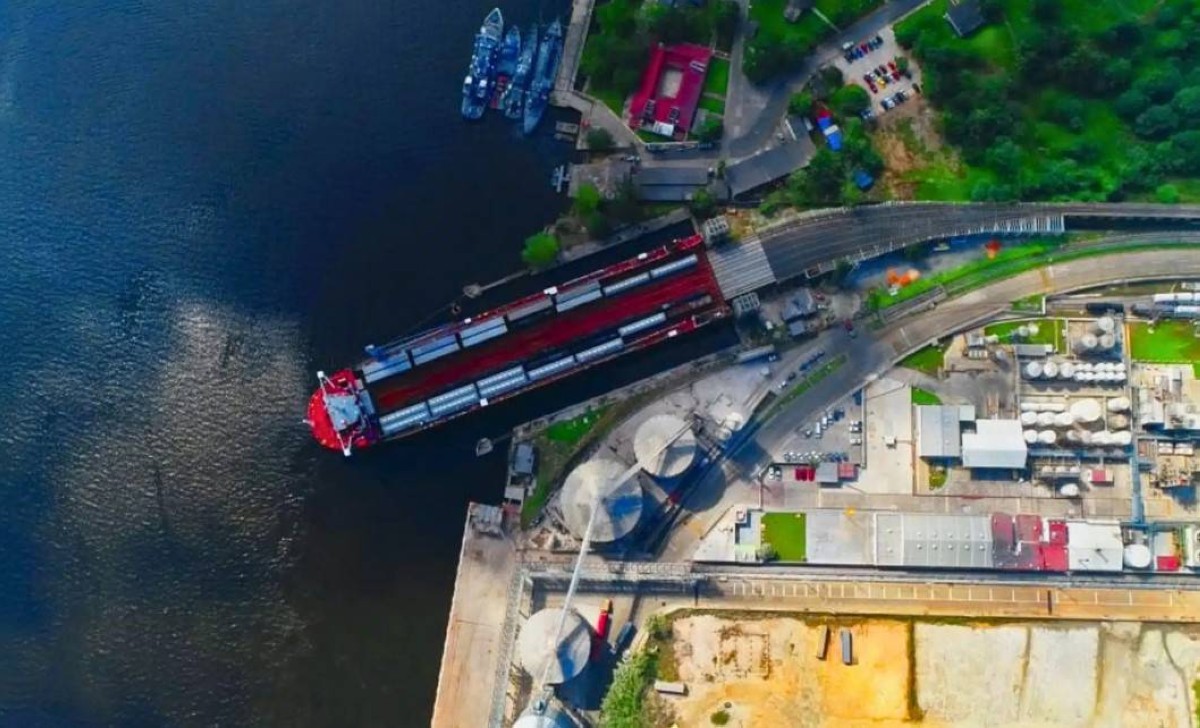
The effort to reactivate 350 kilometers of border railway lines between Turkey and Syria, the signing of a trilateral memorandum of understanding with Jordan and Turkey, and the revival of discussions about a strategic corridor linking the Arabian Gulf to the Mediterranean Sea through our territory.
These developments can be seen as indicators of a potential geostrategic shift, transforming Syria from a “battleground” to a “connecting hub.”
However, for those who believe that politics is not merely about maps and ports, but rather a relationship between people and their authority, we ask a fundamental question: What model of the state will these projects embody? Will it reproduce the “containment” model practiced by the former regime, where the state acts as a harsh father figure, swallowing up society and suppressing its will? Or will it be an instrument for transitioning to the “partnership and integration” model that we in the Syrian Future Movement are working towards?
Let’s be clear: the danger of a return to the containment scenario is real.
When contracts worth billions of dollars are managed without transparency, when transportation revenues are concentrated in the hands of elites without oversight, and when chambers of commerce, NGOs, and unions are excluded, we are not striving to build a state, but rather to entrench a new form of rent-seeking under the guise of development.
Economic experts have warned that reconstruction costs are estimated at more than $200 billion (according to World Bank estimates), amidst a massive funding gap.
In such a situation, major projects become easy prey for corruption and cronyism, and this is something we must not allow.
But there is another scenario, the partnership and integration scenario, which is what we are working towards.
How can it be achieved?
First, by courageously confronting geopolitical realities.
We cannot discuss strategic corridors while ignoring the continued presence of external forces on our land.
The American presence east of the Euphrates, the Russian bases, and the remaining militias, as in Suwayda, are all factors that could hinder or redirect these projects.
Therefore, we demand that any regional agreements in the transportation sector be transparent and public, that they prioritize the supreme Syrian interest above all else, and that they be based on the principle: “No development corridors without full sovereignty.”
Secondly, we must acknowledge that state-building begins with transitional justice.
How can we demand an “independent national authority” for the transportation sector in a country still suffering from deep divisions and former militias that have not fully integrated into state institutions? The answer is: it is impossible.
Therefore, the first practical step is to implement genuine transitional justice that restores trust among the citizens and creates a solid foundation for the establishment of independent institutions.
Without this, any talk of “partnership” will be empty rhetoric.
Third, by establishing a national authority for the railway sector, comprising representatives from the state, independent experts, representatives from the private sector, chambers of commerce and industry, and civil society organizations (while working to build the capacity of these organizations, which has been weakened by decades of repression).
This authority must also possess genuine oversight powers, not merely nominal advisory roles.
Fourth, by adopting a transparency charter that mandates the publication of every contract, budget, and performance report on a single electronic platform, allowing for independent review by specialized local and international organizations.
The Syrian people, who have paid a heavy price to regain their freedom, have the right to know how their resources are being invested.
Fifth, by ensuring the equitable distribution of transportation revenues.
Here, we specifically propose that each governorate through which the railway lines pass receive a fair share of the transportation revenues generated from crossing its territory, to be allocated to local development funds managed in partnership with local councils and civil society organizations.
Sixth, by holding a national conference on “Transport and Development”—not a closed government conference, but a comprehensive platform for academics, experts, activists, and representatives of local communities and the private sector—to produce a participatory vision binding on the government.
We know these proposals are not ideal.
Syrian civil society today is weak and divided, trust among the nation’s various components is low, and the heavy legacy of tyranny cannot be erased by decree.
But the alternative is to continue with the containment scenario we know, or to slide into a confrontation scenario favored only by Syria’s enemies.
Speaking of the “Four Seas Corridor” project, which is a true test, we find US envoy Thomas Barrack saying that Syria possesses “the geographical and geopolitical capacity to be part of the solution” to the region’s energy crises.
This is true, but capacity alone does not create the future.
Only genuine political will, a transparent institutional model, transitional justice, and a civil society that we are gradually rebuilding are indispensable elements.
Here in the Syrian Future Movement, we believe that the true success of these projects will be measured by one question: Did the Syrian citizen, in his village and city, feel that these projects made him a partner, subject to the law alongside the state, and not subject to the state above the law?
This is the essence of what the head of the Syrian Future Movement, Dr. Zaher Badran, called for under the concept of “consultation” from the early months of liberation and the fall of the Assad regime: a consensual democracy with a national framework, based on genuine consultation, justice, development, and institution-building.
It is a practical model that we are building, step by step, station by station, until it becomes a homeland for all.
Finally, we have a golden opportunity before us, but it is not guaranteed. It requires all of us—leadership and people, institutions and civil society—to join hands and build the Syria that it deserves, and that its people deserve.