
Introduction:
In October 2026, Norway and the Netherlands announced financial pledges to a Multi-Donor Trust Fund (MDTF)—established by the World Bank at the request of the Syrian authorities—to support reconstruction in key sectors, particularly health and energy.
While this development marks a significant step toward reintegrating Syria into the international financial system, it raises fundamental questions regarding the adequacy of these pledges, the efficacy of international financing mechanisms in post-conflict contexts, and the capacity of a transitional government to translate promises into tangible achievements.
This article does not aim to celebrate or disparage the fund; rather, it seeks to deconstruct its mechanisms, analyze its figures, and evaluate its prospects for success in light of similar experiences and the literature on international political economy.
First: Theoretical Framework:
The financing dilemma in Syria cannot be understood in isolation from the literature on post-conflict economics and development finance.
This body of literature highlights three core paradoxes that confront any reconstruction fund:
The First Paradox: The Paradox of Timing. International funding often arrives well past the peak of need, as donors tend to wait for a level of “political stability” that may not materialize until years after the conflict has ended. Consequently, funds arrive only when needs have intensified and the costs of addressing them have multiplied. The second paradox—the “capacity paradox”—arises because reconstruction funds presuppose the existence of national institutions capable of absorbing funding. However, these very institutions are often casualties of the conflict itself. This creates a “capacity gap” that either hinders implementation or compels donors to rely on external organizations, thereby undermining national ownership.
The third paradox—the “conditionality paradox”—stems from the fact that international funding bodies impose rigorous standards for transparency and financial oversight. While such measures are essential for combating corruption, in fragile contexts, they can become obstacles if no national institutions exist that are capable of meeting them. This point was highlighted by the Institute for State Effectiveness, which noted that “the problem is not the conditions themselves, but the gap between those conditions and the institutions capable of fulfilling them.”
These three paradoxes explain why a gap between pledges and actual disbursements is a structural feature of reconstruction funds, rather than an exception.
Second: The Scale of Need
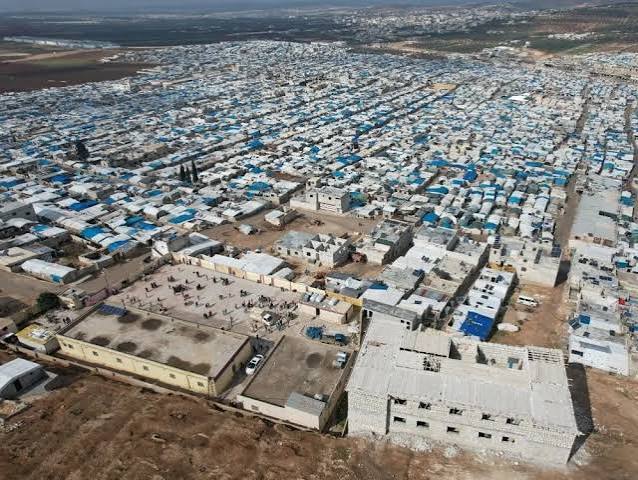
It is impossible to evaluate the pledges made to the new fund without grasping the scale of the needs facing the Syrian economy. In October 2025, the World Bank estimated the cost of reconstructing damaged physical assets at approximately $216 billion, with a projected range of $140 billion to $345 billion.
This total is broken down as follows: $75 billion for residential buildings, $59 billion for non-residential facilities, and $82 billion for infrastructure. Approximately one-third of Syria’s total pre-conflict capital has been damaged, with direct losses to physical assets reaching $108 billion. Infrastructure sustained the heaviest damage, accounting for 48% of the total—equivalent to $52 billion.
Real GDP declined by 53% between 2010 and 2022, while nominal GDP fell from $67.5 billion in 2011 to $21.4 billion in 2024.
Regarding social indicators, data from the Syria Development Fund for the first quarter of 2026 reveal that more than 80% of Syrians live below the poverty line. The general unemployment rate exceeds 50%, with youth unemployment reaching 60%. Furthermore, approximately 15 million people require assistance to meet their basic needs, while cumulative economic losses are estimated at $800 billion.
These figures imply that any international fund—regardless of the scale of its pledges—will remain limited in the face of such immense need. Its success cannot be measured merely by the amount of capital raised, but rather by its capacity to catalyze additional funding and build donor confidence.
Third: Chronological Overview
From the Former Trust Fund to the New Fund:
The story of international financing for Syria’s reconstruction did not begin in a vacuum. Since 2013, the Syria Recovery Trust Fund (SRTF) has served as a primary financing mechanism, reaching over 18 million beneficiaries through approximately 150 projects across sectors including health, water, electricity, agriculture, and food security. This fund was established as an entity “independent of other international institutions, reflecting the founders’ intention to prevent the former Syrian regime from gaining control over it.”
However, having been created in the context of the conflict, the fund operated through non-governmental organizations and local councils rather than the central government. It remained more of a humanitarian tool than a developmental one—which explains why it failed to bring about a qualitative shift in the Syrian economy.
2025: Political and Economic Transformations
The fall of the Assad regime on December 8, 2024, opened a new chapter. The year 2025 witnessed a series of developments:
March 17, 2025: Norway announced a contribution of at least 400 million Norwegian kroner (approximately $38 million) to support Syria.
December 8, 2025: Norway pledged an additional 55 million kroner ($5.4 million) to the Aid Fund for Syria (AFS).
October 21, 2025: The World Bank released an assessment report estimating the cost of reconstruction at $216 billion. 2026: Launch of the New Fund
In April 2026, the Syrian delegation concluded its Spring Meetings with the World Bank, expressing an interest in the Bank’s contribution toward establishing a multi-donor trust fund. On October 13, 2026, Syrian Minister of Finance Mohammad Yusr Barnieh and the Governor of the Central Bank of Syria met with World Bank President Ajay Banga to discuss preparations for the fund’s launch, noting that the total value of the grants provided had reached approximately half a billion dollars.
On October 14, 2026, Norway pledged approximately 90 million kroner ($9.5 million), and the Netherlands announced an allocation of 15 million euros, with the fund expected to become operational within 2026.
2026: Enhancing Transparency and Financial Inclusion
In a move reflecting a shift in Norwegian policy, Oslo announced in April… 2026, the ban on its sovereign wealth fund (valued at $2.2 trillion) investing in Syrian bonds was lifted. The Syrian Minister of Finance welcomed this decision, describing it as “a strong indicator of the international community’s growing confidence in the economic trajectory and the reform program.”
Fourth: A Critical Assessment
- The Funding Gap:
The pledges announced thus far—$9.5 million from Norway and €15 million from the Netherlands—amount to approximately $26 million.
When compared to the $216 billion required for reconstruction, these current pledges cover only 0.012% of the total need.
This suggests that, in its initial phase, the fund will serve as little more than a symbolic tool to attract further financing, rather than a fundamental solution. - The Collection Gap: Only 46%
The issue is not limited to the scale of the pledges; there is also a gap between pledges and actual receipts. The Syrian Development Fund (SYDF), launched in September 2025, recorded $83 million in pledges, yet actual collections reached only $41 million by March 31, 2026—a collection rate of just 46%. This gap highlights the practical challenges involved in converting promises into tangible funds, and it may signal similar difficulties that the new fund could face. - The Ownership Gap: Who is in the lead?
A fundamental question remains: who is steering the fund—the donors or the Syrian government? In his statement, Norwegian Minister of International Development Åsmund Aukrust emphasized “the importance of Syrians leading the reconstruction efforts in their own country, with the support of the international community.”
However, in practical terms, the governance mechanism remains unclear—particularly regarding the government’s authority to set priorities versus the preferences of donors. - The Transparency Gap:
The new fund does not appear to include civil society representation within its governance and oversight mechanisms. This is a dangerous void, as societal oversight is the only guarantee that funds will reach those who truly need them, and that the fund will not be transformed into a tool for distributing privileges among networks of influence.
Fifth: Forward-Looking Recommendations:
At the Government Level:
It is not enough for the government to simply receive funding; it must also build the institutional capacity required to manage it. This entails:
- Establishing a national unit for coordinating international funding—one capable of developing project proposals that meet World Bank standards, managing communication with donors, and coordinating efforts.
- Developing a national recovery plan with clear priorities, identifying the most urgent sectors (such as energy, health, and education), establishing an implementation timeline, and defining specific responsibilities.
- Ensuring full transparency in the management of funds by publishing periodic reports on expenditures and project outcomes, and subjecting these to oversight by the Audit Bureau and the Supreme Financial Audit Authority.
At the Donor Level:
The international community must recognize that the reconstruction of Syria is not an act of charity, but rather an investment in the stability of the region. This requires:
- Shifting from grants to investment guarantees to encourage the private sector to invest in Syria, utilizing mechanisms such as political risk insurance and investment guarantees.
- Linking support to the fulfillment of reform milestones, while providing parallel technical assistance for capacity building—rather than imposing conditions without supporting their implementation.
- Expanding the scope of the fund to include productive sectors (agriculture, industry, renewable energy), rather than focusing solely on basic services.
At the level of civil society:
The fund cannot succeed without effective societal oversight. This requires:
- Ensuring the representation of civil society organizations within the fund’s governance and oversight mechanisms, to guarantee that priorities reflect the needs of citizens rather than the preferences of donors or the government.
- Building the capacity of local organizations to monitor projects and evaluate their impact, through training and funding programs.
- Engaging the local private sector in project implementation to foster entrepreneurship and create job opportunities.
At the level of the media:
Syrian media must play an oversight role by monitoring the fund, publishing reports on funded projects, and exposing any instances of corruption or the squandering of public funds. This requires:
- Training journalists to investigate issues related to international funding and development projects.
- Making information about the fund accessible to journalists and researchers via a transparent online portal.
- Protecting journalists who expose corruption, to ensure the independence of such oversight.
Conclusion:
While the multi-donor trust fund represents an important step toward reintegrating Syria into the international financial system, it falls short of meeting the scale of the challenge. The gap between the $26 million in initial pledges and the $216 billion in actual needs is too vast for any single fund to bridge on its own.
Ultimately, the success of this fund will not be measured by the amount of capital it raises, but rather by its ability to catalyze additional funding, build donor confidence, and translate pledges into projects that tangibly improve the lives of Syrians. This requires political will, sound governance, and a genuine partnership between the government, donors, and civil society. Without these conditions, the fund will remain merely a deferred promise rather than a turning point in the recovery process.