
The Syrian Future Movement is following with great concern the mounting warnings from international experts and institutions regarding the risks of returning displaced persons to their home areas before those areas are adequately prepared—a process envisioned under the “Syria Without Camps” initiative, which the transitional government seeks to implement.
The Syrian Future Movement views these warnings not as a questioning of the initiative’s noble intent, but as a sincere call to ensure that any return is both sustainable and dignified—preventing a scenario where families are merely moved from a tent to a ruin, or from one state of displacement to another.
The Syrian Future Movement maintains that the success of this vision depends on the proper sequencing of priorities: the creation of conditions suitable for return must be a prerequisite for closing the camps, rather than an afterthought.
Furthermore, the Syrian Future Movement recalls the points made by Raed al-Saleh, Minister of Emergency and Disaster Management, during a high-level seminar organized by the Permanent Mission of Syria to the United Nations on September 23, 2026. He emphasized that “our goal is not to eliminate the camps, but to eliminate the need for them,” and that “a tent should not be removed until an alternative is in place that guarantees people a dignified, safe, and stable life.”
The Syrian Future Movement commends this responsible stance, which reflects a genuine understanding of the complexities involved and prioritizes the well-being of the citizens above any formalistic considerations. The Syrian Future Movement objectively notes both the progress made regarding the issue of returns and the challenges that still persist:
Since the fall of the former regime on December 8, 2024, more than two million internally displaced persons (IDPs) and 1.8 million refugees have voluntarily returned to their home areas—the largest wave of returns Syria has witnessed in decades.
According to a report by the United Nations Office for the Coordination of Humanitarian Affairs (OCHA) issued on September 28, 2026, over 1.38 million displaced individuals have left camps and displacement sites since December 2024. The number of people residing in sites tracked by OCHA fell from approximately 2.2 million to 773,000 by August 2026, with 130 displacement sites ceasing operations and more than 22,721 families returning since the beginning of 2026.
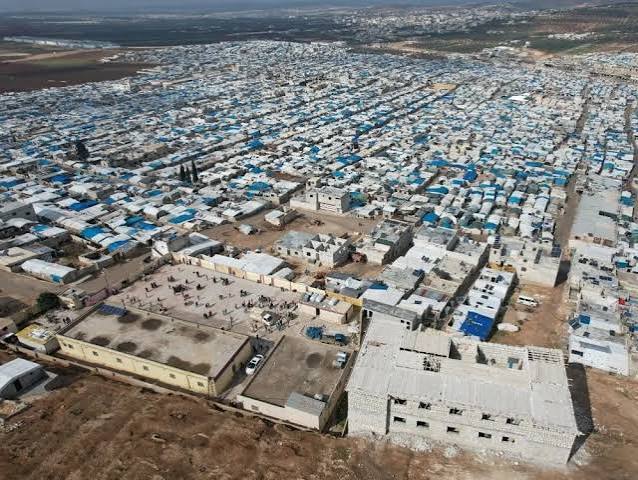
However, the Syrian Future Movement points out that while these figures are positive, they do not reflect the full picture. According to the report “Ten Challenges Facing the Return of Syrian Refugees,” issued by Refugees International on October 15, 2026, the proportion of Syrian refugees intending to return within twelve months fell from 27% to 14% between January 2025 and April 2026. Currently, 5.7 million people remain displaced within Syria, and 4.7 million are refugees abroad, while approximately 800,000 people live in camps—more than 75% of whom are women and children.
The Syrian Future Movement (SFM) asserts that this slowdown in the rate of return—even as returns continue—demands a serious examination of the underlying causes so that they may be addressed, rather than merely counting the number of returning convoys.
The Syrian Future Movement notes that reports from the United Nations and various international organizations have identified four primary obstacles that threaten the sustainability of these returns—obstacles that cannot be ignored:
First: The extensive destruction of housing and infrastructure. More than 1.3 million housing units in Syria have been damaged or destroyed, while only 57% of hospitals and 30% of primary healthcare centers remain fully operational.
In Idlib province alone, as of September 10, 2026, approximately 82,303 families were still residing in 634 camps, according to the province’s Directorate of Social Affairs and Labor.
The Syrian Future Movement maintains that the return of families to destroyed homes or to villages lacking basic services is a recipe for renewed displacement, rather than a durable solution. Second: Landmines and remnants of war continue to kill and injure civilians at alarming rates. Since December 2024, unexploded ordnance has killed 880 people—including 269 children—and injured 1,616 others, nearly 40% of whom are children. Furthermore, landmines render fields, orchards, and pastures—essential for families to sustain themselves—inaccessible. The Syrian Future Movement emphasizes that demining is a fundamental prerequisite for a safe and sustainable return.
Third: Unemployment and a lack of livelihoods represent major obstacles to return. Physical reconstruction alone is insufficient to ensure the stability of returnees; it requires the creation of genuine employment opportunities, the reactivation of schools and health centers, the provision of water and electricity, and the revitalization of local markets.
Fourth: We note that a report by Refugees International has warned that “returns may be temporary, incomplete, or take place under conditions of great uncertainty,” and that the sustainability of such returns depends on circumstances both inside and outside Syria. Similarly, a report by OCHA has warned that “local security instability risks stifling recovery,” noting that attacks by the “Islamic State” (ISIS) in eastern and northeastern Syria, sporadic violence, and bureaucratic hurdles all threaten the prospect of a lasting peace. In this context, the Syrian Future Movement reiterates its consistent positions—published on its official website—which have long advocated for returns to be voluntary, safe, dignified, and sustainable:
In its statement titled “Voluntary Return Convoys from Northern Camps,” dated July 30, 2026, the Syrian Future Movement emphasized that “the sustainability of the return—rather than the number of convoys—is the true measure of success.” It further warned that “inadequate infrastructure and basic services—such as roads, electricity, water, and sanitation—combined with limited employment opportunities, could turn what is intended as a return into merely a temporary relocation.”
In its statement titled “Strengthening Support for Syrian Refugees and Creating Conditions for Safe, Dignified, and Voluntary Return,” dated January 17, 2026, the Syrian Future Movement stressed that “voluntary return is the only sustainable solution to the displacement issue,” and that “establishing appropriate conditions in the areas of return—including security, services, and employment opportunities—is a fundamental prerequisite for the success of any such efforts.”
Acting upon its national responsibility, the Syrian Future Movement recommends the following:
First: Adopt the principle of “an alternative before removal” as a foundational rule. No camp should be closed without first ensuring that a safe and dignified housing alternative is available for the families—consistent with the assertion by the Minister of Emergency Situations that “a tent should not disappear before an alternative is provided.”
The Syrian Future Movement proposes conducting a survey… Conducting a comprehensive field assessment for each camp prior to its closure, which includes evaluating the readiness of areas of return, the circumstances of the families, and their specific needs.
Second: Declaring a national state of emergency for demining, allocating an emergency budget, strengthening cooperation with specialized international organizations, and prioritizing areas with the highest rates of return.
Third: Launching a comprehensive national program to rehabilitate destroyed housing, restore water and electricity networks, renovate schools and health centers, and reopen roads—in collaboration with international organizations and the private sector.
Fourth: Initiating temporary employment programs within reconstruction projects, supporting small and medium-sized enterprises, providing accessible loans to returnees, and revitalizing the agricultural sector in rural areas, thereby ensuring stable sources of income for returning families.
Fifth: Strengthening the presence of state institutions in areas of return, ensuring the rule of law, resolving local disputes through peaceful means, and preventing any party from exploiting security vacuums.
Sixth: Involving representatives of returnees and local communities in the planning and implementation of return and reconstruction programs, ensuring that these initiatives are based on their actual needs rather than administrative assumptions detached from reality.
The Syrian Future Movement commends the “Syria Without Camps” vision launched by the transitional government, viewing it as a noble objective worthy of support.
However, the Syrian Future Movement emphasizes that this goal can only be achieved by correctly prioritizing the sequence of actions: establishing the necessary conditions for return must be a prerequisite for closing the camps, rather than a subsequent outcome. We emphasize that a genuine return is not measured by the number of convoys departing, but rather by the ability of returning families to remain, settle, and live with dignity.
The Syrian Future Movement asserts that investing in a village to which its residents return—whether through a school for their children, a water network serving the community, or a project that provides employment for returnees—is an investment in Syria’s future and a safeguard against the recurrence of the tragedies of displacement.
For its part, the Syrian Future Movement will continue to support all efforts that foster a safe and sustainable return. It will remain critical of any shortcomings and closely monitor developments on the ground, all in pursuit of a new Syria—a nation where every citizen can return to their homeland and their land, finding both safety and dignity.