
Introduction:
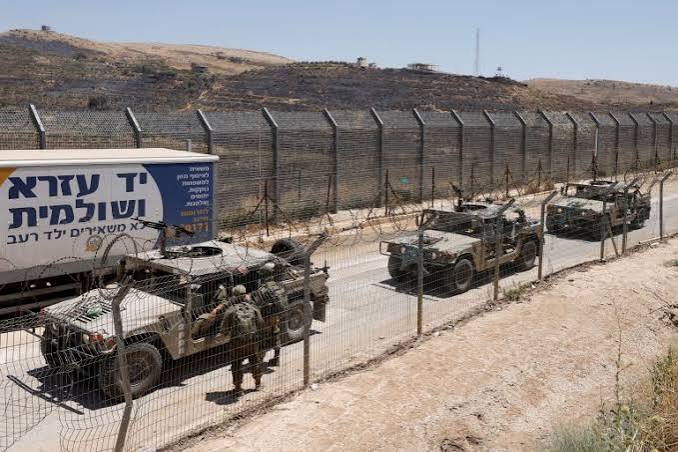
In a scenario that plays out almost daily across southern Syria, military vehicles belonging to the occupying Zionist entity make incursions into villages in Quneitra, Daraa, and the Damascus countryside. They raid civilian homes, erect military checkpoints, detain young men and shepherds, bulldoze agricultural land, and engage in actions described by the Independent International Commission of Inquiry as potentially “amounting to war crimes.”
Amidst this ongoing escalation on the ground, the Syrian transitional government has opted for a diplomatic path based on indirect negotiations under US auspices, affirming that “Syria has chosen the path of dialogue.”
This stark contrast between intense Israeli military activity and the government’s diplomatic efforts raises a fundamental question:
How long can diplomacy remain the sole option in the face of persistent daily violations that affront the dignity of Syrian citizens and infringe upon state sovereignty?
Should the diplomatic track fail, does the transitional government possess an alternative?
And what risks threaten internal stability if this situation persists?
The Scale of Violations by the Occupying Zionist Entity in Southern Syria:
Documented data points to alarming figures that reflect a continuous escalation in Israeli operations. A total of 1,068 Israeli incursions into Syrian territory were documented between December 8, 2024, and September 19, 2026.
In 2026 alone, 594 incursions were documented up to mid-September, representing an average of more than two incursions per day.
Monthly data reveal a steady escalation in the frequency of operations, rising from 51 incursions in January to 95 in August 2026. The “Sijill” Center documented 280 violations in September 2026 alone—a 5% increase over August, which saw 267 violations—bringing the total number of documented violations since the beginning of the year to 2,032.
Quneitra Governorate tops the list of areas most frequently subjected to violations, with 192 incidents in September alone, followed by Daraa (67 violations) and Rural Damascus (21 violations).
Israeli operations extended to new areas in the western countryside of Damascus, including the vicinity of the Beit Jinn waterfalls, Harbun Heights, and the village of Qal’at Jandal near Mount Hermon.
Analyses by ACLED reveal that the occupying Zionist entity has established nine military bases and outposts in southwestern Syria—stretching from Mount Hermon to Daraa and Quneitra—including four bases located outside the buffer zone. In May 2026 alone, Israeli forces carried out 84 ground incursions into southern Syria.
Yet, more significant than the figures is the nature of these operations, which signal a shift from a logic of “temporary deterrence” to one of “permanent engineering.”
According to an ACLED analysis, herbicides are being used to clear farmers from their lands, transforming a productive agricultural zone into a military corridor dedicated to troop maneuvers and reconnaissance.
This points to a clear Israeli strategy aimed at “redrawing the lines of authority and spatial control within the border region.”
Government Diplomatic Strategy:
The Syrian transitional government consistently maintains that its diplomatic choice is a deliberate strategy, not an act of surrender.
President Ahmed Al-Sharaa stated in September 2026 that negotiations with the Zionist entity had “reached the 90% mark in terms of agreements” before the entity backed away “for various reasons.”
He emphasized that Syria “continues to opt for diplomacy and resolving the issue through dialogue and negotiations.”
He clearly outlined Syria’s demands: the Zionist entity’s withdrawal to the 1974 lines, a cessation of violations, and adherence to guarantees of sovereignty.
However, this strategy faces fundamental challenges, namely:
First, the Zionist entity refuses to withdraw from the buffer zone, describing it as a “security asset” that cannot be relinquished. Secondly, an unconditional Israeli withdrawal does not appear to be on the horizon, as Israeli officials insist on maintaining a military presence “as long as jihadist threats persist.”
Thirdly, Syria lacks tangible leverage over Israel, particularly given the absence of military parity and its continued reliance on American support.
More critically, this diplomatic strategy is facing growing criticism from the Syrian public. Opinion polls by the ACRPS indicate that 74% of Syrians reject recognizing the “Zionist entity,” while 88% view it as a direct threat to Syria’s security and stability. The data reveals a clear gap between the public mood—which opposes such incursions—and the political path pursued by the government.
Turkish-Israeli Tensions:
The Syrian landscape is no longer defined solely by the dynamic between the Syrian government and Israel; a new, powerful player—Turkey—has entered the fray.
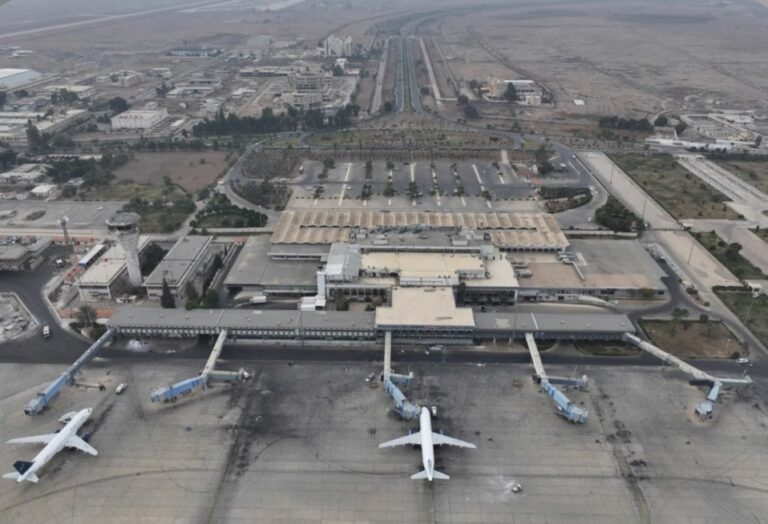
August 2026 witnessed an unprecedented escalation between Ankara and Tel Aviv, marked by an Israeli raid on the Abu al-Duhur airbase in Idlib, which targeted the runway and base facilities.
Israeli Prime Minister Benjamin Netanyahu announced that, prior to the strike, Israel had warned Syria against allowing a Turkish presence at the base.
This strike appears to mark a turning point, pushing Israeli-Turkish relations toward a trajectory of escalating military confrontation. Turkey has emerged as a key ally of Syrian President Ahmad al-Sharaa, providing military and diplomatic support, training the Syrian army, and assisting in the reconstruction of state institutions.
Ankara signed a joint defense agreement with Pakistan and Saudi Arabia in August 2026, thereby bolstering its regional standing.
US Envoy Thomas Barrack notes that the Israeli strike “reflected a perception—whether accurate or misplaced—that Turkey might expand its presence at that base in the near future.”
Consequently, Washington is working to establish a deconfliction mechanism between Israel and Turkey regarding Syria to prevent any unintended confrontation.
Analyses by the Washington Institute reveal that “Israel may believe the current tense situation is sustainable, yet Washington is frustrated by its potential repercussions for Arab normalization, Turkish military friction, and short-term economic plans.”
This implies that Turkey’s position has become a decisive factor in any future security arrangements, and that any Syrian strategy…This regional variable must be taken into account.
The Risk of an Explosion of Popular Anger:
The continuation of Israeli incursions, absent any tangible official response, poses a genuine threat to internal stability.
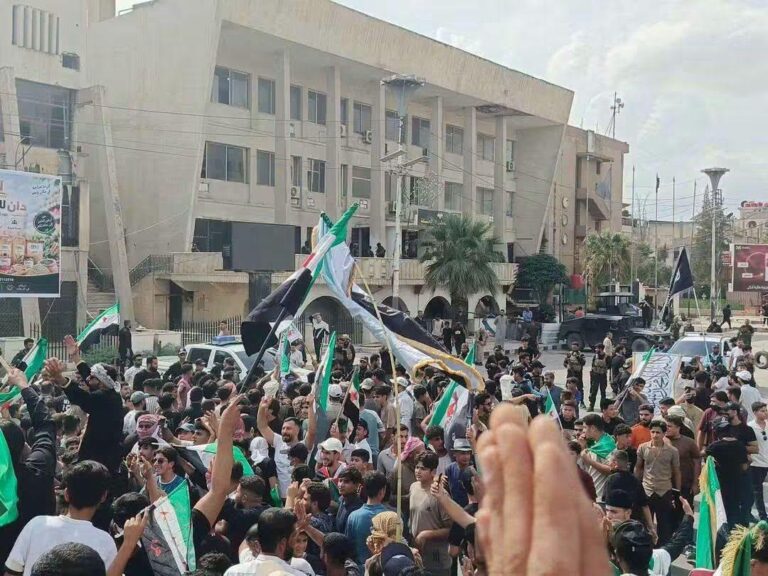
The sense of humiliation and oppression felt by Syrians in the south serves as potential fuel for a social explosion.
In this context, one can look to the “relative deprivation” theory developed by social psychologist Ted Gurr; it explains how collective anger arises when people perceive a gap between what they believe they deserve and what they actually receive.
Syrians in the south see their dignity and sovereignty violated daily, while the official response remains limited to diplomatic statements.
This discrepancy between expectations (sovereign protection) and reality (ongoing incursions) is precisely the condition for an explosion that the theory of relative deprivation describes.
Reports have emerged regarding the nascent stages of popular resistance in southern Syria, with analyses pointing to “Israeli movements and the seeds of popular resistance.”
If the incursions continue without a clear political horizon, this resistance movement could find fertile ground to grow—especially given the absence of effective official mechanisms to protect citizens.
The danger is not limited to the south.
The gap between official diplomatic rhetoric and widespread popular opposition could trigger a revolutionary military uprising against Israel—one that might spiral beyond the government’s control.
If realized, this scenario would drag Syria into an ill-conceived confrontation—potentially escalating into an all-out war that destroys remaining infrastructure and undermines the recovery process that has only just begun. Scenarios for the relationship between the Syrian government and the occupying Zionist entity:
Scenario One: Continued diplomacy amidst ongoing violations (the status quo):
In this scenario, the government maintains its diplomatic course while the entity continues its daily incursions.
The relationship remains in a state of “no war, no peace,” accompanied by mounting public anger and the erosion of the government’s domestic legitimacy.
While this scenario is the most likely in the short term, it is unsustainable in the long run.
Analyses by the Washington Institute suggest that “Israel may believe the current tense situation is sustainable,” yet Washington remains “frustrated” by its repercussions.
Scenario Two: A security agreement with conditional withdrawal:
Should US mediation succeed in persuading the entity to withdraw from areas entered after December 8, 2024—in exchange for Syrian security guarantees—both parties could enter a new phase of relations.
A Washington Institute report has identified “concluding a security agreement between Syria and Israel” as a key challenge.
However, this scenario currently appears unlikely, given the entity’s refusal to withdraw from the “buffer zone,” which it characterizes as a “security asset.”
Scenario Three: Popular uprising and confrontation:
If incursions persist without a political horizon, southern Syria could witness a popular uprising, leading to the formation of local armed groups to counter the incursions.
This scenario could drag Syria into an asymmetrical confrontation with the Zionist entity, resulting in heavy losses for the country. Analyses by research centers indicate that Israel prefers maintaining a “no-war, no-peace” status quo, as this grants it freedom of military action without incurring political costs.
Fourth Scenario: Collapse of the Diplomatic Track and Return to Confrontation
Should the diplomatic track fail completely, the Syrian government might find itself compelled to revert to the option of confrontation—or at least to threaten it.
This scenario would plunge Syria back into conflict, derail the recovery process, and undermine international confidence in the transitional government.
Recommendations:
Based on the preceding analysis and assessments from international research centers (such as the Washington Institute, Carnegie, and ACLED), the Syrian Future Movement makes the following recommendations:
For the Syrian Government: Strengthening the Negotiating Position
The Syrian government must recognize that pursuing diplomacy without leverage could effectively turn into a process of gradual capitulation.
Therefore, it is essential to:
- Broaden the base of international support by leveraging the European Union’s stance—which reaffirms the rejection of Israeli sovereignty over the Golan—and by utilizing unified Arab support to bolster the Syrian position.
- Firmly uphold sovereignty-related demands, insisting that any security agreement must include a complete Israeli withdrawal from areas entered after December 2024 and a return to the terms of the 1974 agreement.
- Invest in indigenous defense capabilities and develop the Syrian Army’s strength—in cooperation with Turkey and Arab nations—to ensure it is capable of securing the borders should the diplomatic track collapse. Ankara has signed a mutual defense agreement with Pakistan and Saudi Arabia, paving the way for broader defense cooperation.
For regional and international powers: Exerting real pressure on the occupying Zionist entity.
The United States, Turkey, and Arab nations must recognize that the entity’s continued incursions threaten the stability of the entire region. It is essential to:
- Exert real pressure on Israel rather than merely mediating; any support for Israel must be contingent upon halting violations and committing to withdrawal.
- Barak noted that “the priority now is to de-escalate tensions and allow space for a more balanced approach.”
- Activating a de-confliction mechanism: Supporting US efforts to establish a communication channel between the occupying Zionist entity and Turkey/Syria to prevent unintended confrontations.
- Supporting the Syrian government: Providing military and economic aid to bolster the government’s ability to assert its authority and protect its citizens.
For civil society: A role in protecting civilians.
Syrian civil society organizations must document violations, support victims, and demand accountability, without being drawn into ill-considered confrontations.
For the Syrian government: Managing public anger.
The government must realize that the public’s silence signifies not contentment, but a state of waiting.
Therefore, it must:
- Provide channels for peaceful expression; rather than suppressing anger, it should be channeled into peaceful political avenues.
- Engage society in decision-making, keep public opinion informed about negotiation developments, and explain the diplomatic strategy to ensure popular support.
- Preparing for an explosion scenario and formulating contingency plans to handle any escalation. …popular [sentiment], so as not to escalate into an ill-conceived military confrontation.
Conclusion:
The diplomatic strategy pursued by the Syrian transitional government regarding incursions by the occupying Zionist entity represents a rational choice, given the absence of any equivalent military alternative.
However, if this strategy persists without tangible results, it carries grave risks—manifested in the erosion of the government’s legitimacy, rising public anger, and the potential for an unpredictable explosion of violence.
The Syrian people, having endured the ravages of war for over a decade, deserve to see a clear political horizon rather than remaining held hostage to daily incursions and unfulfilled diplomatic promises.
The Syrian government must strike a balance between the need to maintain the diplomatic track and the imperative to protect its citizens and uphold their dignity.
Should the diplomatic path fail, the question that must be addressed is: What is the alternative?
Continued silence should not be the only answer.
Protecting Syrian sovereignty is both a national and a moral duty.
Persisting in turning a blind eye to daily violations will only yield counterproductive results—outcomes desired by neither the Syrian people nor the international community.