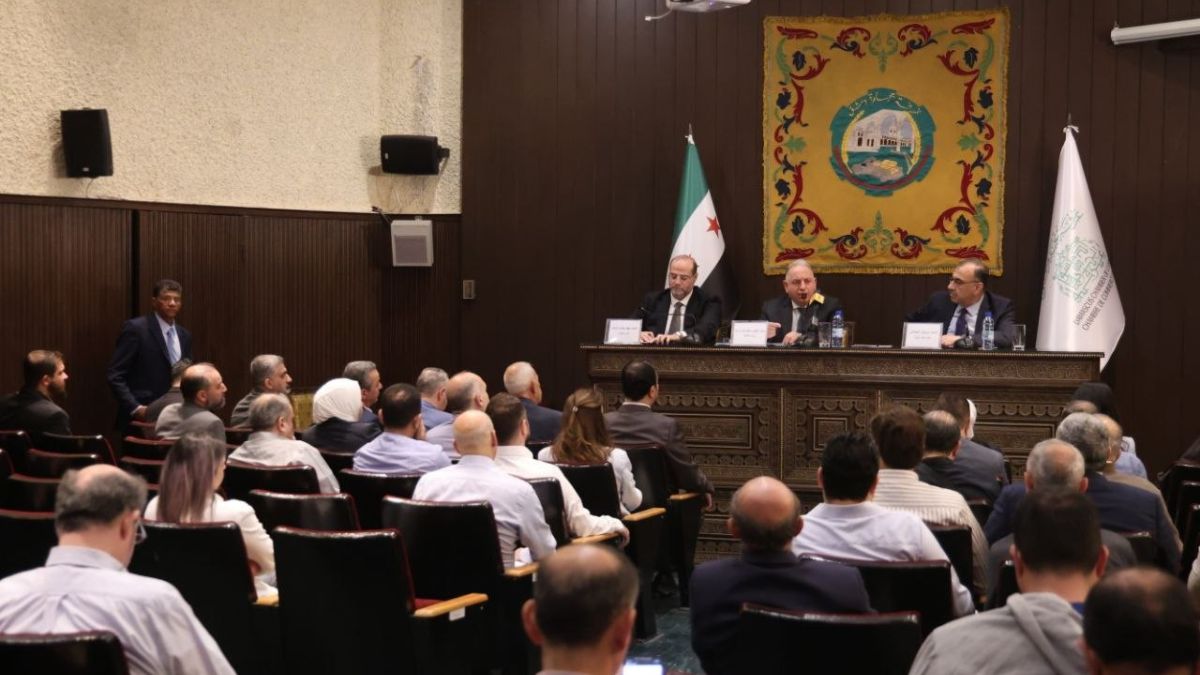
The Syrian Future Movement is closely following the recent actions of the Ministry of Finance, culminating in Finance Minister Mohammed Yasser Barnieh’s referral, on Saturday, May 23, 2026, of corruption cases involving several banks and public institutions to the judiciary. The Minister emphasized “zero tolerance for any negligence or corruption, regardless of its location or scale.” The Ministry also announced new lists of candidates for the boards of directors of banks and public institutions, a move aimed at injecting new blood and strengthening the principles of transparency and efficiency.
The Syrian Future Movement commends the Ministry of Finance’s escalation of these measures, which come after weeks of repeated government statements about the priority of combating corruption. It is worth recalling that administrative and financial corruption was one of the most dangerous diseases that plagued state institutions for decades and was a major driving force behind the Syrian revolution against the former regime. We view the initiation of these corruption cases, their referral to the judiciary, and the restructuring of public institutions as a first step in the right direction, albeit a relatively belated one.
The Syrian Future Movement outlines the dimensions and timeframe of these measures:
- History of the Measures: The Ministry of Finance initiated a series of measures starting in early May 2026, including the dismissal of several underperforming directors and the issuance of directives to tighten oversight of spending. The referrals to the judiciary on May 21, 2026, marked a significant development, bringing the cases out of administrative secrecy and into the public domain.
- The New Lists of Banks and Public Institutions: These lists include the names of new, qualified individuals, in an attempt to break the monopoly of corrupt figures over economic decision-making positions. We believe that the selection of these qualified individuals must be based on criteria of transparency and competence, free from favoritism and partisan loyalties. This is yet another test of the government’s seriousness.
The Syrian Future Movement reiterates its firm stance on the necessity of combating corruption and reforming public institutions, as published on its official website, including:
- The statement on “Preparing Databases of Those Associated with the Ousted Regime” (dated April 19, 2026), which emphasized that protecting public funds begins with meticulous documentation and the prosecution of all those involved in plundering the nation’s resources.
- The statement on “The National System for Damage Assessment in Damascus” (dated May 11, 2026), which warned that the absence of transparency and independent oversight in the reconstruction process would open the door to new forms of corruption comparable to those of the past.
Based on its national responsibility, the Syrian Future Movement recommends the following:
- Ensuring the independence of the judiciary in prosecuting those involved: The government must demonstrate that corruption cases referred to the judiciary will be handled with integrity and without political interference, and that penalties will be applied to everyone without exception or discrimination, regardless of their positions or connections.
- Announcing transparent criteria for selecting new chairpersons of the boards of directors of banks and public institutions, and allowing observers and civil society to evaluate these selections, to ensure that competence, not loyalty, is the basis.
- Activating the role of the Financial Control and Inspection Authority and granting it real powers, so that it becomes an effective oversight body that monitors any violations and provides periodic and public reports on the results of its work.
- Involving civil society organizations and independent experts in monitoring corruption cases, as observers or advisors, to ensure transparency and enhance confidence in the integrity of procedures.
- Not limiting efforts to criminal prosecutions, but also working to recover looted funds from inside and outside the country and compensate those affected, considering this an inherent right of the Syrian people.
The Syrian Future Movement reiterates its full support for every genuine effort to combat corruption, emphasizing that this battle is an “existential battle” for the new Syria.
It also warns that any laxity or selectivity in these procedures will undermine citizens’ trust in state institutions and reproduce the same corrupt pattern that Syrians have suffered from for decades.