Following closely the two tragic incidents that shook the governorates of Deir ez-Zor and Hama within a few days, the Syrian Future Movement reiterates its conviction that building a new Syria hinges first and foremost on establishing effective systems to protect lives and property.
What happened in the al-Mura’iyah desert east of Deir ez-Zor on Friday, June 5, 2026, and the subsequent incident at the Kafr Baham silos in the Hama countryside on Saturday, June 6, 2026, serves as a stark warning, highlighting the urgent need for a fundamental shift in occupational safety culture and procedures. This shift must move beyond reactive measures and embrace comprehensive preventative systems, known in specialized literature as “safety systems.”
First, tragic incidents with known causes:
Deir ez-Zor incident – Hydrogen sulfide (H₂S) gas:
In the desert near the town of Al-Mura’iyah, two security personnel, Abdul Hakim Marhash Al-Dhayyaf and Youssef Khalaf Al-Ahmad Al-Marhash, died while on duty guarding facilities after inhaling toxic hydrogen sulfide gas emitted from an oil well.
This colorless gas has an odor similar to rotten eggs and is produced naturally by the decomposition of sulfur-containing organic matter. Inhaling it in high concentrations causes respiratory irritation, loss of consciousness, and death within minutes.
Hama Incident – Dust Explosion at Kafr Baham Silos:
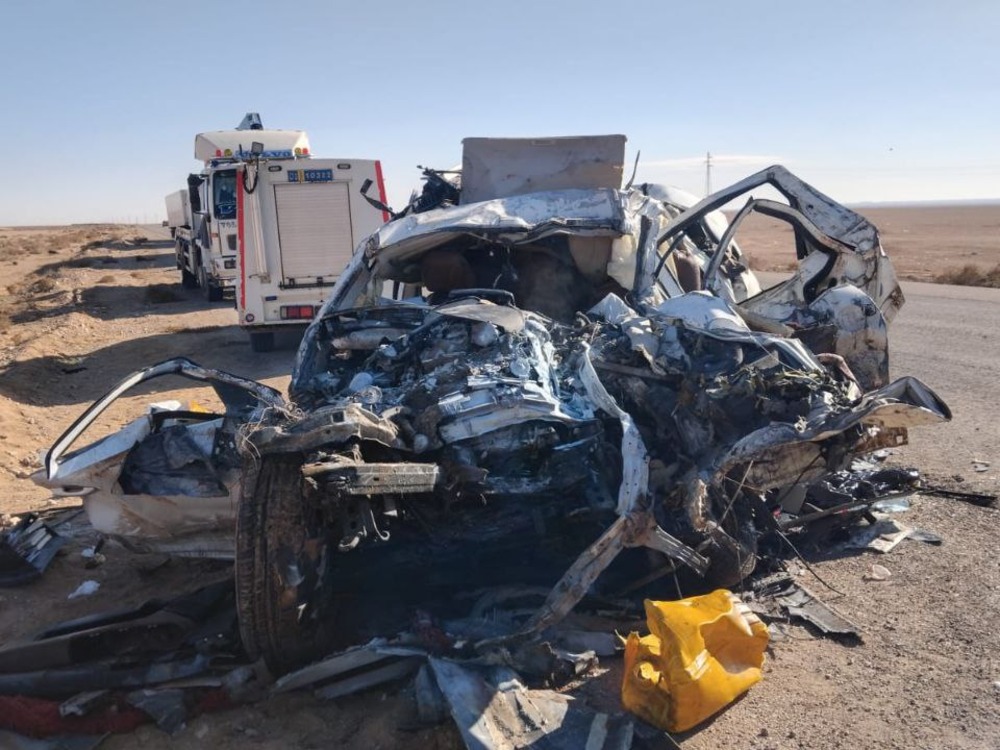
During routine maintenance work on grain silos in preparation for the 2026 wheat harvest, a violent dust explosion occurred, resulting in the death of worker Hamza Jamal al-Shamtiyeh and injuries to nine others, some of whom are in critical condition. Initial investigations revealed that the accident was caused by the maintenance contractor using a welding machine in violation of established safety regulations, which prohibit welding inside silos except under specific controls and in an environment free of flammable dust.
The Syrian Future Movement believes that these two incidents expose a serious gap in the national occupational safety system, stemming from the absence of strict oversight mechanisms, inadequate training on specialized hazards, and a decline in the culture of prevention in favor of a reactive culture.
Second, from tragedy to institution – Safety systems as a national necessity:
While Syria continues to build its institutions during a delicate transitional phase, the experiences of developed countries confirm that safety systems are the cornerstone of reducing occupational accidents and protecting lives. They are not a technological luxury, but rather an investment in human capital and a fundamental component for attracting investment and achieving economic stability.
The following are some of the most inspiring international models from which the Syrian Future Movement draws its vision for developing occupational safety systems in Syria:
Norway adopts a “performance requirements” approach to regulating its oil industry. Companies are required to achieve specific safety levels by any means they choose, while remaining responsible for innovation and risk management. Specialized bodies such as Havtil play an effective oversight role, and Health, Safety, and Environment (HSE) certification training is a prerequisite for working in this sector.
Germany developed a stringent European directive (ATEX 137) that requires employers to protect workers from explosive atmosphere hazards, identifies and classifies dangerous areas, and mandates the use of specially approved equipment in grain silos and mills.
The United Kingdom, through its “Life Saving Rules” principles, adopted a methodology after decades of developing safety in the North Sea. This methodology focuses on a small set of simple, specific behavioral rules that address the most lethal hazards in the oil and gas sector. Major global companies have implemented these rules to reduce accident fatalities to near zero.
The United States, with its extensive regulatory authority and resources (OSHA), dedicates significant human and technical resources to routine, unannounced inspections. It has the power to issue substantial fines, along with awareness campaigns and mandatory, approved training programs.
Singapore introduced the Occupational Safety and Health Act (WSH Act), which integrates responsibility among employers, employees, designers, and suppliers. This system mandates periodic risk assessments and requires reporting of near misses, making Singapore one of the safest countries in the world.
Australia adopted the Model WHS Act, which is followed by most states, to ensure standardization, facilitate compliance, and implement the principle of “knowledge before you know” in risk assessment.
Third, the Syrian Future Movement’s vision:
Based on its firm belief that developing protection systems is an investment in Syria’s future and the dignity of its people, the Syrian Future Movement calls for the institutionalization and activation of the “Supreme National Committee for Occupational Safety and Health.” It further calls for immediately tasking this committee with designing and implementing a “National Safety System” using an integrated methodology that considers the specific needs of vital sectors. The key pillars of this vision are as follows:
- Issuing binding national legislation (the National Protection Law) that mandates all public and private sector establishments to develop and implement an occupational health and safety system in accordance with international standards (ISO 45001), with the mandatory creation of national records for occupational accidents and hazards, and the standardization of reporting and investigation procedures.
- Establishing an independent regulatory body with mandatory technical accreditation, and creating the “National Authority for Occupational Safety and Health” with broad inspection powers, and implementing a mandatory system for periodic technical accreditation of high-risk establishments (oil and gas, silos, chemicals, construction, etc.).
- Developing a national training system based on a mandatory certification model, through the adoption of mandatory training and qualification programs for workers in high-risk sectors, including the issuance of a specialized “Occupational Safety Certificate,” which is renewed periodically and is a prerequisite for employment.
- Equipping specialized emergency operations rooms in each governorate, equipped with the latest rapid response and early warning systems, with dedicated intervention teams trained and equipped to handle fires, explosions, and hazardous materials. Chemical and toxic gases.
- Launching sustainable national awareness campaigns, in partnership with the Ministries of Information, Education, Higher Education, and Health, to promote a culture of prevention and risk management as a national value, starting with school curricula and extending to workplaces.
The Syrian Future Movement views these tragic incidents with deep sorrow and extends its sincere condolences to the families of the victims. It calls upon the Syrian government, all state institutions, and the private sector to adopt a “safety system” as a top priority within the reconstruction efforts and the establishment of a modern state.
Every life lost due to negligence or failure to ensure safety is an irreplaceable loss, and every safety system we establish today is an investment in a safer tomorrow for the new Syria.