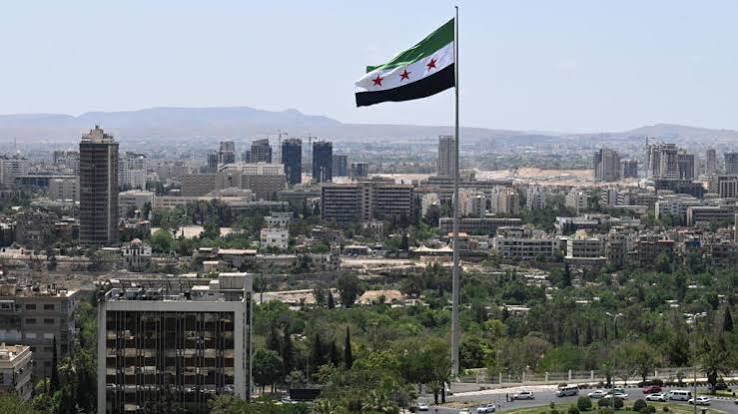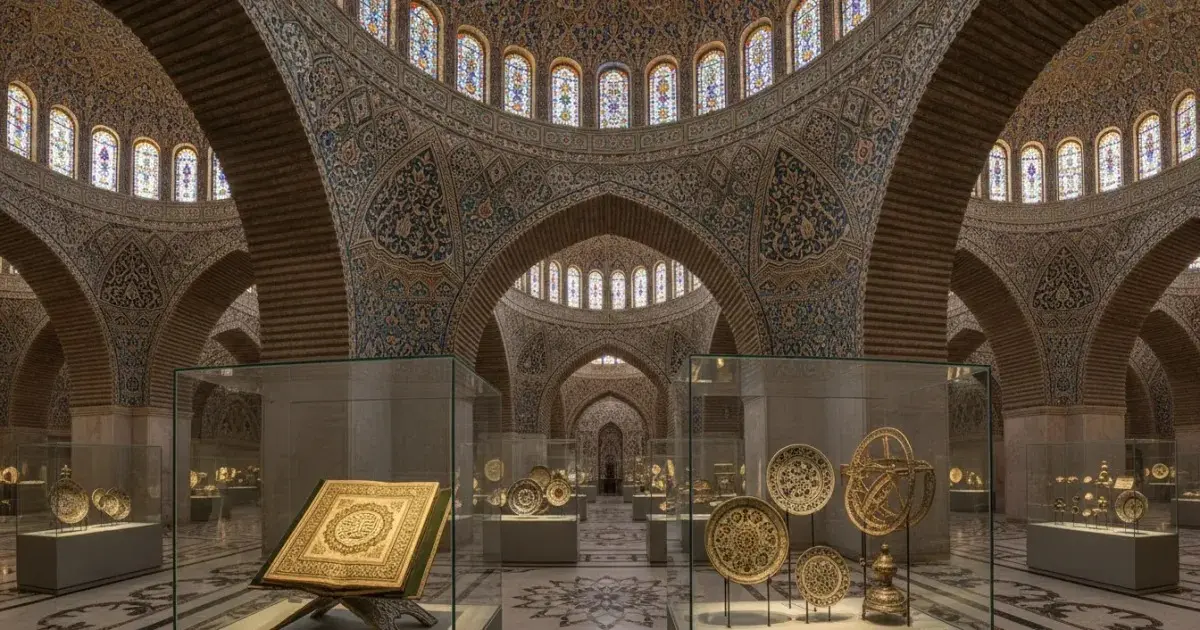
The Syrian Future Movement issues this statement at a time when our nation is undergoing a delicate and crucial transitional phase to rebuild the state and its institutions, guided by a comprehensive national vision and a clear outlook for the future. The Movement places the issue of national identity and Syrian cultural heritage at the heart of its commitments, considering it a bridge to connect a renewed Syria with the international community.
The Syrian Future Movement believes that Syria’s cultural memory, spanning thousands of years, is the fundamental pillar for unifying a comprehensive national identity and overcoming the legacy of the bitter conflict.
It also affirms that protecting Syrian heritage is a shared national and international responsibility; Syrian heritage represents an integral part of the world’s human heritage, recognized by the United Nations Educational, Scientific and Cultural Organization (UNESCO).
Furthermore, the Syrian Future Movement believes that engaging with the international community at this stage requires full adherence to international agreements and covenants concerning the protection of cultural property, particularly the 1954 Hague Convention and subsequent agreements.
The Syrian Future Movement notes with grave concern the reports issued by the United Nations Institute for Training and Research (UNITAR), which documented damage to more than 290 archaeological and cultural sites in Syria. Of these, 24 sites were completely destroyed, and 104 suffered severe damage, including sites listed as World Heritage sites such as the Ancient City of Aleppo and Palmyra.
The Syrian Future Movement also draws attention to recent field and UN reports for 2025/2026, which have observed a worrying resurgence of illicit antiquities smuggling networks. These networks are exploiting the security vacuum of the transitional phase and the collapse of previous security structures, leading to the looting of some local museums, such as Arwad, and the illicit trafficking of artifacts through digital platforms and a cross-border black market.
At the same time, the Syrian Future Movement commends the recent positive reports and steps that reflect the growing awareness within the local community. These include UNESCO’s announcement of the resumption of its emergency efforts to restore and rehabilitate the National Museum in Damascus, and the return of hundreds of historical cuneiform tablets (the Ebla Archive) to their original museums through national efforts and international coordination.
Based on the foregoing, the Syrian Future Movement submits the following set of strategic recommendations addressed to the transitional authorities, national forces, and the international community:
- Establishing an independent national body for the protection of heritage, managed by technocratic experts and free from politicization or power-sharing arrangements.
- Strengthening security controls at borders and sites, and enforcing the strict penalties stipulated in the Antiquities Law against illegal excavators and smugglers.
- Developing the digital infrastructure of museums and expediting the digital documentation and archiving of archaeological artifacts in cooperation with international organizations to create a unified database that prevents the forgery or circulation of stolen pieces.
- Enhancing partnerships with the international community and Interpol by activating hotlines and urgent memoranda of understanding with Interpol and UNESCO to track smuggled Syrian antiquities abroad and ensure their legal return.
- Integrating culture into economic recovery plans, as we believe that the reconstruction of historical centers (such as the old markets of Aleppo and Homs) represents a vital entry point for revitalizing the local economy by creating job opportunities and attracting international funding allocated to the preservation of world heritage.