Introduction:
In this article, we attempt to dissect a profound cultural crisis, which many mistakenly attribute to a lack of resources or the sheer scale of destruction.
However, we at the Religious Bureau of the Syrian Future Movement believe that Syria’s true challenge during this transitional phase lies in the collapse of its active will.
It is time to move beyond the traditional question, “Who will act?”, to the deeper question, “Why are we no longer capable of acting?”
We find the answer in the profound concept of “ineffectiveness” (or “passivity”) offered by the contemporary Islamic thinker Malek Bennabi (1905-1973). This is a civilizational malady that deprives a nation of its capacity for production and innovation, rendering it captive to stagnant ideas and susceptible to cultural colonization even before military occupation.
This is precisely what we are suffering in Syria today. Simply emerging from the physical devastation after the fall of Assad is insufficient unless we first liberate our minds from the colonization of our culture.
“Ineffectiveness”: A Bankruptcy of Vision
Malik Bennabi defines “ineffectiveness” as the state in which a nation loses its capacity for positive engagement with reality. It fails to produce intellectual thought, build identity, or respond to change except with belated or feeble reactions.[1]
He does not mean individual laziness, but rather a structural malady within the culture of the entire nation.
We observe that the transitional phase in Syria has clearly manifested the symptoms of this malady through:
Waiting for an external savior (a state, organization, or donation) instead of self-reliance.
Lamenting the past and dwelling on past grievances instead of investing in the potential of the present.
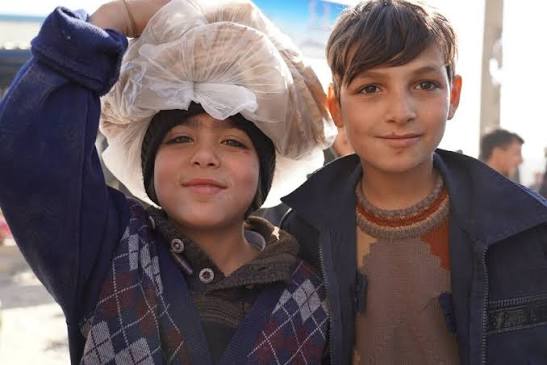
The proliferation of a culture of futility and the prevalence of despair among large segments of the displaced and returnees.
The absence of major intellectual and political projects, replaced by daily squabbles and preoccupation with trivialities.
This is the colonization of the will before the land, and it is far more dangerous than military colonization. This is what God Almighty expressed when He said: {Indeed, God does not change the condition of a people until they change what is in themselves} [Ar-Ra’d: 11].
External change (state-building, city reconstruction, the return of refugees) cannot be sustained or successful unless it is preceded by internal change in mind and will.
The three circles of ineffectiveness in the current Syrian reality:
Let’s be precise; this is not about rigid theories, but a painful reality.
According to the latest reports of the United Nations High Commissioner for Refugees (UNHCR) up to the end of 2024:
Number of internally displaced persons within Syria: 7.2 million.
Number of Syrian refugees outside the country: 5.1 million [2].
Total: 12.3 million Syrians remain displaced or refugees, many living below the extreme poverty line.
According to World Bank estimates (2023), the cost of reconstruction in Syria ranges between $250 and $400 billion [3], a figure equivalent to approximately 10 times Syria’s current GDP.
Given these figures, the question arises: how can a people stripped of their resources, scattered in camps, and burdened by trauma suddenly transform into a constructive and active society?
The answer, according to Malek Bennabi, lies in first liberating oneself from “colonizability.” He argues that colonialism is not a product of the colonizer’s ingenuity, but rather a consequence of the colonized’s own susceptibility to colonization [4].
The true weakness lies in the disintegration of the nation’s internal structure—culturally, socially, and morally. If we do not address this disintegration immediately, any reconstruction will remain merely a patching of a roof that is collapsing on our heads.
From “Calcification” to “Construction” for the Syrian People:
Malik Bennabi used a striking yet accurate expression: the term “calcified human being,” whose intellectual and emotional foundations have hardened, rendering them incapable of adapting to the demands of the modern age, or of creativity and innovation.[5]
This danger is real in post-war societies; repeated traumas generate a “psychological ossification” that makes people despair of any change.
Herein lies the role of living faith. God Almighty says: “He is the One Who produced you from the earth and settled you therein” [Hud: 61].
The word “settled you” carries a sense of obligation, a call to cultivate, build, and develop the earth.
Therefore, any “religiosity” divorced from the responsibility of development is incomplete, and may even be a form of ineffectiveness.
The Prophet (peace and blessings be upon him) said: “There is no Muslim who plants a tree or sows a seed, and then a bird, or a human, or an animal eats from it, except that it is considered charity for him.” (Narrated by Al-Bukhari and Muslim).
This authentic hadith elevates work from being merely a “job” or a “source of income” to being an act of worship connected to God.
When we look at Syria today, is it not in dire need of a new “planting” on all levels: the planting of schools, the planting of factories, the planting of roads, and the planting of human dignity?
The Objectives of Islamic Law in the Transitional Phase:
One of the greatest contributions the Religious Office of the Syrian Future Movement can make at this stage is to present a jurisprudential vision based on the objectives of Islamic law, stating that the reconstruction of Syria, the building of its institutions, and the unification of its social fabric are the foremost priorities of religion at this stage—indeed, they are the very essence of religion. Imam al-Shatibi, in his work “Al-Muwafaqat,” states that Islamic law was established to preserve the five objectives: religion, life, lineage, property, and intellect.
How can these objectives be preserved today without a strong state, a productive economy, free education, and a Syrian mind liberated from subservience?
Therefore, any jurisprudential, doctrinal, or political dispute that hinders reconstruction or weakens the internal front is religiously unacceptable, as it obstructs a greater objective: the preservation of human dignity and the establishment of justice.
Towards a National Project for the Liberation of the Syrian Mind:
Based on the above, we propose – from our position as a religious office – the following principles for those leading the transitional phase and for Syrian society in general:
Launching a national campaign to combat cultural ineffectiveness through educational curricula, media, and especially religious discourse, so that words like “willpower,” “productivity,” “self-reliance,” and “innovation” become the vocabulary of this phase.
Establishing the “Malik Bennabi Academy for Renaissance Thought” in Syria, to serve as a center for training national cadres in strategic thinking and civilizational planning, moving away from spontaneity and improvisation.
Transforming mosques, churches, and places of worship into platforms for promoting a culture of work and…
Ammar, while respecting the particularities of each sect, and focusing on shared values (justice, integrity, excellence, and solidarity).
Linking any external support or assistance to productive, not consumer-driven, projects, so that Syria does not become a perpetual consumer of aid, but rather an active partner in its implementation.
Conclusion:
We are certain that the transitional phase in Syria is the last historical opportunity to eradicate the inertia within us.
The destruction we see is not the end of the world, but rather fertile ground for a new beginning, provided we move from psychological defeat to a resolute determination to rebuild.
This is the essence of Islam’s message: to bring humanity out of the darkness of dependency and stagnation into the light of action and creation, as God Almighty said: {God has promised those of you who believe and do righteous deeds that He will surely grant them succession in the land} [An-Nur: 55]. Succession is a divine promise, but it is conditional upon faith and righteous deeds.
And righteous deeds in our time mean building a nation, shaping a future, and transforming from mere spectators in the annals of history into key players in its making.
O Syria: Your time has come. Cast off the cloak of weakness and inaction, and don the garment of resolve and determination.
For God does not change the condition of a people until they change what is within themselves. And your transformation begins today—with a free mind, an active will, and a faith that builds, not destroys; that cultivates, not ruins.
And our final prayer is that all praise belongs to God, Lord of the Worlds.
Footnotes and Sources:
[1] Malek Bennabi, “Conditions of Renaissance” (translated by Abd al-Sabour Shahin), Dar al-Fikr, Damascus, pp. 117-119.
[2] United Nations High Commissioner for Refugees (UNHCR), “Syria Situation Report,” Q4 2024.
[3] World Bank, “Early Recovery Report for Syria,” Washington, D.C., 2023, p. 34.
[4] Malek Bennabi, “The Birth of a Society,” translated by Muhammad Madi, Dar Al-Fikr, p. 88.
[5] Malek Bennabi, “The Problem of Culture,” Dar Al-Fikr, pp. 205-210.