
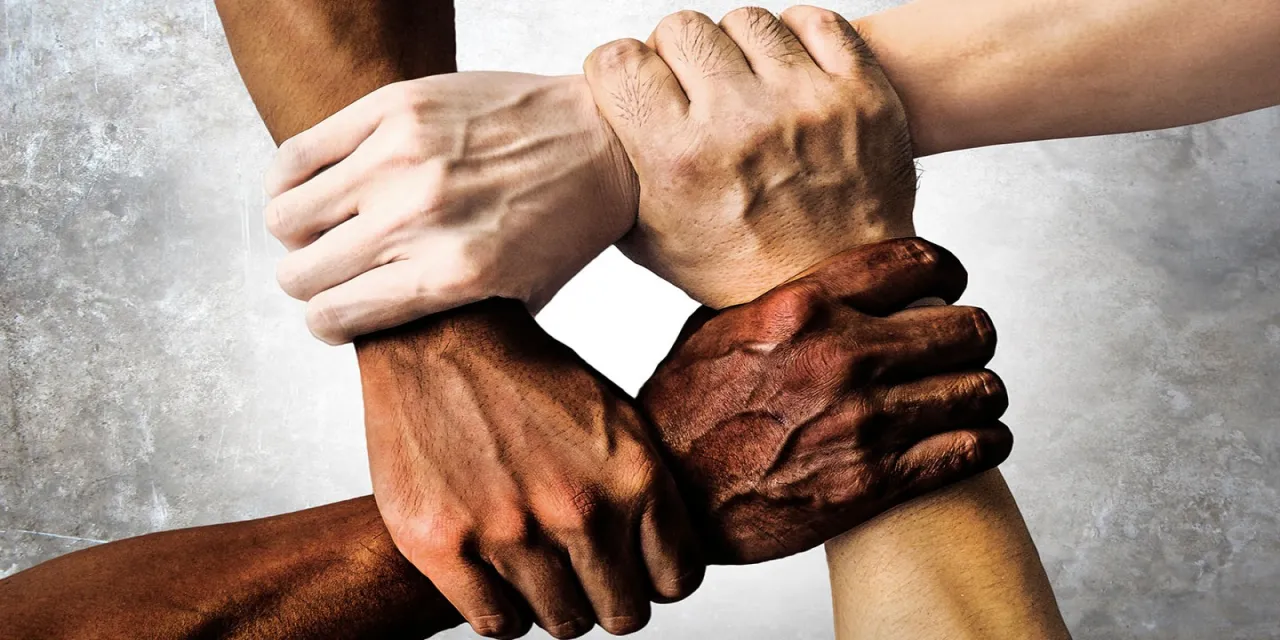
Tolerance is not merely weakness or surrender; rather, it can be, in essence, the highest form of resistance.
This truth, exemplified by Nelson Mandela’s experience when he invited the guard who had tortured him in prison to his table, should not be interpreted simply as an individual moral lesson, but also as an expression of a profound political philosophy. It intersects with the view that revolution is moral before it is a revolution for power or weapons. Indeed, in the prisons of torturers, the prisoner is meant to lose his humanity before he loses his freedom, so that clinging to individual and collective dignity becomes a form of psychological warfare. But what we must transcend is the logic of revenge, retaliation, and violence. Instead, we must work to build a free and democratic society from the very heart of suffering. Just as Mandela refused to become a replica of his torturer, so too must we refuse to build our freedom and democracy on the ruins of others, even if those others are oppressors.
The Moral Revolution: Dismantling Domination from Within
The most dangerous form of tyranny is not that which is imposed from outside society, but that which takes root in the consciousness of the people themselves. Therefore, a true revolution is not merely about overthrowing regimes, but also about liberating oneself from the mentality of revenge and the authoritarian mindset that breeds tyranny even within the ranks of the revolutionaries themselves. The goal of any revolution is not to seize power, but to dismantle it, because centralized power, even when in the hands of freedom fighters, always tends to reproduce the old relations of oppression. In this context, tolerance acquires a strategic and ethical dimension. It is not simply a concession of justice, but the establishment of a new justice that does not reproduce the cycle of revenge, but breaks it completely. True justice is not achieved through punishment, but by rebuilding social relations on equal and democratic foundations. Tolerance is fundamentally linked to democratic life, because a society that cannot tolerate its diversity and does not forgive its mistakes is a sterile society, incapable of innovation or progress. Tolerance is not a moral luxury, but an existential condition for the survival of diverse societies.
When victims make peace, it cannot be defeated.
Indeed, Mandela’s stance is not an isolated exception, but rather part of a global human pattern that has recurred at critical moments in human history, where victims choose to turn a new page, one where memories are not erased but rather transformed into collective wisdom.
Indeed, in Rwanda after the 1994 genocide, which claimed the lives of approximately 800,000 people in one hundred days, the state did not merely rebuild institutions, but also relied on the Gacaca system—traditional people’s courts—which shifted the focus of justice from punishment to recognition and reintegration. The goal was not simply to imprison the perpetrators, but to make them acknowledge their actions before their communities and rebuild the relationships they had destroyed. This was not easy forgiveness, but a collective awareness that justice that does not mend the social fabric will only breed new hatred. In Bosnia and Herzegovina, initiatives like the Mothers of Srebrenica continue to call on the perpetrators of the massacre to acknowledge their crimes, not to be held accountable, but to know that we do not hate them despite everything they did.
Because the true enemy is not the individual, but the system that creates a perpetrator.
Towards a peace built not on forgetting, but on awareness.
The truth is that lasting peace is not built on erasing the past, but on dismantling its mechanisms. It is not enough for the fighting to stop; the thinking, words, and actions that generate the fighting must also cease. Here, forgiveness becomes a revolutionary political act because it redefines the relationship between victim and perpetrator, not as a binary relationship of self and other, but as a shared relationship woven into a single fabric of historical responsibility. The fact that Mandela’s call to the prison guard was not a call for forgetting but for mutual recognition, that is, recognition of pain on the one hand and of humanity on the other, is the same call that we want to put forward, which is participatory democracy that does not exclude anyone, even those who betrayed or killed, as long as they are ready to return to the concept of humanity. But in reality, in a world that is still run by revenge and the absolute enemy, this vision remains rare and dangerous. Rare because it asks man to bear the burden of freedom, and dangerous because it threatens all those who benefit from the continuation of hatred. But in the end, it may be the only way to build a homeland that is not built on the skulls of others but on their shared dreams.