Abstract:
Over the past decade, Syrian families have undergone profound structural transformations as a result of the protracted conflict. These transformations include widespread displacement, the collapse of traditional support networks, loss of income sources, and a rise in multidimensional poverty.
This paper reviews the theoretical framework of social protection in post-conflict contexts, discusses the structural challenges facing Syrian families, and evaluates existing international programs. It then proposes a set of policies to enhance family resilience and empower families economically and socially during the transitional phase.
The paper is based on a vision that encourages a shift from emergency relief responses to building a sustainable social protection system, consistent with the principles of justice, citizenship, and future state policies.
The paper concludes by emphasizing the need to design policies that respond to the demographic and social transformations imposed by years of conflict, address educational losses, support women and livelihoods, and rebuild social capital. This will enable Syrian families to play an active role in post-conflict stability and development.
Introduction:
The conflict in Syria since 2011 has led to radical changes affecting the social and economic structure of society, with the greatest impact on the family as the basic unit of production, consumption, and stability.
Despite the extensive humanitarian programs implemented during the years of conflict, the response remained limited to emergency funding, without progressing towards building a sustainable social protection system. As Syria enters a phase of transition and gradual reconstruction, the need arises for a new approach to family protection policies—an approach based on economic and social empowerment that addresses the root causes of vulnerability and strengthens families’ ability to adapt, integrate, and reclaim their roles.
This paper aims to provide a comprehensive analysis of the situation of Syrian families, examine the structural factors that have affected them, and propose practical policies that align with the Syrian Future Movement’s vision of building a state of citizenship and justice, a state in which the family is a fundamental unit in the path of development and stability.
The paper adopts a comparative analytical approach, drawing on social protection literature and the experiences of countries emerging from similar conflicts, and is based on recent international and academic sources.
Chapter 1: The Theoretical Framework of Social Protection in Post-Conflict Situations:
International institutions have defined social protection as a set of policies and programs aimed at reducing poverty and vulnerability by supporting income, providing services, and enabling individuals to cope with economic and social shocks [1].
In post-conflict contexts, social protection transcends its traditional function to become a tool for rebuilding trust between the state and society and promoting political and economic stability.
Literature on household economics demonstrates that the household is a unit of production and consumption, and that its resilience is linked to its access to income, services, and protection [2].
The experiences of Bosnia, Rwanda, and Nepal also indicate that effective social protection reduces the likelihood of renewed conflict and promotes social reintegration [3].
In this context, social protection in Syria becomes part of a political and developmental project, not merely a relief tool. The shift from an emergency approach to a developmental approach is a prerequisite for formulating a public policy that supports families and strengthens local communities.
Chapter Two: Structural Changes Affecting the Syrian Family During the Conflict:
- Demographic Shifts:
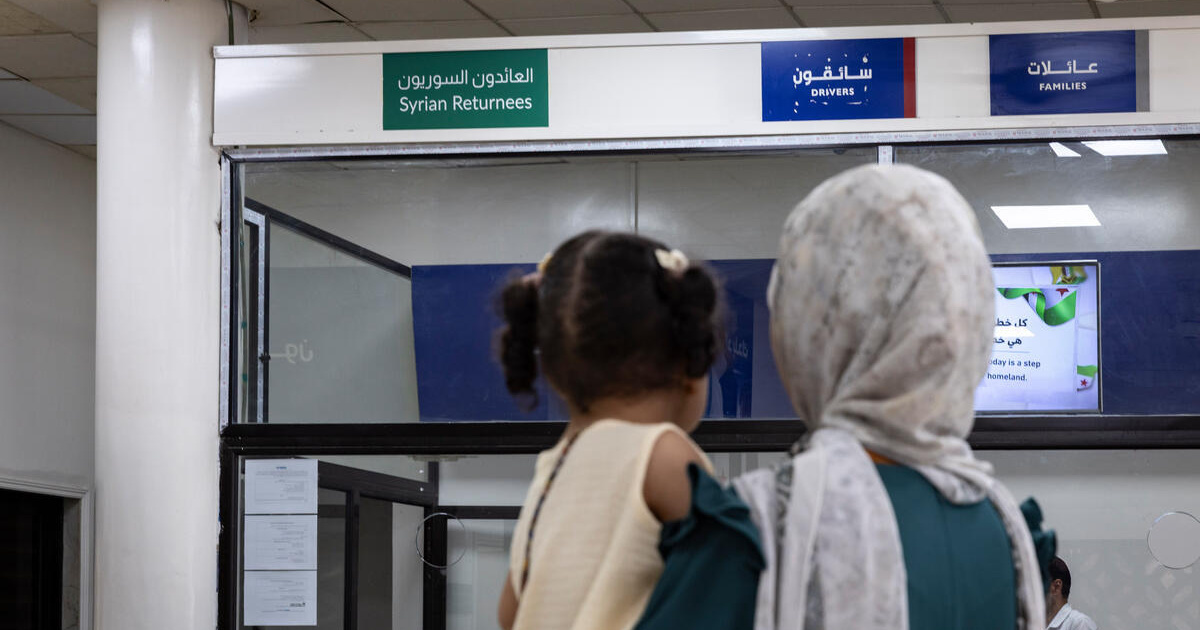
Syria has witnessed one of the largest waves of displacement in the world.
United Nations data indicates that more than half the population has been internally or externally displaced [4].
This demographic dispersal has affected the family structure, creating new patterns of female-headed households or those that have lost their breadwinner. - Multidimensional Poverty:
Recent reports indicate that most Syrian families experience varying levels of multidimensional poverty, encompassing income, health, education, and food [5].
With the decline in formal employment opportunities, families have turned to a fragile informal economy lacking job security. - Changing Gender Roles:
The conflict has contributed to a redistribution of gender roles within the family.
In many cases, women have become the primary breadwinners, while large segments of young people have been forced to work in low-skilled or hazardous jobs. - Children, Education, and Protection:
UNICEF notes that a significant proportion of children have lost years of schooling due to the conflict, while child labor rates have increased, and many have suffered heightened exposure to violence and psychological trauma [6]. - Loss of Traditional Support Networks:
A large portion of the support networks upon which Syrian families relied have collapsed, including extended family, neighborhood, and community and religious institutions.
This has exacerbated family isolation and social vulnerability. - Transformations in the Labor Market:
The formal economy’s capacity to create jobs has diminished, while the informal economy, on which millions of Syrians depend, has expanded.
This reality has left families with unstable sources of income, impacting their ability to plan for and invest in education and health.
Chapter Three: Assessment of Governmental and International Support Programs:
Since 2014, the United Nations and its agencies have adopted the Humanitarian Response Plan (HRP) for Syria, which includes food, education, and health programs.
However, despite their importance, these programs have remained emergency in nature and have not been integrated into a sustainable development vision.
UN Programs:
UNICEF provided support for education and protection, while the World Food Programme (WFP) provided regular food assistance. UNHCR also supported housing and basic needs.
However, coverage of these programs has recently declined due to funding cuts [7].
Key Gaps: These gaps include:
Limited long-term cash assistance programs
Lack of systematic programs to address learning loss
Weak focus on women’s economic empowerment
Absence of programs to rebuild social capital
Security and Governance Constraints:
Administrative and geographical divisions hinder program access to those in need, and political and economic crises affect the sustainability of funding and the coordination of interventions.
Program Sustainability:
Comparative studies indicate that programs that remain emergency for a full decade lose their effectiveness and create dependency rather than empowerment [8].
This applies to the reality of Syrian families today.
Chapter Four: Critical Socioeconomic Needs of Syrian Families:
- Education
Education is a top priority, not only as a fundamental right, but also as a prerequisite for rebuilding the economy and reducing poverty.
Schools need rehabilitation, while students need remedial programs. - Health and Food
Families suffer from the high cost of healthcare and the low quality of services, while food insecurity threatens the stability and development of children. - Livelihood Empowerment
Young people and women need vocational training programs and links to the labor market, in addition to support for small businesses and microfinance programs. - Rebuilding Social Capital
A significant portion of trust between individuals and institutions has collapsed.
This requires community programs, local dialogues, and social reconciliation initiatives. - Protection from Gender-Based Violence
Domestic violence rates have increased during the conflict, and families need protection and psychosocial support programs, listening centers, and legal services. - Children Affected by the Conflict
This group needs psychosocial support programs, school and community reintegration, and protection from the worst forms of child labor.
Chapter Five: Proposed Policies to Enhance Social Protection for Syrian Families:
This section stems from a political vision rooted in the Syrian Future Movement’s orientations.
- Income support policies and restructuring the support system: Conditional cash transfer programs targeting the most vulnerable families should be adopted, linked to access to education and healthcare. Conditional transfer programs have proven successful in Latin America [9]. Transitional safety nets should also be designed, progressing from relief to empowerment.
- Sustainable economic empowerment: Empowering families requires strengthening vocational training relevant to the labor market and providing an environment that encourages small business entrepreneurship. This aligns with a political vision that prioritizes citizen empowerment as a means to build a diversified economy that reduces dependence on the state and promotes individual and community responsibility.
- Policies to protect children and youth: A national plan should be developed to address learning loss, provide alternatives to formal education, and implement programs to protect children from the worst forms of child labor. Safe spaces should also be created for young people to foster their sense of belonging and prevent their attraction to violence or forced migration.
- Supporting women and enhancing their participation: Syrian women today bear double the responsibilities. Therefore, their capabilities must be invested in through vocational programs and by facilitating their entry into the labor market. Strengthening women’s economic independence is a fundamental part of building a state based on citizenship.
- Enhancing the role of civil society is crucial, as it plays a pivotal role in rebuilding trust and can implement impactful community programs. Establishing partnership platforms between civil society organizations and UN agencies is beneficial in this regard, ensuring that participatory interventions are designed to meet the needs of local communities.
Conclusion:
This paper demonstrates that Syrian families face deep structural challenges that have accumulated over a decade of conflict. It highlights the need for a national vision for social protection based on economic empowerment, quality education, protection for children and women, and the rebuilding of social trust.
The transition from relief to development is a political choice that reflects a vision of a state capable of protecting its citizens and achieving social justice.
Social protection policies should be scientifically designed to lay the foundation for building a cohesive society and a state capable of responding to the aspirations of its citizens.
the reviewer:
- [1] International Labor Organization, World Social Protection Report, 2023.
- [2] Becker, G., “A Treatise on the Family”, Harvard University Press, 1991.
- [3] World Bank, “Social Protection in Post-Conflict Settings”, 2020.
- [4] UNHCR, Global Trends in Forced Displacement, 2024.
- [5] UNDP, Multidimensional Poverty in Syria, 2023.
- [6] UNICEF, Education Under Fire Report, 2023.
- [7] OCHA, Humanitarian Response Plan for Syria, 2024.
- [8] OECD, Resilience in Protracted Crises, 2021.
- [9] Fiszbein & Schady, Conditional Cash Transfers, World Bank, 2009.