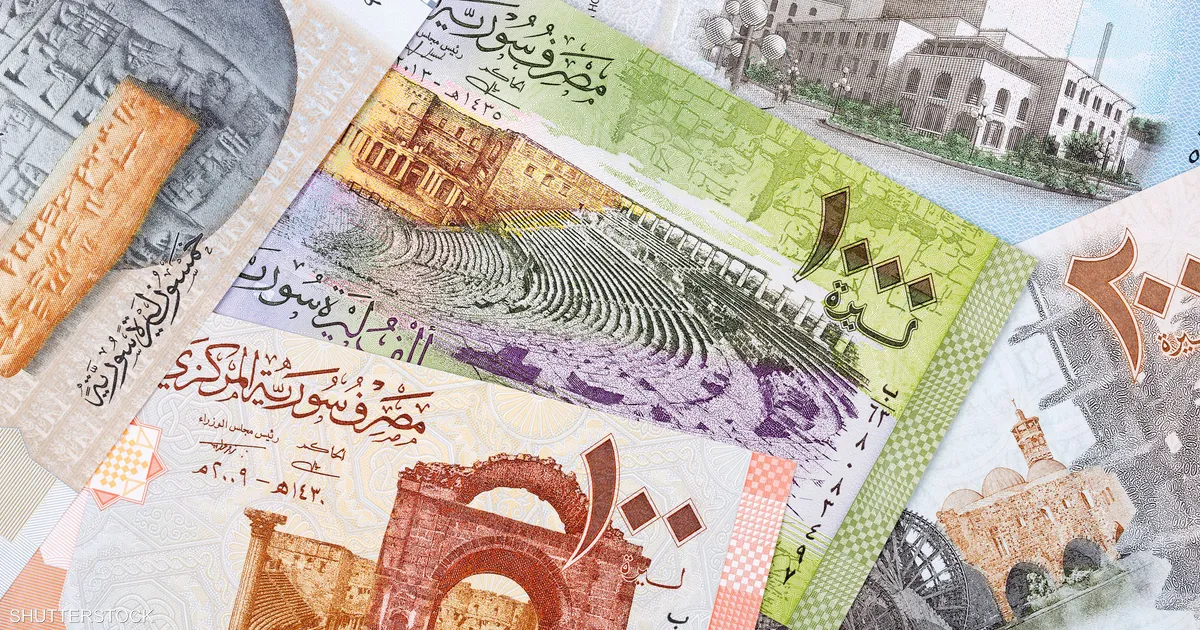
The Economic Bureau of the Syrian Future Movement is following the announcement made by the Governor of the Central Bank of Syria, Abdul Qader al-Husriya, on August 26, 2025, regarding the issuance of the “new lira,” scheduled for December 8, 2025. The issuance includes the removal of two zeros from the national currency to simplify accounting procedures and reduce the logistical costs of cash circulation. It also includes a transitional plan allowing the old and new currencies to coexist for one year, with an extended replacement period until 2030.
We at the Syrian Future Movement initially see this measure as coming in a fragile economic context, with the inflation rate reaching 6.4% in January 2025, and the exchange rate of the lira recording less than 10,000 liras to the US dollar in August 2025, with limited cash reserves estimated at approximately $200 million.
The Syrian Future Movement believes that the issuance of the “new lira” could contribute to improving the efficiency of financial transactions and narrowing the gap between the official and parallel markets. We also see it as a step toward strengthening confidence in the (missing) monetary system. This measure coincides with the Damascus International Fair on August 27, 2025, which witnessed the signing of investment agreements worth $14 billion. This reinforces observers’ expectations of foreign capital inflows, a potential factor supporting the currency’s stability. However, the nominal deletion of zeros, as experts have confirmed in reports by “Economy of the East” and others, does not affect actual purchasing power, requiring integrated monetary and fiscal policies to ensure overall success.
The Syrian Future Movement warns of structural challenges that could hinder the effectiveness of this reform, such as its being a “cosmetic” measure. Furthermore, the absence of substantive reforms, such as strengthening the cash reserve and reducing the fiscal deficit, could limit its impact.
The Syrian Future Movement has followed media reports, such as those on CNN Arabic and Al-Souria Net, that have sparked controversy over the printing of currency in foreign countries (Russia or the UAE), raising important questions about financial sovereignty and transparency.
The Syrian Future Movement believes that the persistence of structural inflation, coupled with weak industrial and agricultural productivity, makes it necessary to link this measure to macroeconomic policies to improve the balance of payments and reduce dependence on imports.
Accordingly, the Syrian Future Movement’s Economic Bureau recommends the following measures to ensure the success of the issuance of the “new lira”:
- An independent oversight framework, through the establishment of a supervisory body comprising local and international economic experts to monitor currency printing, distribution, and withdrawal of old currency, with periodic reports published to ensure transparency.
- Contractionary monetary policies, through gradual increases in interest rates and tighter liquidity to curb inflation, while supporting productive sectors through targeted tax exemptions, as stipulated in the August 26, 2025, decree on the industrial sector.
- Diversify foreign exchange reserves and leverage foreign investments announced at the Damascus International Fair (August 27, 2025) to increase foreign direct capital inflows, with a focus on high-value-added sectors.
- Engage the private sector and the diaspora by organizing a national economic platform that includes representatives of the private sector and Syrian communities to formulate comprehensive monetary policies that ensure a fair distribution of the benefits of economic reform.
The Syrian Future Movement emphasizes that the success of the “new lira” requires a long-term economic vision based on the stability of the financial system, enhancing productivity, and rebuilding trust between citizens and institutions. We, in turn, will commit to supporting economic reforms that serve the interests of the Syrian people, while ensuring that implementation is monitored to avoid any deviations that could hinder economic stability.