
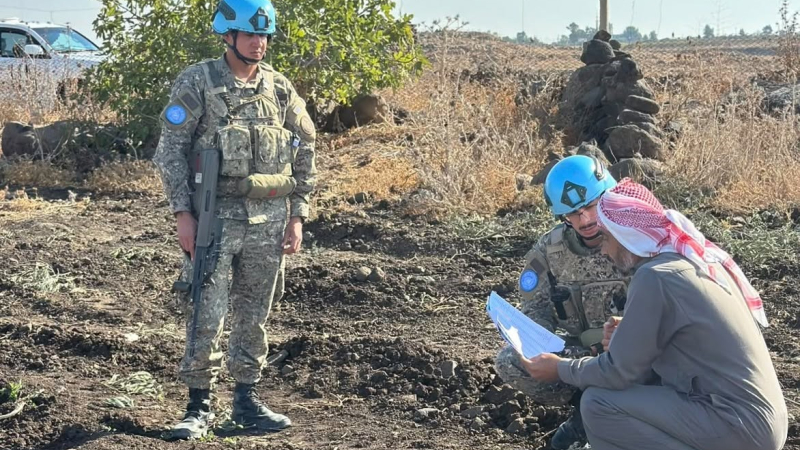
The Syrian Future Movement follows with great interest the efforts made by the United Nations Disengagement Observer Force (UNDOF) to escort olive farmers in the disengagement zone in southern Syria during the current olive harvest season. These efforts have included conducting field patrols to facilitate farmers’ access to their lands near the separation line—specifically in the villages of Saida al-Golan, al-Rafid, and al-Hanout—amidst local calls for these patrols to be intensified, particularly during nighttime hours.
The Syrian Future Movement appreciates these humanitarian efforts, which help alleviate the suffering of the farmers and enable them to harvest their crops—at least in part—under extremely harsh conditions.
Nevertheless, the Syrian Future Movement maintains that such escorts, while important, remain only a partial and temporary solution. They do not substitute for the fundamental demand to end the repeated Israeli attacks on farmers and civilians in southern Syria, nor do they replace the need for effective international protection that would allow farmers to access their lands safely, without the constant requirement for a military escort. The Syrian Future Movement views with extreme concern the scale of Israeli violations targeting olive farmers in Quneitra during the current season.
These actions reveal a systematic pattern aimed at depriving farmers of their livelihoods and compelling them to abandon their lands:
On October 19, 2026, occupation forces razed approximately 13 dunums of land planted with olive trees in the Al-Hanout area—part of the village of Saida—destroying about 300 olive trees, each approximately 13 years old. Furthermore, they prevented local residents from accessing their remaining fields to harvest their crops.
On November 11, 2026, an Israeli patrol, consisting of several military vehicles, advanced west of the town of Al-Rafid. The forces searched the olive harvesters, expelled them from the agricultural land, and halted their work. Concurrently, smoke grenades were fired into agricultural lands near the village of Taranja, in the northern countryside of Quneitra, igniting fires.
The Syrian Future Movement asserts that these incidents—occurring during the olive harvest season—demonstrate a systematic targeting of the primary livelihood for thousands of families in Quneitra. Denying farmers access to their land is not merely a security measure; rather, it constitutes collective punishment intended to depopulate the land of its inhabitants and alter the demographic reality in southern Syria.
The Syrian Future Movement notes that while the UNDOF patrols accompanying farmers are significant, they operate within a limited mandate that precludes them from providing effective protection or deterring attacks; their role is confined to monitoring, escorting, and documenting such violations as they are able to observe.
The Syrian Future Movement questions the utility of escorting a farmer to his land if, the very next day, the occupying forces can bulldoze it or expel the workers. Furthermore, what is the value of the identification cards promised to the farmers if they are not accompanied by guarantees against harassment or assault?
The Syrian Future Movement maintains that genuine protection is not achieved through seasonal escorts, but rather by halting the attacks, withdrawing from areas into which Israel has encroached, and upholding the 1974 Disengagement Agreement.
The Syrian Future Movement reaffirms its consistent position—as articulated in its official statement, “Quneitra Is Not Alone,” published on October 21, 2026—that “the cessation of attacks must be an immediate and unconditional obligation under international law and the 1974 Disengagement Agreement, rather than a negotiable item within a security deal.” It further asserts that “linking the cessation of attacks to the conclusion of a security agreement constitutes an unequal trade-off, effectively turning Syrian sovereignty into a subject for negotiation.”
The Syrian Future Movement holds that this principle remains valid today; any discussion regarding the protection of farmers must begin with the cessation of aggression, not with temporary arrangements that merely manage its consequences. The Syrian Future Movement commends the steadfastness of farmers in Quneitra, who continue to work their land despite threats and assaults, affirming that their commitment to their soil constitutes a form of defense of national sovereignty.
The Syrian Future Movement calls for fair compensation for farmers whose lands have been damaged or who have been denied access to them. It further urges the provision of technical and financial support to rehabilitate damaged olive groves and ensure legal protection for their property.
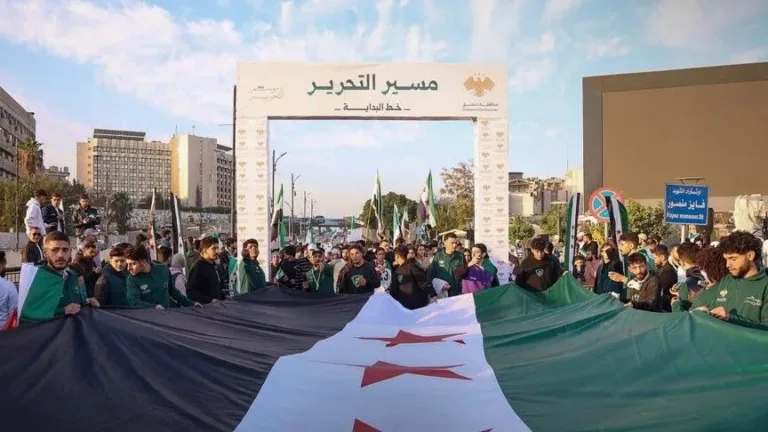
The Syrian Future Movement recalls that, in its statement issued on November 14, 2026—regarding the protest demonstrations in Quneitra, Daraa, As-Suwayda, and Aleppo—it highlighted a “vibrant popular will that rejects injustice and demands justice and dignity.” It emphasized that “the issue of the South is not merely a local matter, but a question of sovereignty and territorial integrity that concerns every Syrian.” The Movement maintains that the continued suffering of these farmers, notwithstanding such expressions of solidarity, necessitates broader national action that goes beyond mere statements and protests.
Acting upon its national responsibility, the Syrian Future Movement recommends the following:
First: Calling for the expansion of the mandate of the United Nations Disengagement Observer Force (UNDOF) and the strengthening of its authority to protect civilians. The Syrian Future Movement urges the UN Security Council to broaden the scope of UNDOF’s operations to include the effective protection of civilians and farmers—moving beyond simple monitoring and escort duties—and to empower the force to intervene to prevent attacks or report them immediately, consistent with other peacekeeping mandates that encompass the protection of civilians.
Second: Halting attacks on farmers, as these constitute a violation of international humanitarian law – The Syrian Future Movement calls upon the international community to condemn the targeting of farmers and their sources of livelihood, to recognize such actions as violations of international humanitarian law, to demand an immediate end to these attacks, and to ensure that farmers have unimpeded access to their lands.
Third: Compensating affected farmers and rehabilitating olive groves – The Syrian Future Movement urges the transitional government and international organizations to provide fair compensation to farmers whose lands have been razed or who have been denied access to them. It also calls for support in rehabilitating damaged olive groves and ensuring that the harvest season can continue in the years to come.
Fourth: Documenting Israeli violations and submitting case files to international forums – The Syrian Future Movement calls for the documentation …all instances of land clearing, forced displacement, and assaults against farmers, and to refer these cases to the International Criminal Court and relevant UN mechanisms, ensuring that those responsible are held accountable and do not escape justice.
Fifth: Launching a national program to support the resilience of farmers in Quneitra. The Syrian Future Movement calls for the provision of technical and financial support to farmers—including seeds, fertilizers, and machinery—as well as ensuring fair market access for olive harvests and providing legal protection. Such measures would strengthen their resilience against attempts at forced displacement.
While the Syrian Future Movement acknowledges and appreciates the humanitarian gesture of the UNDOF (United Nations Disengagement Observer Force) in accompanying farmers, it emphasizes that true protection cannot be achieved through seasonal escorts alone. Rather, it requires an end to aggression, respect for Syrian sovereignty, and the guarantee that farmers can access their lands without fear or threat.
The Syrian Future Movement asserts that olives in Quneitra are more than just a crop; they are a symbol of identity, belonging, and resilience. Every tree uprooted is a crime against both the land and its people, and every farmer prevented from harvesting their crop suffers a violation of their fundamental right to life and dignity.
For its part, the Syrian Future Movement remains committed to supporting all efforts that bolster the resilience of farmers and protect their lands. It will continue to critique international shortcomings and monitor developments on the ground, striving toward a new Syria—a future where every farmer can reclaim their land and harvest their own olives, free from the need for escorts or the shadow of threats.