
Towards the Third Year of Liberation: A Foundation for Change—Prior to Economics and Celebrations
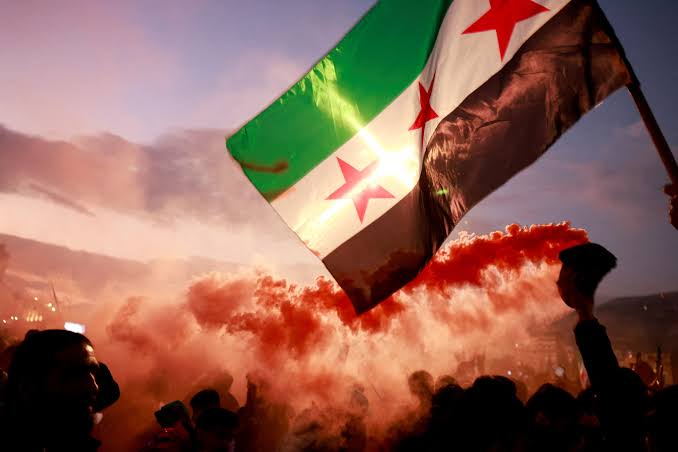
As a nation, a people, and a government, we are entering the third year since the collapse of the Ba’ath Party’s highly centralized security apparatus and the departure of the criminal elements brought in by Assad during the final years of the conflict—elements that fueled grievances and divisions whose repercussions continue to shape our reality to this day.
This time of year has become a season for retrospectives and competing narratives, with each side seeking to present its own interpretation of the events that have unfolded. Yet, it has also turned into an arena for mutual recrimination, where opposing factions cherry-pick failures and achievements to discredit one another, or compile political scorecards tailored to the specific agendas they have chosen to adopt—and there is no shortage of competing political currents in the country today.
Two years on, we still lack a shared roadmap. Syrians hold divergent visions regarding the structure of the state and the distribution of power, and there is a profound lack of trust—both in the existing authorities and among the people themselves. The country requires an institutional framework that allows for the peaceful management of these differences, provides clear guarantees for participation and accountability, and ensures that every party is held responsible for its own actions.
This vicious cycle is further deepened by the absence of an inclusive national framework and a common understanding that the ultimate goal must take precedence over the means used to achieve it. If that goal is to preserve the country’s unity and forge an inclusive national identity, then there are many paths toward achieving it. However, without a unification of efforts—and in the face of challenges of such magnitude and complexity—achieving this goal becomes significantly more difficult. Under current circumstances, merely reviving or recycling old, traditional approaches will not bring us any closer to a solution; on the contrary, it risks reproducing predictable outcomes and provides those intent on obstruction with an easy opportunity to derail any progress.
Beyond the proliferation of uncontrolled weaponry and the challenge of restoring security, perhaps the most pressing issue facing Syria today is the crisis of representation: how can we ensure fair and effective political and institutional representation for our various social components, identities, and segments?
We cannot expect a single party to bear the sole responsibility for ensuring inclusive representation. Nor can we ignore the intense desire among many Syrians to secure representation on terms they deem legitimate—especially since the fall of the regime has opened the door to new ambitions, aspirations, visions, and political projects across all strata of Syrian society. A potential answer to this impasse—and a way to strip those who exploit it to promote “partition” agendas of their pretexts—may lie in the establishment of a Syrian Senate. This idea was proposed by a friend a few days ago, based on a rational and careful assessment of the country’s current situation.
The proposed Senate would represent the country’s regions through their elected local authorities, with seats allocated in a manner that ensures a voice for less-populated areas, while duly accounting for demographic disparities. Furthermore, the electoral system should reflect the diversity within each region, including groups that do not constitute a local majority. Determining how to achieve such representation is a fundamental issue that must be resolved when designing the council’s electoral system.
Establishing such a council would also safeguard the legislative role of the People’s Assembly. It would help avoid the pitfalls of allocating parliamentary seats based on identity-based quotas—which often come at the expense of competence and expertise—thereby allowing the People’s Assembly to focus on its legislative and oversight duties without being constrained by the need to balance regional, ethnic, and religious representation at the cost of its core functions.
The proposed powers for the Senate include requiring its consent for the adoption or amendment of the constitution, as well as for legislation concerning the powers of local administration, cultural and linguistic rights, and the criteria for resource distribution among regions. A clear mechanism would also be established to manage disagreements between the Senate and the People’s Assembly, specifying which decisions require the approval of both chambers and which the Senate may return for reconsideration within a set timeframe.
Syria could draw upon the experiences of parliamentary chambers that represent local authorities or regions, while ensuring that the design is tailored to the country’s specific needs, diversity, and demographic distribution. The proposal must precisely define the administrative units that will elect members of the Senate, the method for allocating seats among them, and the safeguards necessary to prevent any single party from monopolizing representation within its respective region. If municipalities are to elect members of the Senate, this must be preceded by free and competitive local elections held under independent supervision. Such a process requires clear arrangements for the participation of displaced persons and returnees, as well as guarantees for the safety of candidates and voters and the freedom to run for office; for the legitimacy of the Senate will derive directly from the legitimacy of the local councils that elect it.
The issue here is not limited to sectarian divisions alone. We are witnessing communities entrenching themselves behind religious and ethnic identities, tribal affiliations, and even city-based loyalties—all in an effort to exert pressure through representatives (most of whom are traditional figures)
to secure a share of influence or a foothold in power.
Governments often yield to such demands, and therein lies the essence of the muhasasa (quota-based power-sharing) system—a system that we must all work to dismantle.
Negotiating with social groups and outlying regions through back channels and informal arrangements is precisely what legitimizes various forms of quota-based power-sharing—often masked by rhetoric about
“partnership” and “roles.” Furthermore, this informal system grants those operating within it easy access to positions of power, free from oversight or accountability, and lacking any effective mechanisms to regulate, monitor, or define their functions, responsibilities, and activities. The flourishing of this “market” leaves communities held hostage by traditional structures and pre-state identities. Yet, to refuse to engage with these groups—or to attempt to boycott them entirely—is simply unrealistic. For it amounts to turning one’s back on the reality of Syria as it actually exists, drifting into a realm of illusions, and—consequently—legitimizing a “black market of representation.”
The Senate would provide a permanent platform within state institutions for open negotiation regarding regional interests and the rights of the population.
And to limit the scope for political brokerage In the political sphere, the council’s deliberations and voting records must be made public; terms of membership and conditions for re-election must be clearly defined; and its members must be subject to rules regarding financial disclosure and conflicts of interest. Furthermore, elections for its seats must be competitive and protected by safeguards against any form of armed or security-related coercion.
The success of this council requires constitutional guarantees that compel state institutions to respect its mandate, alongside an independent judiciary capable of adjudicating disputes between them.
Its value will be measured by the extent of its influence on decision-making and the allocation of resources, as well as by the ability to hold its members accountable for their performance.
If we wish to lay the foundations for this “third year of liberation”—which is now upon us—we must build upon the principles of genuine representation, direct social accountability, and active participation, ensuring that no one can evade collective responsibility.
We must also put to the test the commitment of Syria’s various components to safeguarding their shared interests and pursuing a path toward true recovery—steering clear of the risks of partition or the threat of a renewed civil war. Achieving this requires nothing less than a radical transformation of the framework within which we operate and the structures through which we seek to act.
A comprehensive shift is essential—one that encompasses the legal framework and the entire structure that carries us toward the future. This would enable us to embark on an entirely new endeavor, drawing inspiration from successful global models while adapting them to Syria’s unique identity and complex reality—thereby transforming the very problems we face into the foundations for their own solutions. Neither bodies, committees, workshops, dialogues, and statements, nor parallel recovery tracks will suffice as long as the overarching framework continues to erode. In fact, many have a vested interest in the persistence of this decline, while the country remains steered by roadmaps that have proven ineffective.
Damascus must remain the country’s compass and center, an integral part of every Syrian’s identity. Yet, if we wish for it to retain this status—beyond mere slogans, songs, and hollow celebrations—and if we are to dispel the anxieties held by many Syrians, we must transform the infrastructure of the political system.
During the transitional phase, a public discussion could be initiated regarding the powers and electoral system of a Senate, involving local authorities, political forces, civil society, and representatives of displaced persons. This process should culminate in a published proposal outlining the stages and conditions for establishing the Senate, allowing Syrians to evaluate how it would enhance their participation in the governance of their country.