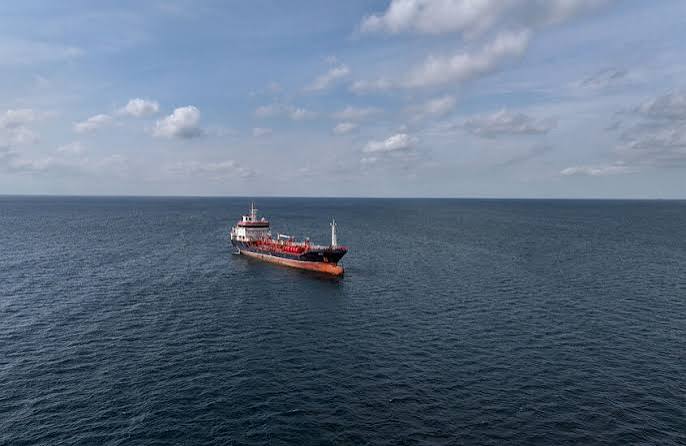
The Syrian Future Movement is following with great satisfaction and pride the successful rescue of five Syrian sailors, including Captain Walid Muhammad Abu Bakr from Arwad Island, who had been stranded aboard the ship “Milagro” off the coast of Jazan for more than six months after its owner abandoned them and left them to face an uncertain fate.
The Syrian Future Movement believes that this incident, despite its tragic nature, carries a profound political message: the new Syrian state has returned to its citizens, is acting on their behalf, and is responding to their pleas for help, no matter how far they may be or how difficult the circumstances.
The Syrian Future Movement commends this shift, which it has long advocated, emphasizing that it is the state’s duty to support its citizens both at home and abroad.
The Syrian Future Movement is recording the precise details of the story, as recounted by Captain Walid Abu Bakr:
On November 13, 2026, the Syrian Embassy in Riyadh received a distress call via its emergency hotline for citizens from Captain Abu Bakr. He reported that his ship was stranded off the port of Jazan, with four other Syrian sailors on board, in dire humanitarian and living conditions that prevented them from continuing their voyage.
According to the captain’s account, the crisis began when maritime inspectors and the port authority in Jazan refused to allow the ship to dock for cargo due to its poor condition and unseaworthiness. He added that the owner, a Yemeni merchant new to the maritime sector, had withdrawn from the shipping agency and disappeared, evading his financial obligations and leaving the crew to face an uncertain future.
The Syrian Future Movement notes that the ship “Milagro,” built in 1979, suffered from serious malfunctions, most notably holes in its hull, main keel, and ballast water tanks, causing water leaks, in addition to the deterioration of its generators and the low efficiency of its main engine.
During the six months of waiting, the crew was besieged by hunger, thirst, and fuel shortages, forcing them to ration electricity despite the high temperatures in the Red Sea.
However, the Syrian Future Movement objectively notes that the rescue operation was not a one-sided effort, but rather a multi-party effort involving the Syrian Embassy in Riyadh, the relevant Saudi authorities, and the International Transport Workers’ Federation (ITF).
The ITF received the sailors’ distress call and acted in parallel with the embassy, successfully securing their back pay for four months and providing them with food, water, and fuel while they were on board. The joint coordination efforts culminated in their transfer to Jeddah, paving the way for their return to Syria.
The Syrian Future Movement considers this integration between national diplomacy and international organizations to be the ideal model for protecting maritime workers. It demonstrates that when a state works diligently and in coordination with international partners, it is capable of rescuing its citizens from the most difficult circumstances.
The Syrian Future Movement highly values the significant cooperation shown by the relevant Saudi authorities, which contributed to facilitating the entry of the sailors and ending their ordeal. The Syrian Future Movement believes that this cooperation reflects the depth of the fraternal relations between the two brotherly countries and constitutes a positive model for joint action in protecting citizens and attending to their needs.
The Syrian Future Movement reiterates its firm position, published on its official website in its statement entitled “Resumption of the Syrian Embassy’s Operations in Libya,” dated August 31, 2026. In that statement, it emphasized that “restoring Syria’s diplomatic role and caring for its citizens abroad is part of restoring Syria’s dignity and standing,” and called for “generalizing the experience of resuming embassy operations to all countries.” The Syrian Future Movement considers the Jazan incident a practical application of this principle, proving that Syrian embassies, when working diligently, can be the first line of defense for citizens abroad.
Based on its national responsibility, the Syrian Future Movement recommends the following:
First: The Syrian Future Movement calls for expanding the emergency hotline model that proved successful in the Jazan incident, providing trained personnel to respond quickly to citizens’ emergencies, and linking these hotlines to central operations rooms at the Ministry of Foreign Affairs to ensure that no Syrian citizen is left alone in their ordeal.
Second: Monitoring the sailors’ situation after their return to Syria, securing alternative employment opportunities for them, ensuring they receive their full wages, and holding the ship’s owner accountable for evading legal obligations, in coordination with the International Transport Workers’ Federation and the relevant judicial authorities.
Third: Establishing a legal framework to protect Syrian seafarers working on foreign vessels, obligating ship owners to ensure safe working conditions, and allowing seafarers to contact Syrian embassies in cases of abandonment or exploitation. This framework should be consistent with the 2006 Maritime Labour Convention, which requires ship owners to provide food, water, medical care, and wages, and grants abandoned seafarers the right to compensation.
Fourth: The Syrian Future Movement calls on the Ministry of Foreign Affairs to build an institutional partnership with the International Transport Workers’ Federation (ITF) and the International Maritime Organization (IMO) to ensure a faster response to the cases of stranded Syrian seafarers, provide a permanent coordination mechanism for emergencies, and train consular staff to handle maritime labor issues.
Fifth: Syrian embassies should publicize their success stories in serving citizens, as the Riyadh embassy did. This strengthens citizens’ trust in the state and encourages them to contact their embassies when needed, rather than feeling hopeless or relying on other entities.
Sixth: Implementing the directives of the Chargé d’Affaires of the Syrian Embassy in Riyadh, Mohsen Mahbash, regarding “the Embassy’s commitment to keeping its doors and direct communication channels open to all members of the Syrian community, and its efforts to develop consular procedures and alleviate burdens on citizens,” and expanding these services to cover all regions of the Kingdom.
The Syrian Future Movement, along with the International Transport Workers’ Federation, expressed its happiness at the return of the five sailors to their homeland and commended their resilience and solidarity in the face of their ordeal.
The Syrian Future Movement believes that this incident, despite its severity, carries a message of hope for every Syrian, both inside and outside the country: that the new state exists, listens, acts, cooperates with international partners, and does not abandon its citizens.
The Syrian Future Movement reiterates that building the new Syria begins with protecting its citizens, attending to their needs, and standing by them in times of hardship. Any state that fails to protect its citizens cannot earn their trust.
For its part, the Syrian Future Movement will remain committed to supporting all efforts that strengthen the state’s role in caring for its citizens, criticizing any shortcomings, and monitoring all achievements on the ground, striving towards a new Syria to which its citizens can return and find a state that protects them and safeguards their dignity.The Syrian Future Movement appreciates the efforts of the Syrian Embassy in Riyadh and the Saudi authorities.