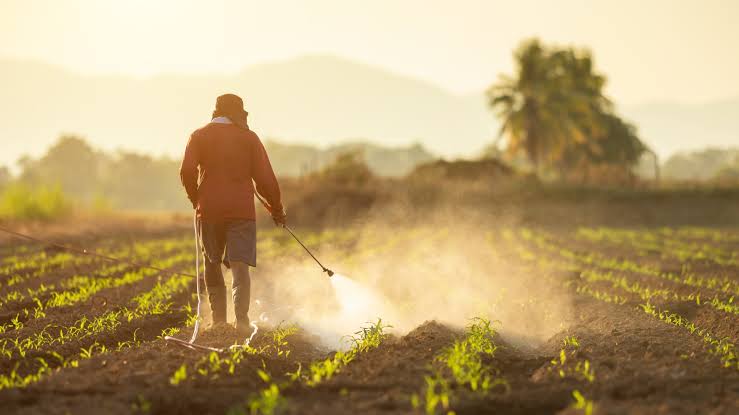
The Syrian Future Movement is following with great interest the decision issued on Tuesday, November 3, 2026, by the Board of Directors of the Fund for Mitigating the Effects of Natural Disasters on Agricultural Production. The decision mandates the provision of compensation to 8,289 farmers across seven Syrian governorates—Daraa, Deir ez-Zor, Raqqa, Homs, Hama, Aleppo, and Tartus—totaling approximately 211 million “new” Syrian pounds. This follows damage to roughly 195,000 dunums of crops—including legumes, vegetables, wheat, and barley—as well as almond orchards and tobacco fields, caused by hailstorms, spring frost, and rising water levels in the Euphrates River during the months of March, April, and May.
The Syrian Future Movement notes that while this decision is significant, it cannot be viewed in isolation. It follows a previous decision, issued on August 24, 2026, which provided compensation to 1,741 farmers in the governorates of Idlib, Aleppo, Quneitra, and Tartus, amounting to 112 million Syrian pounds.
Consequently, the total number of farmers covered by these compensation decisions—including both the August action and the most recent one—reaches approximately 10,030 across eight governorates, with total compensation amounting to nearly 323 million Syrian pounds.
The Syrian Future Movement observes that, while this figure is a positive indicator, it remains extremely limited in relation to the actual scale of the disaster. Flooding alone affected more than a third of Syrian territory last October, causing damage to farmers in the governorates of Raqqa, Deir ez-Zor, Al-Hasakah, Aleppo, Hama, Homs, and Latakia. The Syrian Future Movement notes that the documented scale of damage far exceeds what is covered by the compensation decrees. According to a rapid assessment conducted by Oxfam between May 31 and June 3, 2026—following the flooding of the Euphrates River in May—approximately 20,500 dunums of land in the western countryside of Deir ez-Zor were damaged. Furthermore, 85% of farmers have lost all or part of their agricultural income, 85% of irrigation systems (both individual and collective) have become completely inoperable, and 43% of households have sold their livestock or productive assets, while another 25% plan to take on debt to resume farming.
The Syrian Future Movement provides a simple calculation that reveals the reality behind these figures:
The total amount allocated in the most recent decree (211 million Syrian pounds), divided by the number of farmers (8,289), results in an average payout of no more than 25,500 Syrian pounds per farmer.
Under the previous decree (112 million Syrian pounds for 1,741 farmers), the average was approximately 64,330 Syrian pounds.
If the combined total from both decrees (323 million Syrian pounds) is distributed among all beneficiaries (10,030 farmers), the average compensation amounts to just 32,200 Syrian pounds per farmer—a sum insufficient even to purchase seeds for a single season, let alone compensate for the loss of an entire season’s harvest. The Syrian Future Movement maintains that these figures, despite their symbolic value, represent only a tiny fraction of the actual losses. When compared to the real costs of production—including seeds, fertilizers, diesel, irrigation, and labor wages—it becomes clear that these compensations serve more as a “symbolic gesture” than as “fair restitution.”
One must ask: how could such an amount possibly enable a farmer to return to his land, prevent another from having to sell off his livestock, or stop a third from migrating to the city?
The Syrian Future Movement reaffirms its consistent position—as stated on its official website—calling for fair and prompt compensation for affected farmers.
In its statement titled “Decision to Halt Irrigation for the Summer Season in the Rouj Plain,” issued on March 26, 2026, the Syrian Future Movement urged the implementation of “a clear compensation program for affected farmers to prevent further rural-to-urban migration and rising food prices.”
Furthermore, in its statement titled “Proactive Planning to Protect the Agricultural Season,” dated August 11, 2026, the movement emphasized that “investing in proactive response can yield savings of up to seven dollars [for every dollar spent],” and that transforming these measures into sustainable policies is the only genuine guarantee against the recurrence of such crises. The Syrian Future Movement notes that the recent compensation decision comes months after the damages occurred—specifically in March, April, and May. This delay in disbursing payments exacerbates the suffering of farmers, exposes them to further losses, and—as indicated by an Oxfam assessment—compels some to sell their productive assets or take on debt.
The Syrian Future Movement calls for the publication of a list of beneficiaries along with their respective compensation amounts. It also demands the establishment of a clear appeals process and the prompt disbursement of funds through the Agricultural Bank, avoiding any bureaucratic hurdles that might further erode the farmers’ remaining trust in the state.
Acting out of its national responsibility, the Syrian Future Movement makes the following recommendations:
First: Link compensation to a national disaster risk reduction program. This should involve investing in early-warning systems, rehabilitating irrigation and drainage networks, and constructing dams and spillways—such as the dam and spillway in the Al-Saiha area of Aleppo, as previously recommended by the fund’s own committee. Providing compensation without preventive measures only ensures that the disaster will recur year after year.
Second: Increase compensation amounts to align with actual production costs. This requires reviewing current calculation criteria and adopting precise indicators that determine the value of losses based on crop type, land area, and the stage of plant growth—moving away from arbitrary lump sums that fail to reflect reality. Furthermore, compensation should, at a minimum, cover the costs of resuming production for the following season. Third: Enhance the transparency of the Disaster Mitigation Fund by publishing periodic reports on its financial resources, the criteria for distributing compensation, and the names of beneficiaries. Furthermore, its decisions should be subject to independent oversight to ensure the fund does not become a tool for favoritism or clientelism.
Fourth: Launch a comprehensive compensation program for the recent floods that struck Raqqa, Deir ez-Zor, Al-Hasakah, Aleppo, Hama, Homs, and Latakia in October—a measure previously advocated for by the Syrian Future Movement. Limiting compensation to damages sustained in the spring, while excluding those from the autumn, fosters a sense of injustice among thousands of farmers who have yet to be included in any compensation schemes.
Fifth: Involve farmers and their organizations in the design of compensation and prevention programs, ensuring these initiatives are based on their actual needs rather than administrative estimates detached from reality. The success of any agricultural policy depends on a genuine partnership with those who cultivate the land and safeguard food security.
The Syrian Future Movement views the decision to compensate thousands of farmers as an official acknowledgment of the state’s responsibility toward those affected by natural disasters for which they bear no fault.
However, the Syrian Future Movement emphasizes that compensation—while essential—is no substitute for a comprehensive agricultural policy. Such a policy should protect farmers before a disaster strikes, ensure swift and fair compensation in its aftermath, and provide them with the hope needed to remain on their land, rather than forcing them to migrate or abandon agriculture altogether.
The Syrian Future Movement asserts that national food security begins with respecting farmers, upholding their rights, and recognizing that those who provide bread for everyone deserve to have their dignity preserved above all else.
For its part, the Syrian Future Movement will continue to support initiatives that bolster the resilience of farmers and ensure transparency in the compensation process. It will remain critical of any delays or shortcomings, while closely monitoring actions taken on the ground—all in pursuit of a new Syria where no farmer is left to face disasters alone.