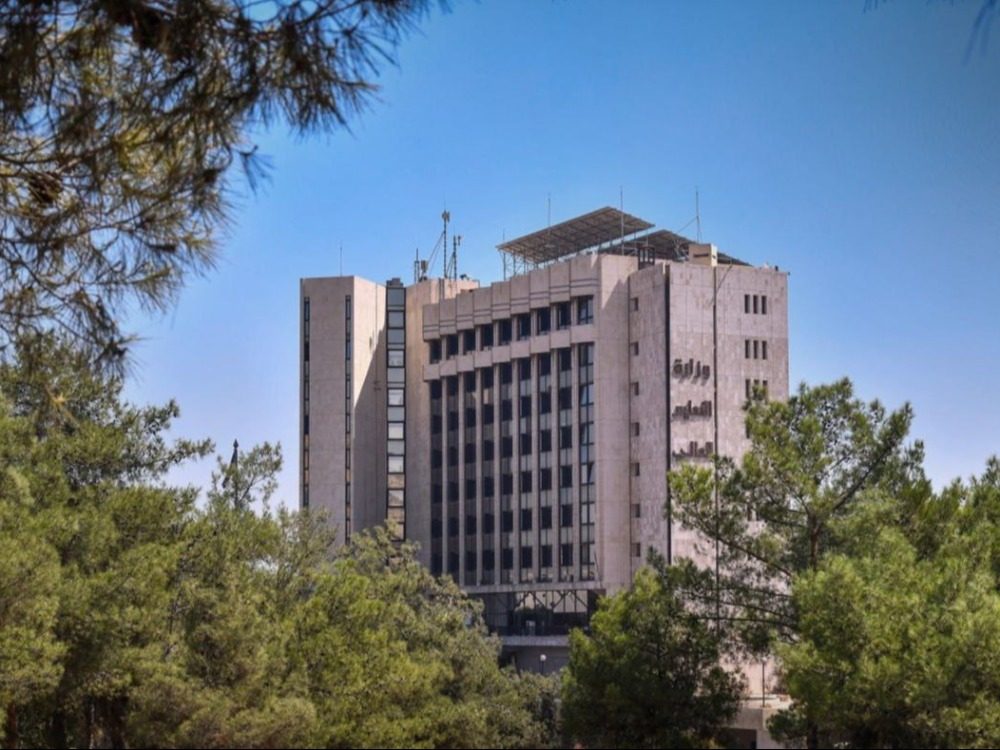
Academic Abstract:
This study analyzes the pivotal academic event of the Second International Scientific Conference on Educational and Psychological Sciences, held at Al-Furat University on May 12-13, 2026, as an indicator of Syria’s academic recovery in the post-political transition phase.
The study aims to assess the current state of scientific research and higher education institutions in Syria, analyze the structural and financial challenges hindering their advancement, and present a future vision based on the principles of “civilizational Islam” to integrate intellectual heritage with the demands of the modern era.
It also offers a brief comparative study of successful higher education reform experiences in Gulf and Asian countries and attempts to answer the central question: How can scientific research be a genuine engine for building a modern Syria?
First, the study’s methodology and analytical introduction:
This study proceeds from the premise that building a modern civil state is incomplete without establishing a solid foundation for science and knowledge. Scientific research represents the fundamental guarantee for sustainable development and the optimal mechanism for overcoming the logic of quotas and hegemony, replacing it with an institutional mindset and a focus on competence.
In this context, the convening of the Second International Conference on Educational and Psychological Sciences at Al-Furat University acquires particular significance, as it signals the return of academic life to normalcy and the opening of Syrian educational institutions to the world after years of isolation and devastation left by the former regime.
The study adopted a descriptive-analytical approach to document the event and analyze its dimensions, and a comparative approach to draw lessons from regional and global models in higher education development. It utilized official data and statistics issued by the Ministry of Higher Education and Scientific Research, as well as documented international rankings for 2026.
Secondly, the Syrian Future Movement’s vision for building a modern, cultured individual:
The Syrian Future Movement bases its intellectual project on a vision of Islam as a human civilization drawing from the wellsprings of justice, knowledge, and moderation, not as a closed ideology or a tool for political manipulation.
From this perspective, the movement calls for what it terms “civilizational Islam,” emphasizing that Islam encouraged science, knowledge, research, and contemplation of the universe, and that it supported human civilization in its golden age. The Prophet Muhammad (peace be upon him) said: “Seeking knowledge is an obligation upon every Muslim” [Narrated by Ibn Majah]. This hadith places scientific research at the heart of religious and ethical duty, not merely as a secondary option.
Civilizational Islam is an approach that embodies authentic Islamic values, calling for knowledge, work, construction, excellence, and justice, far removed from extremism, fanaticism, and ideology.
It is analogous to “Islamic civilization,” which draws upon the values of justice, moral responsibility, and excellence to build institutions and disseminate knowledge.
At the heart of this vision lies a focus on youth, education, and technology. Spreading “modern culture” and a “scientific mindset” constitutes the core of the movement’s project in confronting extremist and authoritarian ideologies. The Syrian Future Movement has consistently emphasized the necessity of aligning academic curricula with the requirements of economic and social development, and in its previous research, it warned of the crisis of mismatch between higher education outputs and labor market needs.[1]
Third: The Second International Conference on Educational and Psychological Sciences – Documentation and Analysis:
Event Facts: [2]
Under the patronage of Professor Dr. Marwan Al-Halabi, Minister of Higher Education and Scientific Research, Al-Furat University organized its Second International Scientific Conference on Educational and Psychological Sciences, under the slogan “The First Step to Empowerment is Investing in Possible Things,” and entitled: “Educational and Psychological Sciences: Between the Realities of the Present and the Requirements of Development.”
The conference was chaired by Professor Dr. Munir Al-Habib Al-Aroud, President of Al-Furat University, and was held at the Faculty of Education at Al-Furat University in Deir ez-Zor, on May 12-13, 2026.
As stated in the announced conference program, the opening session began on the morning of May 12. The initial sessions included specialized discussions addressing crucial issues such as: “Teachers, Learners, and Mental Health in Light of Global Changes,” “The Impact of Global Changes on the Psychological Stress of Students and Teachers and the Role of Educational Administration in Mitigating It,” “The Relationship Between Job Commitment and Burnout,” and “Psychological Well-being and Its Relationship to Self-Motivation Among University Students.” Researchers from Syrian and Arab universities (including Damascus University and Kirkuk University) participated.
An Analytical Reading of the Event’s Significance:
The convening of this conference at this specific time and in a sensitive geographical location (Deir ez-Zor) sends a clear message on four levels: First, that Syrian universities have regained their active role as leading scientific institutions after having been targeted by systematic neglect and destruction; Secondly, Syria’s openness to the Arab and international academic community has begun to take on practical dimensions that are no longer limited to political statements. Thirdly, the focus on educational and psychological sciences constitutes an implicit recognition of the importance of addressing the immense psychological trauma inflicted on Syrian society by the protracted conflict. Fourthly, this conference is but one in a series of scientific conferences and events taking place at Syrian universities in 2026, reflecting a growing academic movement.
In the same vein, the Ministry of Higher Education and Scientific Research announced updated indicators and statistics for the sector on April 13, 2026.[3] Furthermore, higher education institutions have witnessed remarkable progress in global rankings. The results of the new edition of the Scientific Index for Universities 2026, released on February 17, 2026, demonstrated a significant academic achievement for Syrian higher education institutions, with Latakia University topping the list of Syrian universities in this ranking, ahead of the universities of Damascus, Aleppo, Tishreen, and Al-Baath.[4]
Damascus University was also included in the 2026 QS World University Rankings as one of the best universities, becoming the only Syrian university in this ranking.[5]
Fourth, approaching the topic from the perspective of “civilizational Islam”:
From the perspective of “civilizational Islam,” as espoused by the Syrian Future Movement, holding an international scientific conference at Al-Furat University is a tangible embodiment of this vision.
The integration of educational and psychological sciences, on the one hand, and ethical and civilizational principles, on the other, is the most effective way to rebuild Syrian society and strengthen its cohesion.
Civilizational Islam rejects the absolute separation between knowledge and ethics, and calls for science to serve humanity and society. This is reflected in the conference sessions, which focus on mental health and educational pressures.
We also believe that addressing teacher burnout and promoting students’ psychological well-being are authentic Islamic values (justice, mercy, and the preservation of dignity) expressed in modern scientific language.
Fifth, coinciding with a significant international event:
It is worth noting that this scientific conference comes just one day after the European Union announced (on May 11, 2026) the lifting of the freeze on its economic cooperation agreement with Syria after a 14-year hiatus [6], representing a gradual European opening to the new Syria.
This openness is not limited to the economic sphere; it extends to education and scientific research. The European Union has already discussed plans with the Syrian government to develop higher education, including reopening the Erasmus+ office in Damascus, which provides scholarships and extensive exchange programs for students, staff, and trainees.
This convergence creates a historic opportunity to institutionalize scientific cooperation with Europe, while simultaneously testing the ability of Syrians to offer an academic vision that aligns with international standards.
Sixth, Analysis of the Current Situation and Challenges (Recent Data and Statistics):
- Admissions and Higher Education Statistics:
According to data from the Ministry of Higher Education and Scientific Research, approximately 256,891 students applied for university admissions for the 2025-2026 academic year via the online application.[3]
The Ministry recorded a general and comprehensive decline in admission rates and minimum requirements in the previous year, indicating the continued impact of the ongoing conflict on enrollment in higher education.
Syria currently has 21 accredited universities, verified through reliable sources of academic data. - Scientific Research Budget:
The scientific research budget is considered one of the most pressing challenges.
Despite the inclusion of the Ministry of Higher Education and Scientific Research in the 2026 budget, which President Ahmed al-Sharaa announced would amount to $10.5 billion[7], the funds allocated to scientific research remain below the aspirations that would enable researchers to conduct high-quality research.
This is attributed to the prioritization of physical reconstruction over investment in knowledge. - The Brain Drain Problem:
Syria continues to suffer from the emigration of scientific talent. Many researchers and university professors left during the conflict, and some still prefer to remain abroad due to weak incentives and the lack of an attractive research environment.
If this problem is not addressed, it will lead to the depletion of academic institutions of their personnel and undermine any effort to advance higher education.
Seventh, Recommendations and a Future Vision Based on Comparative Experiences:
Practical Recommendations for Advancing Scientific Research and Higher Education:
- Establish a national fund to support scientific research, administratively and financially independent, to finance applied research of national priority, similar to the Qatar Fund for Cultural Development (the “Riwaq” Fund for Scientific Research) and Malaysia’s experience with the “Science and Technology Fund.”
- Launch the “Rafed” program to attract expatriate Syrian talent to universities, including providing financial and service incentives, along with an advanced research environment that enables them to make significant contributions.
- This experience has been remarkably successful in South Korea (the “Brain Pool” program) and Turkey (the “TÜBİTAK” program).
- Develop postgraduate curricula to align with labor market needs and development requirements, focusing on modern technologies, renewable energy, and urban planning.
- Institutionalize academic cooperation with the European Union by reactivating existing cooperation agreements and establishing joint academic exchange programs (Erasmus+, Horizon Europe).
- Establishing a Syrian Observatory for Scientific Innovation to monitor and evaluate the outputs of scientific research and provide technical recommendations to donors and investors.
Successful International Experiences to Emulate:
A. The United Arab Emirates: Invested in establishing world-class research centers (Mohammed bin Zayed University of Artificial Intelligence), attracted global talent, and subjected higher education to international quality standards (accreditation of university programs by international bodies).
B. Malaysia: Linked higher education to national development plans (Vision 2020) and established the MIMOS agency to support research and technological development, making the high-tech manufacturing sector a key pillar of the Malaysian economy.
C. Finland: Made scientific research the cornerstone of its education system and invested in teacher training and curriculum development to keep pace with the changing times.
Warning Against Failed Experiences:
- Libya’s Experience After 2011: The higher education system was neglected, and the economy relied on oil revenues without investing in human capital, leading to a complete decline in scientific research and the emigration of all skilled professionals.
- The Lebanese Experience: Where public universities collapsed due to political polarization and the entrenchment of sectarian power-sharing in the management of educational institutions.
Conclusion:
In conclusion, the essence of building a new Syria lies in investing in the Syrian mind and liberating it from the constraints of the past.
The Second International Conference on Educational and Psychological Sciences at Al-Furat University is a tangible embodiment of Syria’s return to the global scientific research map. We believe that the academic compass must now point towards openness to the world, renewing the pact between the state and scientists, and empowering Syrian youth to carry the torch of renaissance.
For our part, we in the Syrian Future Movement call for a shift from a state of anticipation to one of achievement, and from slogans of reform to the science of reform.
We are confident It is believed that the era of building Syria begins within the halls of universities, and it is expected that everyone who is able to contribute will lay its first brick.
List of Sources and References:
- Syrian Future Movement, “Annual Report for 2025,” January 1, 2026.
- Al-Furat University, “The Second International Scientific Conference on Educational and Psychological Sciences at Al-Furat University (Announcement and Program),” May 12, 2026.
- Ministry of Higher Education and Scientific Research, “Indicators and Statistics on Higher Education,” April 13, 2026.
- uni.sy, “Ranking of Syrian Universities for 2026 According to the Scientific Index,” February 17, 2026.
- Syrian Radio and Television Production Corporation, “Damascus University Among the Best Universities in the QS World University Rankings for 2026,” June 18, 2025.
- Al-Araby Al-Jadeed, “The European Union Ends the Freeze on Cooperation Agreement with Syria,” May 11, 2026.
- Al Jazeera Net, “President Al-Sharaa Announces the 2026 Budget: $10.5 Billion,” April 9, 2026. 2026.
- In addition:
- TopUniversities.com, QS World University Rankings 2026 (accessed May 12, 2026).
- Harmoon Center for Contemporary Studies, “Challenges of Higher Education in Syria,” 2025. (For reference)