In the name of the Syrian Future Movement, the national civil political entity striving to build the Syria of tomorrow on the foundations of modernity, science, and respect for rights and public freedoms, and in accordance with its objectives that place the dignity of the Syrian people at the forefront of its priorities, and based on Article (12) of the Syrian Constitutional Declaration and subsequent articles guaranteeing the right of citizens to peaceful assembly, and in accordance with the provisions of the International Covenant on Civil and Political Rights, particularly Article (21), which stipulates that any restrictions on the exercise of this right must be “necessary measures in a democratic society,” as well as with reference to General Comment No. 37 issued by the United Nations Human Rights Committee (2020), which clearly affirms that the exercise of the right to peaceful assembly should not be subject to a prior authorization system, but rather a simple notification system is preferable.
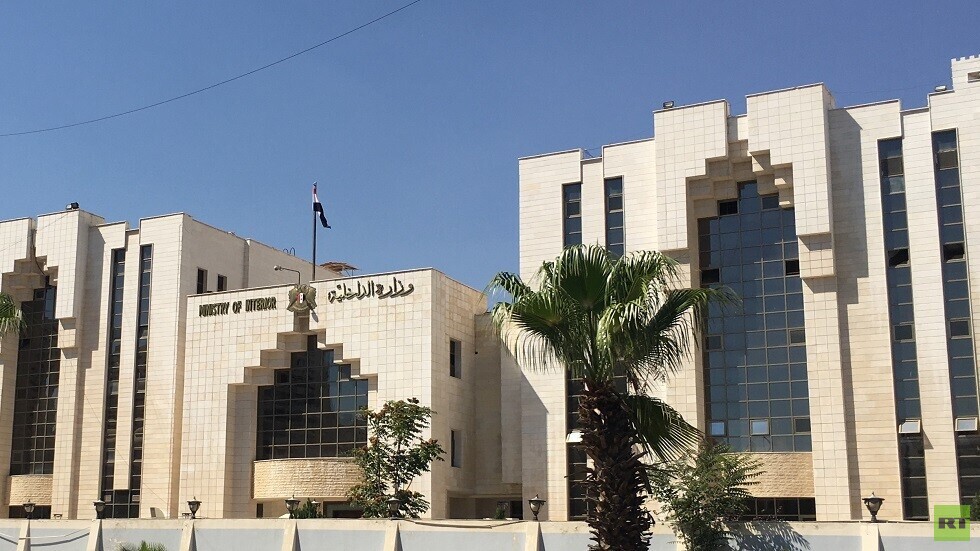
While the Syrian Ministry of Interior issued official statement No. (61/B) on May 3, 2026, which, according to its text, aims to regulate the right to peaceful demonstration, the Syrian Future Movement views this step as a positive development towards building a state of institutions and the rule of law, and moving away from the logic of repression and censorship that prevailed for decades.
The Syrian Future Movement considers statement No. (61/B) issued by the Syrian Ministry of Interior as a first and positive step towards regulating public spaces. It commends the article stipulating that approval is automatic if the relevant committee does not respond within five days, as well as the right of organizers to appeal rejection decisions before the administrative judiciary within one week. This aligns with the principles of the rule of law that the Movement advocates.
The Syrian Future Movement takes note of the statement regarding the Ministry of Interior’s reliance on articles of the Penal Code issued by Legislative Decree No. (148) of 1949. Specifically, Articles 335 to 338 of this law define “meetings that are not of a private nature” as unlicensed public gatherings, subject to legal procedures that may include criminal penalties, depending on the context of each article.
We emphasize that any regulatory measures should not criminalize peaceful protest in its essence, and we call for a review of these texts to ensure their consistency with the spirit of the transitional phase and Syria’s international obligations.
The Syrian Future Movement also points out a fundamental deficiency in the statement: the absence of provisions addressing emergency and spontaneous situations, such as gatherings that erupt in response to immediate events (like provocations or individual acts of repression). Such gatherings cannot and should not be subjected to a waiting period of up to five days. The Syrian Future Movement affirms that the sanctity of the right to immediate peaceful protest must not be violated under the guise of routine procedures.
The Syrian Future Movement bases its position advocating for a notification system instead of the absolute licensing of routine procedures on global best practices and comparative experience in advanced democracies, as follows:
- In Germany, organizers are required to provide authorities with a minimum of 48 hours’ notice, with a full exemption for spontaneous gatherings, which are a constitutional right. Legal practice allows for exceptions if the deadline cannot be met, while adhering to the principle of proportionality.
- In Britain, police are required to be notified six days in advance of planned marches, with an exception made if this is practically impossible. This ensures the right to protest in the moment.
- In the United States, the First Amendment guarantees freedom of assembly. Although many cities impose prior licensing systems for large gatherings that disrupt traffic or require government services, judicial practice requires these systems to be impartial and tends to protect spontaneous protests as a protected expression of opinion.
- In Canada, the capital, Ottawa, recently adopted a “voluntary notification” model that completely abolished mandatory permits. Organizers fill out a simplified notification form for the authorities without needing to wait for a response or prior approval, respecting the flexibility of peaceful protest as a constitutional right.
The Syrian Future Movement calls on the Syrian Ministry of the Interior to consider the following recommendations:
- Amend the regulations by adding an exceptional clause allowing for spontaneous and emergency protests to be organized without prior authorization. Organizers should be able to submit urgent written notification within hours of the event’s commencement to protect public safety and order.
- Gradually transition from a “licensing system” to a “notification system,” ensuring that the authorities’ role is to facilitate peaceful protests, not restrict them except in cases of extreme and justifiable necessity, in accordance with UN General Comment No. 37.
- The Syrian Future Movement calls for an expedited review of Penal Code No. 148 of 1949, with the aim of amending or repealing Articles 335-338 to ensure that peaceful protest is not criminalized and to provide a modern legal framework consistent with human rights standards, thus preserving the sanctity of the right to peaceful protest under all circumstances.
In conclusion, the Syrian Future Movement reiterates its conviction that protecting the right to peaceful protest, in all its spontaneous and organized forms, is the cornerstone of any genuine democratic transition in post-revolution Syria. While respecting the decisions of the state and committed to civil peace, the Movement will spare no effort in defending this sacred right as a cornerstone of inviolable dignity and the foundation of a nation governed by freedom, equality, and the rule of law.