
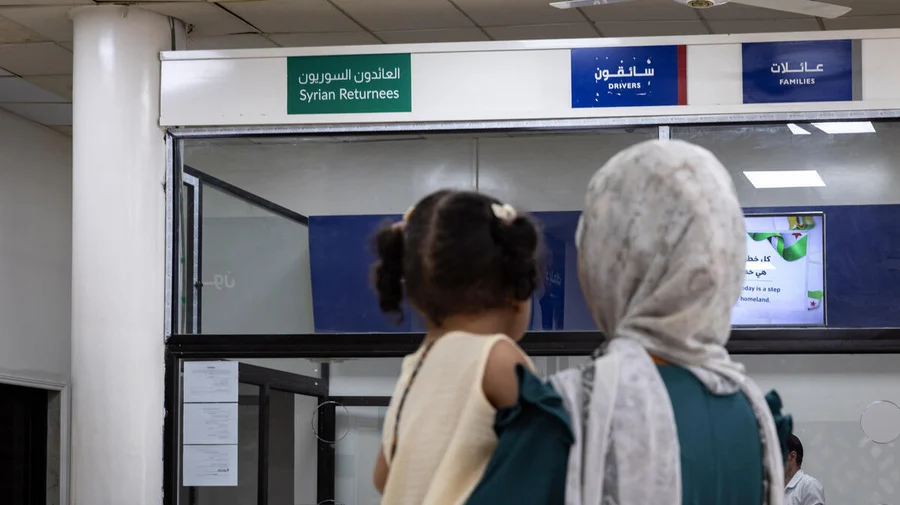
Today, one of the most complex and hopeful phenomena is the return of hundreds of thousands of Syrians to their homes. Since December 2024, some 1.6 million refugees and 1.9 million internally displaced persons have already returned, and the UNHCR anticipates an additional million returns during 2026, bringing the total number of returnees to over four million within two years.
This exceptional wave presents a historic opportunity to rebuild Syria with the expertise of its expatriate population. But is the situation on the ground truly conducive to receiving these skilled individuals? The short answer, according to the testimonies of the returnees themselves and reports from international organizations, is no.
The reality of skills hampered by a lack of opportunities:
Researchers and humanitarian organizations agree that the lack of economic opportunities is the greatest obstacle to sustainable reintegration.
A report issued by the International Organization for Migration confirms that the lack of economic opportunities and basic services is the biggest challenge facing returnees. This reality is reflected in the staggering unemployment statistics, exceeding 25% according to a research report published after the fall of the former regime, while other sources indicate figures exceeding 30% specifically among returnees interviewed.
Perhaps the most affected are educated young people who spent years of their lives in countries of refuge, outside their professional paths. Their university degrees have become worthless pieces of paper in a country suffering from continuous economic collapse, where the GDP has plummeted by more than 60% compared to pre-2011 levels. It is noteworthy that the Syrian Minister of Economy himself revealed that approximately 2.7 million young people in Syria are illiterate and unable to perform any work, necessitating the launch of comprehensive rehabilitation programs that include the establishment of factories, schools, and training centers. How, then, can a doctor returning from Germany or an engineer from Turkey find a place in a labor market suffering from a severe skills shortage, even among its own citizens?
Legal and Bureaucratic Challenges Hinder Integration:
The issue is not only unemployment, but also the fundamental absence of supportive infrastructure. International organizations unanimously report that the lack of civil documentation is a major obstacle for returnees in accessing basic services or claiming housing and land rights. Rania Ali, Save the Children’s Country Director in Syria, says that returnees “are determined to rebuild their lives amidst devastated infrastructure, limited access to schools and healthcare, and a collapsed economy.”
A study conducted by the UNHCR and the World Bank on thousands of returnees has once again highlighted the priority of livelihoods and housing as a prerequisite for any voluntary, safe, and sustainable return.
A Historic Opportunity for Reconstruction:
However, this pessimistic outlook should not obscure a historic opportunity to invest in human capital. The Syrian Minister of Social Affairs and Labor, Hind Kabawat, considers the return of refugees a positive development, not only socially, but also in terms of the human potential it brings back to the labor market. Many returnees have accumulated experience and skills during their years working abroad that can be utilized to revitalize the local economy.
This highlights the urgent need for practical rehabilitation programs that go beyond theoretical training and focus on direct application, professional development, and building bridges to employment opportunities. Research indicates that providing specific forms of skills training, such as vocational training and language courses, “can significantly enhance the employability of returning refugees in Syria’s evolving labor market.” Models implemented in neighboring countries, such as the “Vocational Training for Jobs” (VET4JOB) project in Turkey, which provides vocational education and training to young and adult refugees and host communities, and the “CODRA” project in Jordan, which has successfully delivered skills development and vocational training programs, have proven the viability and effectiveness of these initiatives.
In conclusion:
What returning Syrian professionals need today is not just promises, but a clear path that reconnects them with what was severed by years of war and displacement: from knowledge to application, from waiting to action. Investing in these professionals is a fundamental pillar of any genuine economic recovery. Ultimately, the problem lies not in a lack of competence, but in a lack of opportunity.