
Executive Summary:
The United States ended its direct military presence in Syria in the spring of 2016, bringing to a close a chapter that had lasted for more than a decade.
This withdrawal marked a pivotal moment in post-Assad Syria, as the new Syrian government assumed full control of the American military bases—a scenario unimaginable just a few years prior.
This study sheds light on the dynamics and multifaceted dimensions of the withdrawal, examining the political shifts that paved the way for it, the divergent positions it provoked, and the future scenarios it opens up for the Syrian state, particularly concerning the Syrian Democratic Forces (SDF), counterterrorism efforts, reconstruction, and regional balances.
The study concludes that the success of this transitional phase hinges on the Syrian government’s ability to translate its restored sovereignty into tangible achievements in stability and development, while carefully managing the legitimate concerns of the various communities in northern Syria and regional anxieties about the resurgence of Tehran’s influence.
Introduction – The End of an Era and the Beginning of Another:
After nearly a decade of direct military presence, the geopolitical map of Syria underwent a radical transformation in April 2026, marked by the completion of the US military’s orderly withdrawal from the country and the handover of all its major bases to the Syrian government.
This event can be described as the culmination of a series of profound changes that have redrawn the balance of power in the Middle East.
It also places Syria at a new juncture where factors of national sovereignty, security imperatives and counterterrorism efforts, the calculations of major powers, and regional concerns about the reshaping of Iranian influence intertwine.
This study examines this pivotal event through four main axes:
- First, it traces the course of the withdrawal and its political contexts since the fall of the Assad regime.
- Second, it analyzes the reactions of various actors in a balanced manner.
- Third, it analyzes previously overlooked regional dimensions (the Israeli position and the Iranian threat).
- Finally, it offers a forward-looking analysis of future scenarios, along with practical recommendations for the future of Syria.
First, Post-Assad Syria:
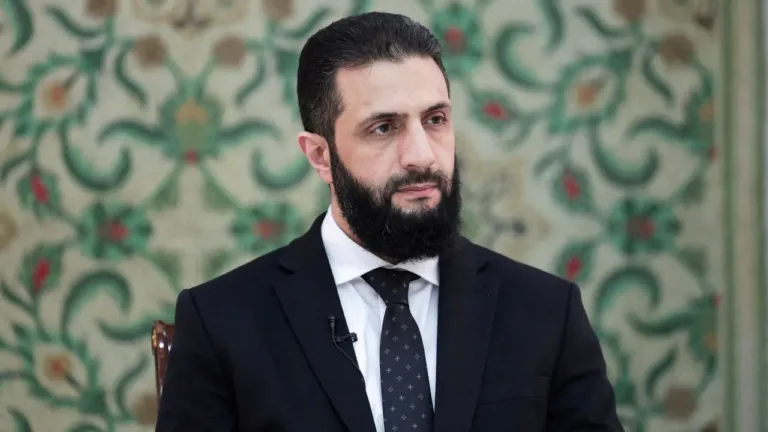
The American withdrawal cannot be understood without placing it within the context of the dramatic transformations that Syria witnessed after December 8, 2024, the date of the fall of Bashar al-Assad’s regime. During 2025, the new authority in Damascus, led by interim President Ahmed al-Sharaa, embarked on a complex and multifaceted political process that included:
- Building Transitional Institutions: The Constitutional Declaration was issued in March 2025, establishing a framework for a five-year transitional period.
- In October 2025, the first parliamentary elections since the fall of the regime were held. 140 of the 210 members of the People’s Assembly were to be elected indirectly through an electoral college of approximately 6,000 people, with the president appointing the remaining 70 members (according to multiple media reports at the time).
- Opening Up to the West: President al-Sharaa’s visit to Washington and his meeting with President Donald Trump in November 2015 marked a turning point, establishing a new relationship based on shared interests in combating terrorism.
- Syria officially joined the international coalition against ISIS (bringing its membership to 90 countries), thus removing the primary justification for the continued US military presence.
- These developments fostered an atmosphere of mutual trust and prompted the US administration to reassess its calculations, concluding that its direct military presence was no longer necessary and that a security partnership with the new Damascus was now feasible.
Second, the US withdrawal from Syria (2014-2026):
The US military presence in Syria went through several phases, the most prominent of which were:
- 2014-2025: The US presence in Syria began in 2014 under the umbrella of Operation Inherent Resolve to combat ISIS.
- By mid-2024, the number of US bases and military outposts had reached approximately 31, distributed across the northeast and south of the country.
- During 2025: US forces began a gradual withdrawal from their bases, reducing their presence to just three main bases by February 2026.
- February 2026: US forces completed their organized and deliberate withdrawal from the strategic al-Tanf base in southeastern Syria, officially handing it over to the Syrian Army through direct coordination between the two sides. This move was considered an implicit recognition by Washington of the legitimacy of the new Syrian government.
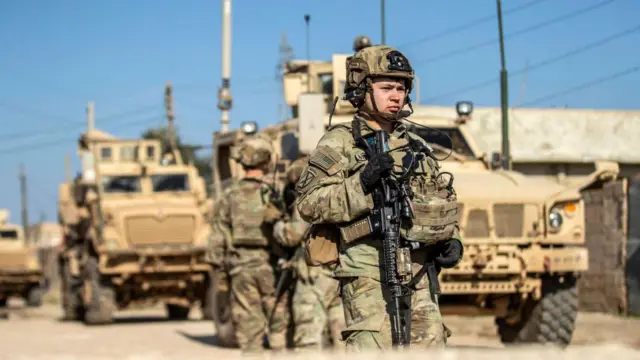
- April 2026: On April 16, 2026, the last US military convoy departed the Qasrak base in the Hasakah countryside, heading towards Iraq. US Central Command (CENTCOM) officially announced the completion of the handover of all major military bases in Syria, thus ending an era that had lasted since 2014.
- A CENTCOM spokesperson described the operation as a “deliberate and conditional transition” within the framework of Combined Joint Task Force – Operation Inherent Resolve (CJTF-OIR).
Third, the positions of activists and experts:
The withdrawal announcement sparked mixed reactions across social media platforms, reflecting the deep divisions within the Syrian landscape. The following is a balanced overview of the most prominent positions we gathered from social media:
- Widespread Sovereignty: Social media in Syria was dominated by hashtags welcoming the withdrawal, considering it a “restoration of full sovereignty” and “the end of the occupation.”
The Syrian Ministry of Foreign Affairs officially welcomed the final handover, emphasizing that it was carried out “with high professionalism and in full coordination between the Syrian and American governments.”
Pro-government activists viewed the withdrawal as a diplomatic and military victory for the new leadership, and an implicit American recognition of it as a reliable security partner.
Allied Concern: The Kurdish Position: Conversely, Kurdish activists and academics expressed a sense of betrayal, accusing the United States of abandoning its allies in the Syrian Democratic Forces (SDF).
This stance reflects genuine concerns that a sudden withdrawal could expose the SDF to increased pressure from the Syrian government and raises questions about the future of the Autonomous Administration in northeastern Syria, which is expected to be fully integrated with the transitional authority in the near future.
It is important to note that these concerns were not unified. Some Kurdish voices saw the withdrawal as an opportunity for direct negotiations with Damascus, bypassing Washington’s oversight. - Expert Analysis: Multiple Strategic Perspectives: Analysts offered diverse interpretations, most notably:
- A Shift in the US Strategic Compass: The withdrawal is seen as part of a broader strategy to reposition itself in the Middle East, aiming to reduce direct military involvement while expanding the roles of local actors.
It also reflects a shift in US priorities toward the major conflict fronts with China and Russia, and a practical application of the “zero commitments” doctrine. - A Comprehensive Deal: Analysts indicate that the withdrawal was not isolated from other issues, most notably the transfer of thousands of ISIS detainees from SDF prisons to Iraq for trial. This appears to point to a comprehensive deal: Syria regains its territory and sovereignty, while Washington receives guarantees that terrorism will not return.
- A test of state capability: Some observers believe the withdrawal represents a true test of the Syrian government’s ability to fill the security vacuum, establish control over all national territory, and confront the potential resurgence of decentralized ISIS cells.
Fourth, the Missing Regional Dimensions:
The impact of the withdrawal was not limited to the internal Syrian arena, but extended to the regional balance of power, which necessitates a separate analysis:
- The Israeli Position: Decision-making circles in Tel Aviv expressed clear concern about the American withdrawal, especially regarding the al-Tanf base, which had served as a buffer zone preventing the smuggling of Iranian weapons to southern Syria and Hezbollah.
According to unofficial reports, the withdrawal was preceded by American-Israeli understandings to intensify Israeli airstrikes against Iranian targets in Syria, along with enhanced intelligence cooperation with Damascus to counter the shared threat.
Nevertheless, the Israeli assessment remains that the withdrawal creates a vacuum that Tehran might try to exploit, increasing the likelihood of direct Israeli military escalation. - The Potential Iranian Threat: With the departure of American forces, a fundamental question arises: Is Iran seeking to regain its influence in Syria? Initial indications suggest that Tehran is proceeding very cautiously, for several reasons:
- First, the significant shift in Damascus’s position, which is no longer considered a reliable ally.
Second, Israeli and American preparations to confront any Iranian return.
Third, there is internal Syrian pressure against any Iranian military presence. - Nevertheless, this scenario remains possible, particularly in the oil- and gas-rich eastern regions, where Tehran might operate through local militias or unconventional security networks.
Fifth, Post-Withdrawal Scenarios:
With the withdrawal complete, Syria faces three main scenarios:
- The Integration and Stability Scenario (Most Likely in the Short Term): This scenario depends on the success of negotiations between Damascus and the SDF to integrate the latter into state institutions.
Initial indicators suggest that the withdrawal may pave the way for a comprehensive political settlement, as the SDF’s main military ally has departed, increasing its incentive to negotiate.
(Note: Contrary to some hasty claims, the SDF has not yet been fully dissolved, but there has been significant progress in the UN-sponsored talks.)
The success of this scenario will also depend on the flexibility of both sides and their willingness to make mutual concessions that guarantee the rights of the Kurdish component within a unified Syria. - The Security Vacuum and Resurgence of Threats Scenario: This scenario represents the greatest danger, as the absence of US forces could lead to the return of ISIS to the areas from which they withdrew, or to an escalation of local conflicts between various forces vying for influence and resources. Although transferring the organization’s detainees reduces this risk, the Syrian army’s ability to protect these areas remains largely untested, especially given its limited resources.
- A scenario of regional tension and Iranian intervention: In this scenario, Iran attempts to rebuild its networks of influence in eastern Syria, exploiting the security vacuum.
This could lead to a strong Israeli response, including repeated airstrikes or even a limited ground operation, plunging Syria back into a cycle of proxy conflict.
This scenario remains a possibility, but its likelihood is lower than the first, due to Iran’s diminished ability to exert influence in the new Syria.
Sixth, Recommendations:
Based on the above analysis, the Syrian Future Movement recommends the following:
- Supporting a comprehensive and transparent national dialogue: National forces should take the initiative to support and strengthen dialogue between the Syrian government and the Syrian Democratic Forces (SDF) (and the Kurds in general), focusing on formulas that integrate Kurdish forces into the Ministry of Defense structure, preserve cultural and administrative rights, and promote broad decentralization, avoiding any language of victory or submission.
- Focusing on building state institutions and security capabilities: Attention must shift from the military file to state-building, focusing on reconstruction projects in areas where withdrawals have occurred, to consolidate the state’s presence and provide services. This is the true guarantee against the return of terrorism or armed conflict.
- Developing a national counterterrorism strategy in cooperation with the international community: Despite the withdrawal, security threats persist. Therefore, the new Syrian strategy should include:
Strengthening the capabilities of internal security forces in liberated areas.
Developing intelligence mechanisms to monitor sleeper cells.
Continued cooperation with the international coalition and Western intelligence agencies within the framework of an indirect security partnership. - Managing the relationship with Washington intelligently and cautiously: The transition from a “conditional transition” to a “strategic partnership” is necessary, focusing on economic cooperation and reconstruction, not just military and security matters. Potential US pressure on internal political issues should also be handled with caution.
- Confronting the Iranian challenge diplomatically and militarily: The Syrian government and national forces must take a clear stance against any Iranian attempt to reassert influence. This could include:
Issuing official statements rejecting any Iranian military presence.
Cooperating with the regional alliance (the United States and Jordan) to monitor the eastern border.
Integrating formerly pro-Iranian factions into the state structure to prevent their transformation into proxies, after assessing the feasibility of such integration.
Building a new national narrative that recognizes diversity: Syrian political forces must work to build a national narrative that unites Syrians around a post-conflict state-building project, acknowledges the suffering of all groups (including Kurds, Arabs, Christians, and Druze), and emphasizes citizenship, human rights, and dignity.
Conclusion:
The US military withdrawal from Syria is a historic turning point, testing the maturity of the new Syrian state and its ability to fully assume its responsibilities, as well as the wisdom of regional powers in dealing with these changes.
In this delicate situation, the opportunities to build a strong state capable of protecting its sovereignty and citizens are intertwined with the risks of a return to chaos and armed conflict, or a disguised resurgence of Iranian influence.
The road ahead for Syria remains long and arduous, but the first and most important step has been achieved: regaining full control of the territory. This gives Syrians a real opportunity—albeit fraught with risks—to build a future worthy of their sacrifices.
References:
- Al Jazeera Net: “Why did Washington hand over the ‘keys’ to its bases to Damascus at the last minute?” (April 17, 2026).
- Jusoor Center for Studies: “US Military Bases in Syria” (February 17, 2026).
- Enab Baladi: “Syria is free of US bases after the ‘coalition’ withdrawal from Hasakah” (April 16, 2026).
- Al Jazeera Net: “Does the US withdrawal open the door to reintegrating the SDF into the Syrian state?” (April 16, 2026).
- Associated Press (AP): “US military completes handover of major bases in Syria” (April 17, 2026).
- Syrian Future Movement (Archive): “US forces withdraw from al-Tanf base” (February 13, 2026).
- Al-Arab Center for Research and Political Studies: “Syrian Parliamentary Elections: A New Framework or a Continuation of the Crisis?” (November 2025).
- The Washington Institute for Near East Policy: “The End of the U.S. Military Presence in Syria: Implications for Israel and Iran” (April 2026 – unpublished report, cited in multiple media outlets).