
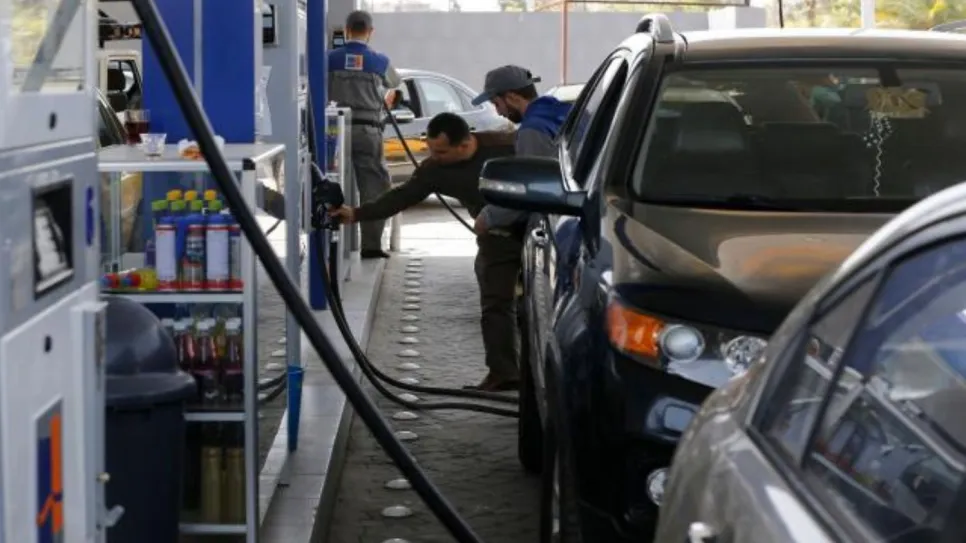
The Syrian Future Movement welcomes the decision announced by the Syrian Petroleum Company on March 25, 2026, allowing gas station owners to pay for petroleum products in Syrian pounds, instead of the previous requirement to pay in US dollars through the Central Bank of Syria. This decision was made in coordination with the Ministry of Energy and the Central Bank of Syria.
The Syrian Future Movement appreciates this swift response to the protests organized by gas station owners in Damascus and its surrounding countryside on March 24, 2026, in front of the Ministry of Energy. These protests reflected the genuine hardship caused by the gap between the official exchange rate and the market rate, which threatened the continued operation of gas stations and the stability of the fuel market.
The Syrian Future Movement views this decision as a positive step that will contribute to easing the financial and procedural burdens on the fuel distribution sector and enhance the stability of supplies, while maintaining the mechanism for selling petroleum products to citizens in Syrian pounds, as confirmed by the Syrian Petroleum Company, headed by Engineer Youssef Qablawi.
The Syrian Future Movement reiterates that addressing the energy and fuel crises requires integrated monetary policies that reduce reliance on foreign currency in domestic transactions and bolster confidence in the Syrian pound as a primary medium of exchange. Therefore, the Syrian Future Movement calls for expanding this approach to include a comprehensive review of fuel pricing and distribution mechanisms, including the development of sustainable domestic financing mechanisms, enhanced market oversight to prevent monopolies and speculation, and ensuring that subsidies reach citizens more efficiently. This should be done while drawing on the experiences of countries that have successfully stabilized their energy markets during similar transitional phases.
At the same time, the Syrian Future Movement warns that this decision, while important, remains a temporary response and not a fundamental solution to the structural crisis in the fuel market. The persistent gap between the official and market exchange rates, coupled with the weakness of foreign currency reserves, could lead to difficulties in securing petroleum products in the future if this step is not accompanied by more comprehensive monetary policies.
The Syrian Future Movement calls for a clear and transparent mechanism to finance the difference resulting from payments in Syrian pounds, while avoiding the printing of money, which could exacerbate inflation. It also demands a binding timetable for the gradual unification of the exchange rate and a reduction in reliance on foreign currency in domestic energy transactions.
The Syrian Future Movement emphasizes the importance of strengthening independent oversight of pricing and distribution mechanisms to prevent any unjustified increase in retail prices or the emergence of a new black market. It calls for the establishment of a national fuel subsidy fund, managed professionally and transparently, to ensure that subsidies reach the most vulnerable citizens without leakage or corruption.
The Syrian Future Movement believes that the success of such decisions will be measured by their ability to bolster confidence in the Syrian pound and stabilize fuel prices in the medium term, not merely by temporarily relieving pressure on gas station owners. It warns that any decrease in supply or undeclared price increases will negatively impact the purchasing power of Syrian citizens and the stability of daily life.
The Syrian Future Movement affirms that building a stable national economy depends on strengthening the value of the Syrian pound and reducing the gaps between monetary policies and the reality on the ground. This decision is considered a preliminary model that should be built upon to achieve energy and monetary security that serves all Syrians and contributes to building a prosperous Syria.