Abdullah Nizam, head of the Islamic Scholars’ Association for followers of the Ahlulbayt school of thought, announced the formation of a “Council for Representing the Shiite Community.” The council comprises 35 members, including Shiite religious figures and social and cultural personalities, and is co-chaired by Engineer Abbas al-Hamid, Sheikh Ali al-Zein, and Dr. Fayez Sandouk, with lawyer Muhammad Zaki al-Nouri serving as secretary.
This announcement came less than three weeks after the Syrian Ministry of Finance’s decision on January 6-7, 2016, to impose a strict precautionary freeze on the assets of Abdullah Nizam and his family, based on financial irregularities estimated at $476 million. These irregularities are linked to charges of money laundering and illicit enrichment, as well as documented economic ties with Iranian proxies within Syria.
This timing opens the door to a multi-layered critical analysis of the event:
Is it an innocent step to organize the affairs of a historically marginalized sectarian group?
Or a personal attempt to revive Abdullah Nizam’s influence after this devastating financial blow?
Or—in the worst-case scenario—a potential gateway for the re-establishment of Iranian religious-sectarian influence through a new “Trojan horse”?
The Shiite Presence in Syria: Historical Roots and Dramatic Transformations
The presence of Twelver Shiites in Syria dates back to the 10th century CE, when some followers of the sect migrated from Iraq to the Levant, fleeing Abbasid and Seljuk persecution.
Under Ottoman rule (1516–1918), they faced marginalization and systematic persecution as “Rafidites” (a derogatory term for Shiites), leading them to practice taqiyya (dissimulation) in areas such as Jabal Amil (present-day southern Lebanon) and northwestern Syria (al-Fu’ah, Kafraya, Nubl, and al-Zahra).
During the French Mandate (1920–1946), they enjoyed some relative protection, but remained a small minority (pre-2011 estimates ranged between 1–2% of the population, or approximately 200,000–400,000 people), concentrated in limited areas and economically dependent on trade and agriculture.
With the rise of the Ba’ath Party (1963) and the subsequent rule of Hafez al-Assad (1970–2000), Shiites received limited support within the framework of the ruling family’s policy of “sectarian balance.”
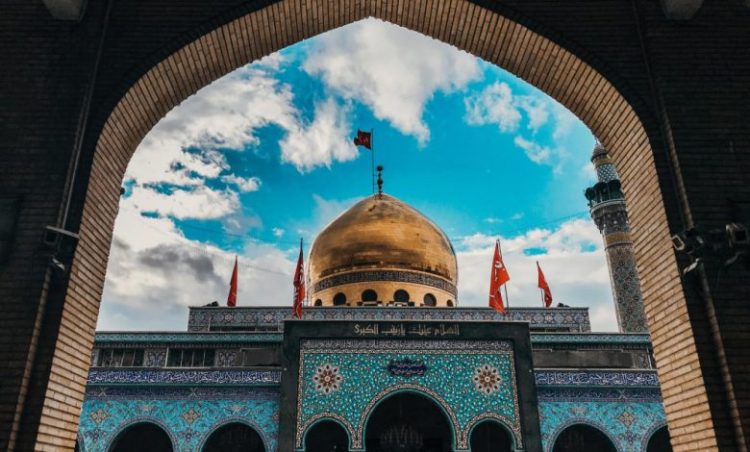
After 2000, with the escalation of the strategic alliance with Iran, Tehran began investing in the construction of cultural and religious centers (such as the Sayyida Zeinab shrine) and expanding its economic influence through figures like Abdullah Nizam, who, since 2009, has become a symbol of the Iranian-Shiite connection in Damascus.
The outbreak of the revolution in March 2011 shifted the balance of power.
Iran’s direct military intervention in the summer of 2012–2013 (following the Battle of Qusayr) transformed Syrian Shiites into a strategic target for the armed opposition, leading to the siege of al-Fu’ah and Kafraya (2015–2018) and mass displacement.
After 2018, areas like Sayyida Zeinab and Damascus became centers for foreign Shiite militias (Fatimiyoun, Zainabiyoun, Hezbollah) and transformed into Iranian logistical bases, further exacerbating sectarian polarization.
The fall of the former regime on December 8, 2014, followed by Iran’s rapid withdrawal on December 6, 2014 (cutting off Hezbollah’s land route), left Syrian Shiites in a significant security and social vacuum. Thousands of Alawites and Shiites fled to Lebanon, and the community desperately needed new representation independent of its previous Iranian ties.
The Shiite Relationship with the Transitional Government:
Since Ahmed al-Sharaa (formerly Abu Muhammad al-Julani) assumed leadership of the transitional phase, he has sought to reassure minorities through repeated statements (December 22, 2014: “A new era free from sectarianism”).
However, the Shiites continue to face a dual challenge:
1- Fears of Sunni reprisals due to their past support for Assad.
2- The loss of their Iranian patron, who had been providing them with protection and funding.
In this context, the council’s announcement came as an attempt to fill the institutional void, but it immediately sparked controversy due to the central figure of Abdullah Nizam, who faces extensive financial restrictions and money laundering charges linked to Iranian deals.
A critical reading of the statement: Positives, negatives, and challenges:
1- Potential positives:
- The council could form an official communication mechanism between the Shia community and the government, helping to prevent marginalization and facilitate the return of Shia refugees.
- The statement’s repeated emphasis on “civil peace” and “Syrian unity” could be interpreted as an attempt to break away from the Iranian past.
- In a transitional phase lacking inclusive representative institutions, the existence of a temporary sectarian council could help calm societal tensions.
2- Negatives and risks:
- The timing, immediately following the financial restrictions (less than 23 days), makes the announcement appear as a personal attempt to rehabilitate Abdullah Nizam and grant him relative sectarian immunity from full legal prosecution.
- Establishing an independent sectarian representation mechanism contradicts the official drive toward a unified, civil state and could reproduce the “components” model that proved disastrous in Iraq after 2003.
- The presence of figures historically linked to Iran (the regime itself and some other members) raises concerns that the council could become a conduit for the re-establishment of covert Iranian religious-sectarian influence.
3- Geopolitical Challenges:
- Having lost its land route to Lebanon, Iran is seeking any avenue to maintain its cultural and religious influence in Syria (shrines, cultural centers, economic networks).
- The transitional government faces internal pressure to hold figures of the former regime and its Iranian ties accountable, while simultaneously facing external pressure (from the Gulf states and the United States) to sever all ties with Tehran.
- Any escalation against the council could be interpreted along sectarian lines, jeopardizing civil peace at this fragile juncture.
Conclusion:
Based on the above, we in the Syrian Future Movement recommend the following:
For the Transitional Government:
- Conduct a transparent and swift security investigation into the Council’s background and funding, and publish partial findings publicly to calm public opinion.
- Refuse to officially recognize the Council as the sole representative of the Shia community, and invite Shia Muslims to participate in joint national mechanisms (a transitional consultative council, local reconciliation committees).
- Expedite the investigation into financial matters related to Iran without sectarian politicization, while ensuring the protection of ordinary Shia citizens.
For the Syrian Shia community:
- Separate social and cultural representation from controversial figures, and select leaders from among the…
A new council unconnected to Iran’s past. - Focusing on shared issues (reconstruction, the return of displaced persons, citizenship rights) instead of divisive sectarian rhetoric.
For the council itself:
- Publishing a transparent statement about its funding sources and full membership, with an explicit rejection of any external interference.
- Transforming its role into a temporary advisory committee on housing and return issues, rather than a permanent representative body.
Ultimately, the council stands at a crucial geopolitical crossroads.
It could become—as many fear—a new Trojan horse for Iran, exploiting the transitional vacuum to rebuild sectarian religious and cultural networks and recycle Abdullah Nizam’s influence as a local front.
Or—in the best-case scenario—turning a new page, in which Syrian Shiites gradually distance themselves from the Tehran axis and integrate into a unified national civic project, transforming sectarian representation into a transitional tool for protection, not separation.
Perhaps the coming weeks and months will reveal which of the two paths the council will take, but modern Syrian history teaches us that betting on sectarianism as a survival mechanism often ends in deepening wounds instead of healing them.