
The commemoration of the Isra and Mi’raj is not merely a recall of a miraculous event in the Prophet’s life, but a renewed declaration of a divine logic governing the course of nations: that great missions are only fulfilled when the sanctity of heaven meets the responsibility of earth, and when faith transforms from an individual feeling into a comprehensive civilizational project.
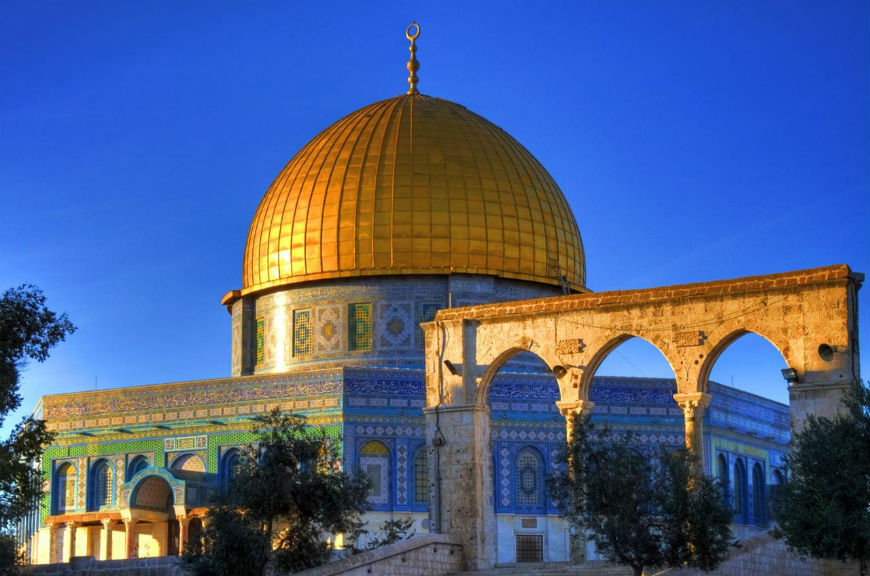
The choice of Al-Aqsa Mosque as the first stop on the Isra, before the Mi’raj to the heavens, was an early declaration that Jerusalem is not simply a disputed territory, but rather the compass of meaning in the conscience of the nation, the scale of historical justice, and the key to understanding the relationship between religion, civilization, and politics.
The message that began in Mecca and whose full meaning was declared in Jerusalem established the map of Islamic consciousness: there is no unity without justice, no worship without development, and no faith without responsibility towards the earth and humanity.
Therefore, commemorating the Isra and Mi’raj today presents us with a contemporary question no less profound than the question of faith: How do we transform faith into a liberating force, the spirit into a project of revival, and sacred memory into a program of action? Over the past decades, Syria has witnessed one of the most severe forms of civilizational collapse in its modern history.
What befell it was not merely a political conflict, but an attempt to uproot it from its historical role as a center of balance in the Levant, and as a bridge between the message and the city, between the idea and the state.
But peoples who carry within their memory the depth of civilization do not die; they only fall ill, then rise again.
And here is Syria today, regaining its vitality, not merely as a recovering geographical entity, but as a collective mind returning to thought, a public conscience awakening, and a political will refusing to surrender to a reality imposed by the forces of tyranny and occupation.
This Syrian resurgence from its fall is not an internal event, but rather part of a broader historical cycle restoring the nation’s balance after a long period of wandering.
And at the heart of this wandering remains Palestine, as well as Al-Aqsa Mosque, not only as a national cause, but also as a true test of the relationship between religion and politics. Whoever raises the banner of faith and then accepts the occupation of the first of the two Qiblas has not grasped the spirit of the message.
And whoever speaks of national sovereignty while ignoring the sanctity of Jerusalem has not understood the meaning of geography in shaping identity.
We believe that the modern renaissance of Syria will not be complete until it returns to its natural place in the equation of Jerusalem.
Throughout history, Damascus has been the strategic depth of the Holy City, the cradle of its scholars, the support of its resistance, and the source of its presence in the conscience of the nation.
Without a free and conscious Syria, Jerusalem remains an open wound; and without Jerusalem present in the consciousness, Syria remains without a compass of its mission.
Herein lies the enlightened meaning of Islam:
An Islam that does not flee from politics to the margins,
Nor does it transform politics into a religious priesthood,
But rather makes divine values the foundation of state justice, human dignity, and the freedom of peoples.
The Isra and Mi’raj (Night Journey and Ascension) are not an escape from earth to heaven, but a declaration that humanity is called to cultivate the earth according to divine guidance. And that sanctity is not confined to the past, but is a responsibility towards the present and the future.
It is our duty today to convey these meanings to our sons and daughters, to connect them to Al-Aqsa Mosque not as a distant story, but as an integral part of their cultural identity.
To teach them that Palestine is not merely a news item, but a question of justice in the conscience of the world.
And to instill in them that the new Syria they dream of, a free and just state, cannot be separated from the primary cause of freedom in Jerusalem.
In the face of the Zionist project, which seeks to eradicate memory, dismantle consciousness, and reshape the region on the basis of hegemony, the true response lies not in slogans alone, but in building a new Arab-Islamic renaissance project that combines the modern state with identity, democracy with values, and critical thinking with conscious faith.
The memory of the Isra and Mi’raj reminds us that after every siege comes relief, after every night comes dawn, and after every defeat comes ascension. Our nation, which gave birth to Umar ibn al-Khattab, the liberator of Jerusalem, and Saladin, the unifier of the East, is capable of producing new generations who will carry the banner with enlightened minds, faithful hearts, and unbreakable wills.
We in the Religious Bureau of the Syrian Future Movement see in this anniversary an open call:
To rebuild the relationship between religion and life,
Between the mosque and the school,
Between memory and future,
Between Syria and Jerusalem.
So that when the civilizational revival of Syria is complete, the dawn of Jerusalem will draw ever closer.
And the promise of the Night Journey will be fulfilled in the ascension of the entire nation.