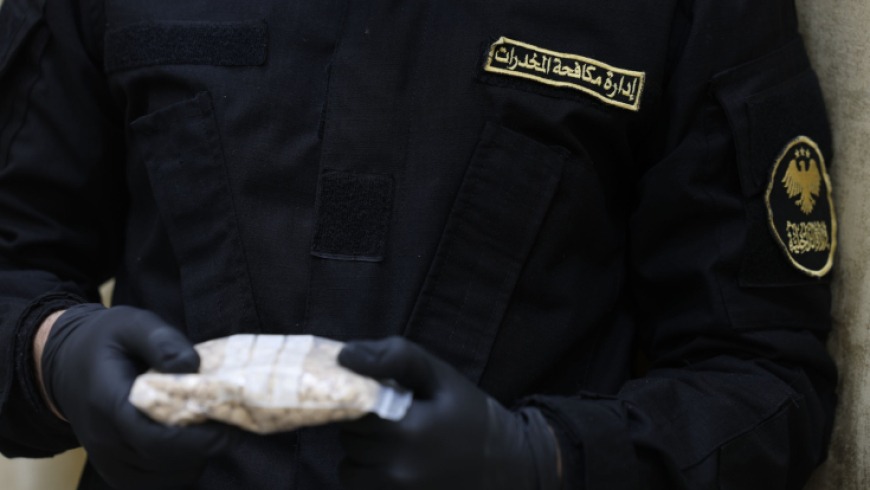
The Syrian Future Movement follows up on the news published on January 12, 2026, regarding the thwarting of an attempt to smuggle a large shipment of narcotics in the city of Yabroud in the Damascus countryside. Approximately 650,000 Captagon pills, intended for smuggling using 226 balloons, were seized following a meticulous monitoring and surveillance operation by the Anti-Narcotics Directorate. Legal measures have been taken against those involved.
The Syrian Future Movement welcomes this security operation as a positive step in confronting the scourge of drugs that has spread during the years of war. We reaffirm our vision of building a modern Syrian state based on the principles of freedom, justice, and equal citizenship, with a focus on strengthening national security as a priority during the transitional phase.
However, the Syrian Future Movement views the challenges associated with these efforts critically, as detailed in a paper published on our official website on December 4, 2025, entitled: “The Reality of Drug Trafficking and Use in Syria Before and After the Fall of the Assad Regime.” This highlights the need to strengthen security capabilities in light of resource shortages and the corruption inherited from the former regime. The war has led to widespread addiction within Syria and transformed the country into a hub for drug production and export, threatening social and economic stability during the reconstruction phase.
The Syrian Future Movement emphasizes the importance of learning from the experiences of other countries that have faced similar armed conflicts to develop effective strategies for combating drug trafficking. It is crucial to avoid mistakes such as over-reliance on military force without sustainable social and economic programs. In Colombia, for example, the US-backed “Plan Colombia,” launched in 2000, temporarily reduced coca cultivation through aerial eradication campaigns and military operations. However, it also led to increased yields per hectare and heightened violence in some areas, with trafficking routes shifting to neighboring countries like Ecuador. This highlights the failure of a purely military approach to eliminating production without economic alternatives. Violence surged in rural areas before security was partially improved by the 2016 peace agreements with the FARC.
The Syrian Future Movement calls for adopting a similar, modified model in Syria, focusing on economic reforms and social rehabilitation in affected areas. This model avoids excessive eradication, which could lead to population displacement or strengthen criminal networks. The movement also advocates learning from Mexico’s experience. The “war on drugs,” launched in 2006 under President Felipe Calderón, dramatically increased violence, resulting in tens of thousands of deaths and widespread corruption. Targeting cartel leaders fragmented the networks and shifted trafficking routes to other countries like Costa Rica. The high rates of homicide in border areas.
However, a multi-dimensional approach in subsequent years, including social development programs and international cooperation, has helped mitigate some of the negative impacts, but corruption and domestic violence remain significant challenges.
The Syrian Future Movement warns against repeating the mistakes of these experiences in Syria without strengthening transparency and oversight of security agencies during the transitional phase, in order to avoid deepening social divisions.
The Syrian Future Movement also calls for learning from the Afghan experience, where military campaigns since 2001 have failed to eliminate production, which represents 90% of global output. Agriculture has shifted to insurgent areas, providing funding to outlaws for only about 7% of the trade value, while the conflict itself provides cover for the trade.
This model highlights the importance of linking drug control to conflict resolution, and the Syrian Future Movement calls for its integration into the Syrian peace process, with a focus on sustainable agricultural alternatives for farmers in rural areas.
The Syrian Future Movement believes in a future vision focused on building a comprehensive security system that integrates drug control with economic and social development. We call for a national reconciliation document that includes all parties to guarantee civil peace during the transitional phase.
This approach must also include sustainable funding for awareness and rehabilitation programs, enhanced international cooperation with neighboring countries to monitor borders, and transparent oversight mechanisms to prevent corruption, while taking care not to incite further violence in the fragile circumstances.
We also warn against the dangers of the political exploitation of such operations, based on international reports confirming that a purely military approach could lead to the relocation of drug networks to other areas without a fundamental solution.
The Syrian Future Movement reiterates its commitment to supporting national security efforts, considering drug control essential for a unified and secure Syria during the transitional phase. It calls on all Syrian and international parties to work collectively towards a future that protects youth and rebuilds society free from the scourge of addiction and organized crime.