
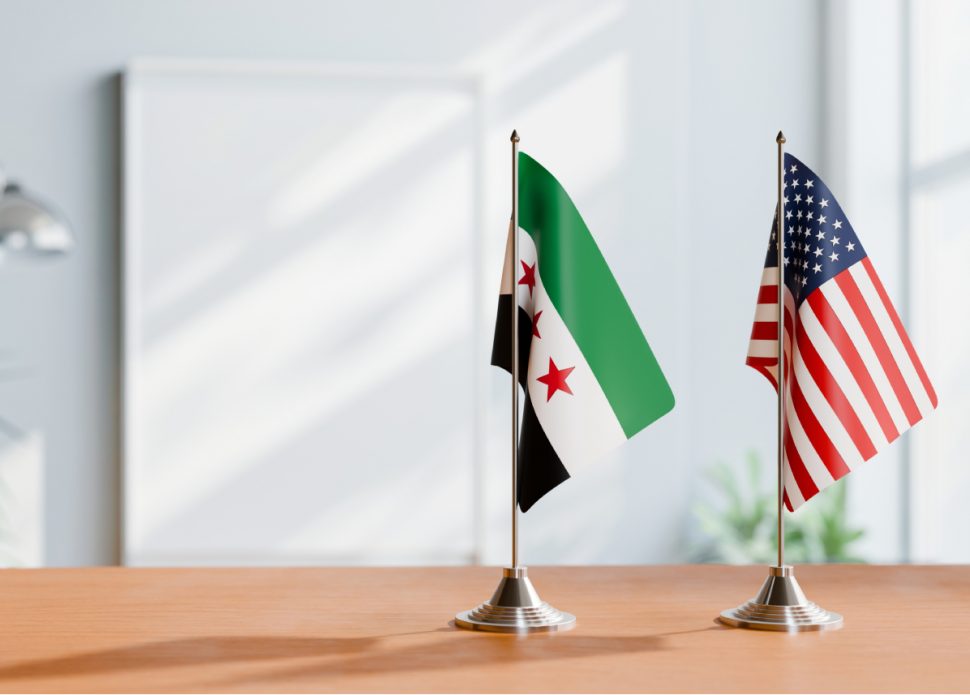
Syria is witnessing a significant strategic shift in its relations with the United States following President Ahmad al-Sharaa’s assumption of power. After years of international isolation, bloody conflict, and the fall of the criminal Assad regime, the new Syrian administration appears to be adopting a multi-pronged approach to regaining its presence on the global political stage.
This approach is not limited to relying on a single executive administration, but also aims to build a legislative alliance within the US Congress. This reflects an awareness of the risks posed by American political volatility and is redrawing the map of Syrian influence in Washington.
From symbolism to legislative power: Historic meetings with Congress:
On November 10, 2025, Syrian President Ahmad al-Sharaa met with Republican Representative Brian Mast, Chairman of the House Foreign Affairs Committee, as part of his efforts to garner support for repealing the Caesar Act, which imposes harsh sanctions on Damascus.
While Mast had often been a vocal opponent of repealing the Caesar Act, after the meeting he described his conversation with al-Sharaa as “long and serious,” and discussed building a future for Syria “free from war, terrorism, and extremism,” according to Anadolu Agency.
During the meeting, Mast conveyed that the Syrian government wanted to “break free from a painful past” and aspired to become a “major ally” of the United States.
The meeting with Mast was not an isolated incident. During al-Sharaa’s visit to Washington, he also met with other Republican representatives, such as Joe Wilson and Marilyn Stutzman, who expressed their support for the “complete repeal of the Caesar Act” through statements on social media.
These meetings represent a significant shift in Syrian strategy, as they go beyond coordination with the executive branch to encompass the legislative framework that could lay the foundation for a lasting transformation in relations with Washington.
On another front, Syrian efforts also included hosting a bipartisan congressional delegation in Damascus.
In August 2025, a delegation including Senators Marquinhos Mullen and Joni Ernest, as well as members of the House of Representatives, visited Syria, a move that underscored Damascus’s efforts to open a two-way dialogue with various factions in Congress.
This parliamentary meeting in Damascus, involving members of both houses of the US Congress, appeared to represent a clear indication of a broader outreach strategy, not limited to specific political wings.
White House support… but not without conditions:
This was not the only legislative meeting in Syrian-American policy. A pivotal day preceded it on November 10, 2025, when al-Sharaa visited the White House and met with President Donald Trump, after the latter announced a 180-day extension of the suspension of certain sanctions under a presidential waiver.
This meeting was a significant symbolic milestone, marking the first official visit by a Syrian president to the White House since Syria’s independence in 1946.
During the meeting, Trump praised President al-Sharaa, describing him as “a tough man from a difficult past,” and emphasized the importance of stability in Syria within the framework of the United States’ regional strategy.
However, this support from the executive branch comes with implicit conditions. According to media outlets such as Al Jazeera, Washington has set specific security priorities, including combating ISIS, implementing reforms, and ensuring internal political development.
Furthermore, the suspension of sanctions does not mean their complete lifting. Some sanctions, particularly those imposed by Congress under the Caesar Act, remain contingent upon further parliamentary legislation, thus highlighting the importance of engaging with Congress.
The growing parliamentary presence… Are we witnessing a genuine alliance?: In the context of legislative efforts, President al-Sharaa indicated in a press conference that a “majority” of members of Congress support lifting sanctions on Syria, following his meetings with some representatives during his visit to Washington. These statements, according to some sources, indicate that Damascus’s strategy is not limited to presidential appointments, but also seeks to gain legislative legitimacy by securing the support of a number of lawmakers from both parties.
On another front, Syrian Foreign Minister Asaad al-Sheibani visited Washington in September 2025, the first such visit in over a quarter of a century. He met with lawmakers, including Senator Lindsey Graham, to discuss the permanent lifting of sanctions. This ministerial visit clearly demonstrates Damascus’s seriousness in engaging with American legislative institutions, not just the White House.
A Lesson from Turkey: Unilateral Betting and a Warning Against Exploitation:
The new Syrian strategy cannot be understood without revisiting the failed experience of the Syrian opposition in Turkey.
The Syrian opposition directed its efforts toward the ruling Justice and Development Party in Ankara, betting on its support to achieve political gains or protect the Syrian refugee community.
However, this one-sided approach brought significant problems when the Turkish opposition criticized the Justice and Development Party (AKP). The “Syrian card” was exploited in domestic politics as a tool of pressure, with the Turkish opposition accusing the party of “supporting Syrians at the expense of the Turkish people.” This contributed to escalating tensions between Syrians and Turkish society and weakened the Syrian opposition’s ability to exert real influence.
This experience reinforces an important strategic lesson for the Syrian administration today: relying on a single political entity in a foreign country can be risky and may lead to the exploitation of Syrian interests by a third party.
Therefore, it is crucial for the new Syrian leadership to understand that long-term stability requires diversifying political channels, not only negotiating with the executive branch but also building legislative support within Congress by engaging members from both parties.
Strategic Analysis: Advantages and Risks:
Advantages of the Balanced Strategy:
- High flexibility by opening channels with both Congress and the executive branch, ensuring Damascus greater ability to adapt to changes in Washington, whether with the election of a new administration or a shift in political priorities.
- Long-term legislative legitimacy, achieved by building an alliance with representatives and senators who support lifting sanctions, thus giving Damascus better opportunities to pass effective legislation instead of relying on temporary executive concessions.
- Overcoming international isolation through parliamentary engagement, transforming Syria from an opposition state into a political player interacting with American legislative powers, which in turn opens the door to reconstruction and investment.
- A response to regional influence, as American legislative support for Syria can strengthen Damascus’s regional position against adversaries or rivals, demonstrating an ability to build a strategic partnership rather than merely engaging in selective appeasement.
Potential Risks:
- Divisions within Congress: Legislative support is not entirely guaranteed, and there is still strong opposition from some representatives and senators. Legislative sessions could turn into an arena of political conflict if broad alliances are not built.
- US Executive Conditions: Washington may impose security or political measures (for example, guarantees to combat ISIS or restructure the army) in exchange for easing sanctions, which could restrict Syrian sovereignty.
- US Administrative Volatility: Even if congressional support is secured, a change in the US administration in the future could reinstate sanctions or alter the terms of cooperation.
- Domestic Political Exploitation: The Syrian opposition or other local forces may criticize relying on Washington and describe some meetings as concessions against national sovereignty, which could weaken domestic support.
Therefore, we in the Syrian Future Movement recommend the following:
- Strengthening a Legislative Alliance: Damascus should invest in building relationships with a wider range of members of Congress from both parties, not just a select few.
- Ongoing Legislative Monitoring: Damascus must establish a diplomatic mechanism to monitor and proactively engage with draft legislation in Congress, particularly concerning sanctions and reconstruction.
- Ensuring Practical Commitments: In every meeting with lawmakers, Syrians should present a clear vision for reconstruction, combating terrorism, and respecting minority rights, so that legislative support is based on mutual interest and not merely the slogan of lifting sanctions.
- Engaging Civil Society and the Syrian Diaspora: Utilizing Syrian-American communities and civil society organizations as bridges for legislative and diplomatic pressure can bolster campaigns within Washington by building a grassroots base.
- Learning from Regional Experiences: As with Turkey, the Syrian leadership must avoid unilateral approaches and instead adopt a flexible and sustainable strategy of balance.
Conclusion:
The new Syrian administration’s moves toward Washington, especially its meetings with Congress, represent a significant strategic shift in its relationship with the United States.
This balanced strategy, between the executive branch and lawmakers, will provide Damascus with powerful tools to address sanctions and restore its international standing, but it is not without its challenges.
The historical lesson from the Syrian opposition’s experience in Turkey demonstrates that one cannot rely on a single external power; rather, diversifying relationships is key to protection and political credibility.
If Damascus succeeds in implementing this comprehensive vision intelligently, it may find in Washington a different kind of partner—not just in terms of humanitarian aid, but as a strategic partner in building a new, stable, and strong Syria.