
Abstract:
This study aims to analyze the phenomenon of corporal punishment in Syrian education within a socio-cultural and religious context, based on a field survey conducted with fifty families from the governorates of Idlib, Aleppo, and Damascus during 2025.
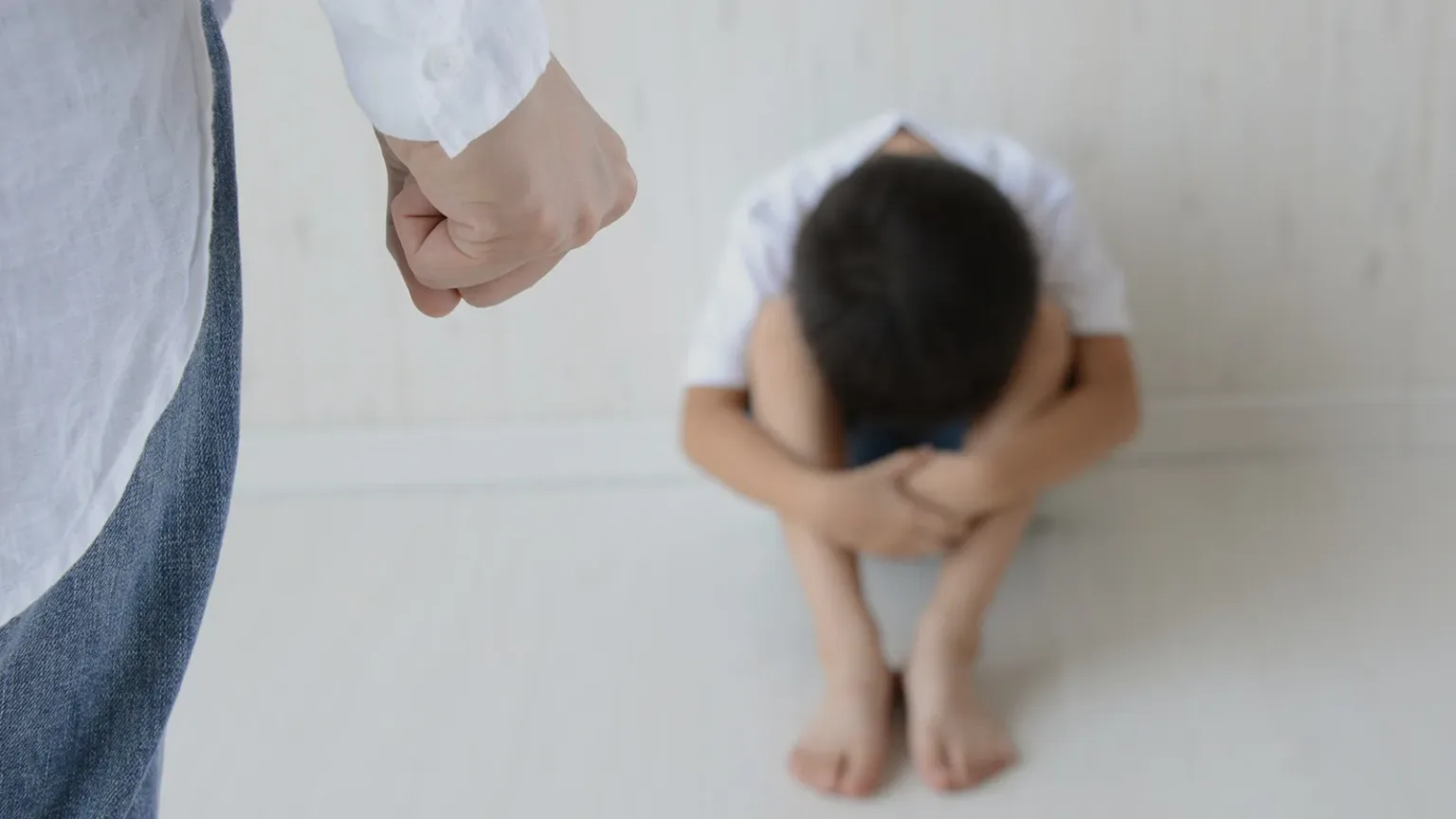
The results showed that 70% of parents consider corporal punishment a legitimate means of education and discipline, while 40% of children (aged 6-12) expressed extreme fear of being hit, describing it as the worst experience they face in their family and educational environment. Meanwhile, 60% of children exhibited apathy resulting from psychological adaptation to violence.
The study examines the historical, religious, and cultural roots of corporal punishment in education, comparing it with modern concepts of positive parenting and children’s rights. It then presents a reformist approach in light of the transitional phase that Syria is undergoing.
Background and Syrian Context:
Educational violence in Syrian society is part of a long-standing cultural legacy, fueled by the patriarchal and educational systems that prevailed in the second half of the 20th century. This legacy intersected with political and institutional repression that fostered blind obedience and submission instead of criticism and creativity.
With the collapse of the authoritarian regime and the country’s entry into a new transitional phase, the need arose to reconsider educational methods in line with the values of freedom, dignity, and social justice.
However, corporal punishment remains prevalent in schools and homes, considered by many families to be a legitimate “disciplinary method.”
Field Methodology:
The Research and Studies Department of the Family Affairs Office of the Syrian Future Movement conducted a field survey of fifty families in three Syrian cities (Idlib, Aleppo, and Damascus) from diverse social strata.
The study employed semi-open-ended interviews and questions directed at children (aged 6–12) and their parents. Survey Results:
70% of parents believe that corporal punishment is a necessary means of disciplining behavior and teaching manners.
40% of children expressed extreme fear of being hit, considering it the greatest psychological threat they face.
60% of children showed indifference towards being hit, due to repeated experiences and their desensitization to daily violence.
These results indicate a structural flaw in the understanding of the concept of education, where learning is reduced to obedience rather than character building and the ability to think critically.
The Cultural and Psychological Roots of Educational Violence:
We hypothesize that educational violence in Syria is an inherited value system, manifested in proverbs and everyday language, such as “spare the rod and spoil the child.” Psychological research shows that repeated violence in childhood leads to:
- Low self-esteem and loss of trust in others.
- The formation of a submissive or aggressive personality, depending on the nature of the response.
- The perpetuation of violence in an inherited social cycle.
The Religious Perspective on Corporal Punishment:
- From an Islamic Perspective: A purposive reading of Islamic heritage reveals that Islam did not legislate corporal punishment as a means of discipline, bu rather restricted it with stringent limitations that almost negate it.The Prophet Muhammad (peace be upon him) said: “Kindness is not found in anything except that it beautifies it, and it is not removed from anything except that it blemishes it.” [Narrated by Muslim].Furthermore, Ibn al-Qayyim, in his work “Tuhfat al-Muhtaj,” states that corporal punishment is only permissible after a child reaches the age of discernment and after all methods of admonition have been exhausted, and that it should not be severe or humiliating.The overarching objectives of Islamic law (Sharia) are to preserve life, dignity, and intellect, objectives that are incompatible with the physical and psychological harm inflicted upon children.In modern purposive jurisprudence (Qaradawi, Raisouni, and Jabri), discipline through violence is considered contrary to the spirit of mercy and justice, which is the essence of the Islamic message.
- From a Christian Perspective: Christianity, likewise, places mercy at the core of its educational principles. In Paul’s letter to the Ephesians (4:6): “Fathers, do not exasperate your children, but bring them up in the training and instruction of the Lord.”Here, training is understood as psychological and spiritual refinement, not physical punishment.The modern Syrian Church, in its educational documents (the Synod of Catholic Patriarchs, 2018), affirms that corporal punishment deprives education of the spirit of love and instills fear instead of faith.Thus, the Christian and Islamic positions converge in rejecting violence as an educational method and emphasizing mercy and good example as educational approaches toward alternatives in the new Syria.
In light of these findings and data, the following recommendations can be summarized:
- Establish national programs for positive education in cooperation between the Ministries of Education and Social Affairs, integrating nonviolent communication methods into family and school education.
- Include training materials for teachers on emotional intelligence and classroom management without violence.
- Launch community awareness campaigns based on shared religious and humanistic discourse to reject violence.
- Enact protective legislation for children in accordance with the Convention on the Rights of the Child (1989), criminalizing corporal punishment and domestic violence.
- Support ongoing field research to assess the impact of cultural shifts on the consciousness of Syrian families during the transitional phase.
Conclusion:
This research demonstrates that educational violence in Syria reflects a deep-seated socio-psychological system entrenched over decades of authoritarianism.
Therefore, rebuilding education on modern, humanistic foundations requires a comprehensive vision that integrates science with religious and national values.
In the new Syria, a free citizen cannot be built through repression and fear, but rather through an education based on compassion, reason, and participation.
References:
- Bandura, A. Aggression: A Social Learning Analysis. Prentice-Hall, 1973.
- UNICEF. Violence Against Children in the Middle East and North Africa: Regional Report. 2023.
- Al-Qaradawi, Yusuf. An Introduction to the Study of Islamic Law. Cairo: Dar Al-Shorouk, 1996.
- Al-Raysouni, Ahmad. The Theory of Maqasid in Imam Al-Shatibi. Beirut: Dar Al-Kalima, 2000.
- Al-Jabiri, Muhammad Abed. The Arab Moral Mind. Casablanca: Arab Cultural Center, 2001.
- Assembly of Catholic Patriarchs in the Middle East. Document on Christian Education in the Family and School. Beirut, 2018.
- Ibn Qayyim al-Jawziyya. Tuhfat al-Mawdud bi-Ahkam al-Mawlud. Cairo: Dar al-Kutub al-Ilmiyya, 2002.
- The Holy Qur’an; The Holy Bible (New Testament).
……………….
Appendix (A): Field Research Tools and Methodology
Field Sample:
The field research was conducted in three major Syrian governorates—Idlib, Aleppo, and Damascus—during September and October 2025, with the aim of representing the geographical and social diversity across the northwest, northeast, and central regions.
The sample size consisted of fifty participants, half of whom were children and the other half parents, to ensure a balance between the two perspectives on the study topic.
The children ranged in age from six to twelve years, while the parents ranged in age from twenty-eight to forty-five years. Participants were selected purposively to ensure diversity in educational, economic, and social backgrounds, while also considering representation between rural and urban environments.
Field Research Procedures:
Interviews were conducted using paper questionnaires administered by volunteer university students who had been trained in academic questionnaire design methods. The field team adhered to ethical research standards, informing parents and children that participation was entirely voluntary and that they had the right to withdraw at any time without any impact on their relationship with the implementing organization.
The research employed a semi-structured interview approach, using standardized questions while allowing participants to freely express their opinions and experiences.
After data collection, responses were entered into a descriptive statistical coding system for analysis and comparison of general trends between the two groups (children and parents).
Field Survey Model:
The survey comprised four main sections.
The first section addressed general data such as age, gender, place of residence, educational level, and number of children in the family.
The second section focused on parents’ opinions, including questions about their stance on the use of corporal punishment as a disciplinary method, the reasons for resorting to it, the degree of subsequent regret, their belief in the existence of non-violent alternatives to discipline, and their willingness to participate in positive parenting training programs. The third section addressed the children’s responses, including questions about the extent to which they were subjected to physical punishment at home or school, what frightened them most during educational experiences, how they felt after being punished, whether they discussed their feelings with anyone, and their desire for adults to stop using violence.
The fourth section was dedicated to open-ended questions, allowing children and parents to express their views on alternative educational methods and the impact of encouragement and praise on children’s behavior.
Data Analysis Methodology:
The data was analyzed on two levels:
The first level was quantitative and descriptive, through the extraction of percentages and the identification of general trends in attitudes and behaviors.
The second level was qualitative, relying on an open-ended reading of the participants’ responses and their semantic analysis to understand the relationship between physical punishment and the image of authority in the minds of Syrian children, particularly in environments that have experienced security disturbances or displacement.
Combining the two levels allowed for the development of integrated indicators linking adults’ educational intentions with the psychological and social impact of the act on children.
Ethical Considerations: The research adhered to the strict ethical standards applicable to social studies involving children. Before commencing the study, written consent was obtained from the parents, guaranteeing complete confidentiality and ensuring that no data that could reveal the participants’ identities would be collected.
The field team was also trained in safe psychological interaction with children and in avoiding questions that might cause shock or embarrassment.
The research ethical guidelines were based on UNICEF’s 2023 recommendations regarding field research with minors.
The forms and data were stored in a secure internal archive and will only be used for comprehensive analytical purposes solely for the research objectives.
Study Limitations:
This study is preliminary and exploratory, as the sample was limited to three governorates and did not include representatives from the eastern or southern regions. Furthermore, no standardized psychological assessment was used due to limited technical resources.
Therefore, the results serve as general indicators that pave the way for broader future studies and contribute to building a national database on the impact of educational violence during the Syrian transitional phase.
Field Recommendations:
We recommend expanding the scope of future field studies to include public and private schools in all Syrian governorates, and involving psychologists and educators to establish scientific standards for understanding the phenomenon.
We also recommend establishing a permanent research unit within the Syrian Future Movement Studies Center to monitor educational and social transformations within the context of transitional justice, in cooperation with the transitional Ministry of Education, to incorporate research findings into new educational and media policies.
………….
Appendix (B): Theoretical Description of the Study’s Key Concepts:
The Concept of Educational Violence:
Educational violence is any behavior or action by an adult towards a child with the intention of discipline or education, resulting in physical, psychological, or symbolic harm. In modern educational literature, it is classified as a form of domestic and institutional violence, linked to a flawed understanding of educational authority and the psychological function of punishment.
According to the United Nations Children’s Fund (UNICEF) in its 2022 report, educational violence includes “any use of physical force or the threat thereof that results in physical pain or psychological suffering to a child, even if the intention is not to cause direct harm.”
It is noteworthy that this form of violence is often culturally or religiously justified, making it more profound and dangerous than direct physical violence because it is cloaked in the guise of “good intentions” in education and evaluation.
The Concept of Positive Parenting:
Positive parenting is an educational approach that focuses on building behavior through communication, mutual respect, and encouragement, rather than punishment and fear. This concept is based on developmental psychology studies dating back to the work of Alfred Adler and Rudolf Dreikurs in the 20th century, who emphasized that the goal of education is not to subjugate the child but to help them develop a sense of belonging and responsibility.
Positive parenting is a cornerstone of modern education policies and has been adopted by UNESCO in its 2030 Agenda, which considers educational violence to be undermining the goals of quality education and democratic citizenship.
In the Syrian transitional context, adopting positive parenting represents a symbolic shift from a “culture of obedience and fear” to a “culture of freedom and responsibility,” that is, from the logic of educational authoritarianism to the logic of civic education.
Family Authority Between Tradition and Modernity:
In traditional Syrian society, the family is the center of educational and social authority, where the father or elder plays a guardianship role based more on imposing discipline than encouraging dialogue. Social scientist Pierre Bourdieu points out that this form of authority reproduces the authoritarian structure of society through socialization, where the child learns submission instead of criticism, and obedience instead of initiative.
Therefore, the relationship between father and child in post-conflict societies, such as Syria, needs a philosophical and educational redefinition, replacing the concept of “parental dominance” with that of “parental accompaniment” based on partnership and trust. This aligns with the project of social justice and democratic transition.
The Impact of Educational Violence on Psychological and Social Development:
Recent psychological studies, such as the American Psychological Association (APA) report (2021), show that children who are subjected to repeated physical punishment are more prone to chronic anxiety, low self-esteem, and difficulty forming secure relationships in the future.
Furthermore, research from Cambridge University (2020) has shown that domestic violence reproduces violence later in school and society; that is, a child who is beaten today may become an adult who perpetrates violence tomorrow. In the Syrian case, the accumulation of political violence, war, and displacement has made educational violence an unconscious extension of the culture of conflict, exacerbating the fragility of the new generation’s psychological structure and weakening the chances of building a peaceful civic culture.
Education and Violence in the Context of Transitional Justice:
Rebuilding the educational system in transitional phases is linked to redefining the relationship between the citizen and the state, and between the child and the educational institution.
Educational violence is a reflection of a historical authoritarian structure that prevailed in the Syrian state during the past decades, where fear and discipline were employed as tools of social and political control.
Therefore, addressing this phenomenon must be part of a broader transitional justice project, through educational reform programs that promote the values of dialogue, non-violence, and accountability, and link education to psychological and social liberation.
In this context, researcher Martha Nussbaum (2011) emphasizes in her book “Creating Capabilities” that education in societies emerging from authoritarianism must rebuild “human capacity for empathy” as a moral prerequisite for democracy.
The Philosophical and Political Perspective on Education:
Educational discourse during transitional phases belongs to what philosopher John Dewey calls “education as a democratic practice,” meaning it is not merely the transmission of knowledge but the establishment of active citizenship.
From this perspective, rejecting corporal punishment and violence in education becomes a distinctly political act, as it signals the end of the “symbolic violence” upon which the relationship between the state and the citizen, the school and the child, and the father and the son has been based.
Adopting an educational approach based on freedom and responsibility means establishing a new generation of Syrians who understand that power is not an instrument of punishment, but rather a means to serve humanity and build the common good.
Theoretical Conclusion:
The preceding concepts reveal that educational violence in Syria is not merely a familial phenomenon but a complex cultural and political structure, and that the shift towards positive education is a cornerstone of the Syrian transitional justice project.
Reforming education is not limited to modernizing curricula, but also includes rebuilding the human relationship between educator and learner on the basis of respect and dignity. The success of these transformations requires a new national educational policy rooted in the realities of Syrian society, one that restores confidence in schools and families as safe spaces for nurturing free individuals capable of creativity, participation, and responsibility.
…
Appendix (C): Recommendations and Public Policies for Addressing Educational Violence in Syria
General Framework:
These recommendations aim to develop a comprehensive national policy to reduce educational violence in family and school environments, and to establish a new educational culture that upholds the dignity of the child and links educational reform to the transitional justice process.
This vision stems from the conviction that human development is the cornerstone of rebuilding the modern Syrian state, and that reforming educational practices is an essential part of national reconciliation.
Strategic Objectives:
Transforming the educational environment into a safe space free from physical and verbal violence.
Establishing positive education as a national educational culture.
Building the capacities of teachers and parents in nonviolent communication skills.
Redefining educational authority in accordance with the values of a civil and democratic state.
Integrating the psychological and social dimensions into the educational process.
Practical Implementation Axes
First: Policies and Legislation
Issuing a national law to protect children from educational violence, criminalizing corporal punishment in schools and homes, based on the Convention on the Rights of the Child (1989), which Syria has previously ratified.
Including a specific clause in the Transitional Education Law prohibiting the use of any form of physical or degrading punishment in educational institutions.
Establishing a national observatory for educational violence in cooperation between the Ministry of Education and the Syrian Future Movement Studies Center, tasked with collecting periodic data and issuing annual reports on progress in reducing the phenomenon.
Second: Capacity Building Axis
Implementing national training programs for teachers and administrators on positive education and participatory classroom management.
Incorporating modules in faculties of education on “Education in Post-Conflict Contexts” and “Emotional Intelligence in Education.”
Preparing a unified educational guide, issued by the Ministry of Transitional Education in cooperation with local and international experts, that includes practical tools for implementing non-violent education in classrooms.
Third: The Family and Civil Society Axis
Launching community awareness campaigns through local media and social media platforms about the dangers of corporal punishment and educational violence, and highlighting successful models of modern parenting.
Establishing family counseling centers in major cities (Damascus, Aleppo, Idlib, etc.) to provide psychological support and training for parents in positive parenting skills.
Involving NGOs and women’s organizations in designing and implementing “Positive Parenting” programs in partnership with the Ministry of Social Affairs and Labor.
Fourth: The Education and Media Axis
Integrating the topic of children’s rights education into the primary and preparatory school curricula, using an interactive and non-preachy approach.
Producing short series and awareness films aimed at children and parents that reflect the values of dialogue and respect, under the supervision of the Transitional Ministry of Information.
Developing school radio programs that encourage children to express their opinions freely within a safe environment, thereby enhancing self-confidence and social responsibility. Fifth: The Psychosocial Support Axis:
Establishing a specialized unit within the Ministry of Education called the “Department of Psychosocial and Educational Support” to monitor children affected by violence.
Training psychological counselors in rapid intervention and group support techniques in schools.
Connecting schools to a network of social workers to provide consultations to parents and teachers when violent behaviors are observed.
Proposed Implementing Partners:
The Transitional Ministry of Education: Leading body for implementation and legislation.
The Syrian Future Current Studies Center: Research, evaluation, and development of national indicators.
UNICEF and UNESCO: Technical and training support.
Syrian NGOs: Community awareness and local monitoring.
National media: Disseminating the new culture and promoting a positive image of non-violent education.
Proposed Timeframe for Implementation:
Short Term (One Year): Establishing the National Observatory for Educational Violence and launching the first awareness campaigns.
Medium Term (Three Years): Integrating positive education into curricula and teacher training programs. Long-term (5 years): Measuring the impact of policies and amending legislation to become part of the permanent education system in the new Syria.
Evaluation Indicators
A decrease in the use of corporal punishment in schools and families, based on annual monitoring reports.
An increase in the number of teachers trained in positive parenting methods.
Higher indicators of child and parent satisfaction with the school environment.
Integration of non-violent education as a principle in the basic education curriculum.
Executive Conclusion:
Confronting the culture of educational violence in Syria is a strategic step in building the new Syrian individual who possesses a democratic consciousness based on self-respect and respect for others.
Translating the results of the field research into practical policies will contribute to creating a profound cultural transformation, restoring to the family and school their true educational role as spaces of love and growth, not punishment and fear.