
Introduction:
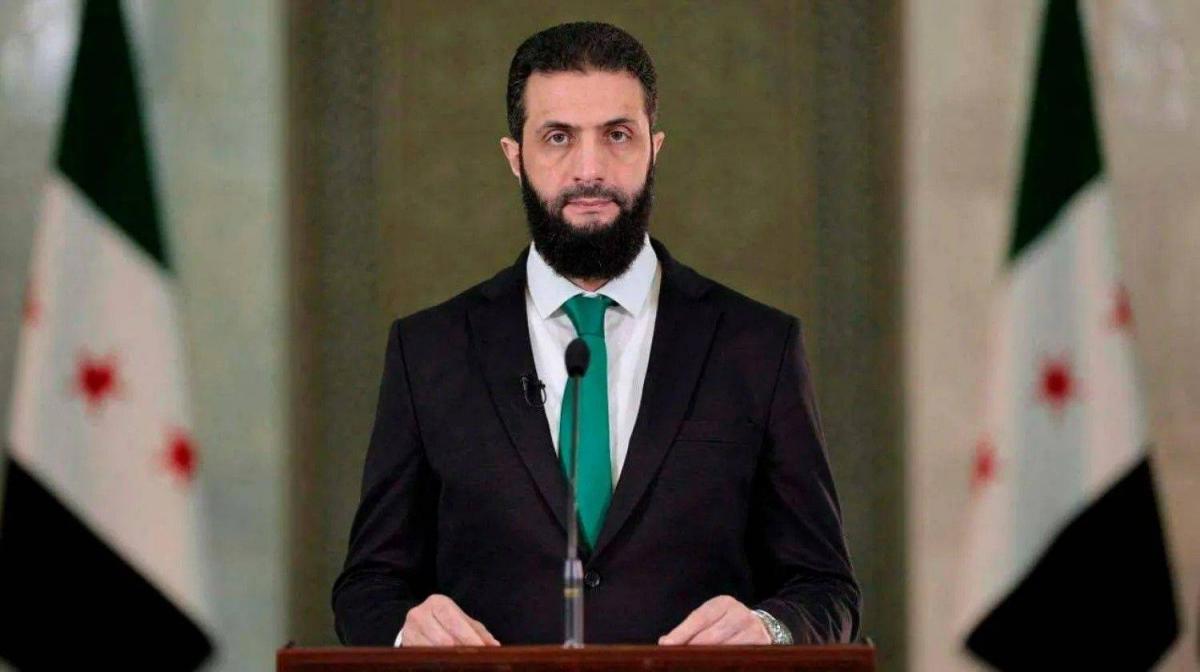
On October 10, 2025, during an official meeting in Damascus with the Supreme Council for Economic Development, Syrian Interim President Ahmad al-Sharaa presented a new strategic vision aimed at rebuilding the Syrian economy on productive and investment-based foundations, away from reliance on aid or conditional loans.
In his speech, the President emphasized that “Syria does not want to live on politicized aid or loans,” calling for a flexible investment environment that encourages real and sustainable development.
This vision comes within a sensitive political and economic context, in which the Syrian state seeks to overcome the effects of war, restore internal and external confidence, and build a new economic model based on production and integration between the public and private sectors and civil society.
This article aims to analyze the foundations of President al-Sharaa’s vision, highlight the structural challenges facing its implementation, and compare it to successful international experiences. The goal is to present practical, implementable recommendations from the Economic Office of the Syrian Future Movement, based on modern economic literature and principles of good governance.
Pillars of the Economic Vision:
President al-Shara’s vision is based on three main, interconnected pillars:
- Economic and sovereign independence:
By rejecting reliance on conditional foreign aid and striving to build a self-sufficient national economy. - Stimulating domestic and foreign investment:
By reforming the legal environment, simplifying administrative procedures, providing guarantees to investors, and establishing modern institutions dedicated to attracting and monitoring investments. - Balanced and sustainable development:
By distributing production and service projects across various governorates, focusing on key sectors such as agriculture, industry, and renewable energy, to achieve economic and social justice.
These pillars align with what the political economy literature on development emphasizes (Rodrik, 2007), which states that economic independence can only be achieved by building strong institutions, activating the role of the private sector, providing a stable legal environment, and ensuring effective accountability.
The Political and Economic Context of the Vision:
This vision comes at a critical transitional stage, in which the new government seeks to overcome the effects of war and build trust between the state and society, and between Syria and the outside world.
It is noteworthy that President al-Sharaa’s economic discourse is characterized by realism, as he acknowledges the existence of profound structural challenges and proposes solutions based on market tools and local production, rather than the traditional centralization that has prevailed for decades.
However, the Syrian economic landscape remains complex and faces intertwined obstacles, which can be summarized as follows:
- The specter of international sanctions, which continues to hinder the movement of capital and financial transfers, despite the Arab and international openness toward the new Syria.
- The weakness of infrastructure and productivity, as a result of the destruction of cities and industrial and agricultural areas in recent years (UNDP Syria, 2024).
- The lack of trust in official institutions, due to the accumulation of corruption and bureaucracy, weak oversight, and a lack of transparency in the management of public resources.
- The absence of an integrated development vision, as economic strategies remain fragmented, and there is no clear roadmap for projects and programs that define the path of development for the next phase.
- The role of economic and social partners, including civil society organizations, unions, NGOs, and the private sector, in formulating public policies is declining, especially in light of the absence of an effective Council of Ministers.
- The greatest challenge remains securing sustainable financial resources by creating a supportive environment for the main productive sectors (agriculture and industry) and improving the trade balance through specialized programs to support exports and increase local added value.
Comparison with successful international experiences:
President Shara’a’s vision can be read in light of the inspiring development experiences of countries emerging from major crises:
- Rwanda (after 1994):
Successfully built a productive economy based on modern agriculture and technology through institutional reforms and ensuring political and security stability (Sachs, 2005). - Georgia (after the Rose Revolution):
Abolished thousands of obstructive laws and simplified administrative procedures, raising its ranking on the Ease of Doing Business Index (World Bank, 2020). - Morocco (over the past decade):
Established free industrial zones and logistics centers, and offered smart tax incentives, attracting major investments in the automotive and renewable energy sectors (OECD, 2022).
These experiences demonstrate that economic reform cannot succeed without institutional and legislative reform, and that political stability and good governance are the foundation for any sustainable economic renaissance (Rodrik, 2007).
The Syrian reality and structural challenges:
In July 2025, Syria’s new investment law was issued, establishing the Supreme Council for Economic Development, an independent investment authority, and an investor services center.
While these steps represent significant legislative developments, the greater challenge lies in their practical implementation and the ability of the new institutions to overcome bureaucracy, politicization, and corruption.
The most prominent structural challenges that continue to hinder implementation include:
- Administrative corruption, which leads to investor flight and undermines the confidence of economic partners.
- Weak judicial independence, which reduces the effectiveness of commercial dispute resolution mechanisms.
- Lack of transparency in resource allocation, which creates an unfair competitive environment.
- Geographical and political fragmentation, which hinders the implementation of unified national projects.
- The absence of a comprehensive national development strategy that links investment, production, and employment priorities within a clear timeframe.
Recommendations:
Based on economic literature and the experiences of post-conflict countries, the Syrian Future Movement’s Economic Bureau offers the following recommendations:
- Launching a national development and investment plan that defines goals, programs, and projects with clear priorities and measurable performance indicators.
- Establishing a development advisory council comprising representatives from the public and private sectors, civil society organizations, universities, and Syrian experts at home and abroad to participate in formulating economic policies.
- Activating the role of the banking sector in financing small and medium-sized enterprises (SMEs) through government and partial loan guarantee programs.
- Establishing a unified digital platform for registering companies, obtaining licenses, and following up on procedures with transparency and speed (World Bank, 2020).
- Developing the commercial arbitration system and linking it to independent economic courts to ensure fairness and speedy adjudication of cases.
- Launching vocational and technological training programs in partnership with the private sector to prepare youth for the needs of the labor market.
- Designating special economic zones in the most affected governorates, with smart tax and customs incentives (OECD, 2022).
- Activating development partnerships with Syrians abroad through flexible financial instruments and legal guarantees for their investments (Sachs, 2005).
- Redefining trade policy priorities by supporting exports and developing manufacturing industries to enhance the trade balance.
- Establishing a national mechanism for governance and transparency that monitors project implementation and prevents overlap between economic and political decisions.
Conclusion:
President Ahmad al-Sharaa’s vision represents an important step toward a qualitative shift in Syria’s economic discourse. It lays the foundations for building a sovereign and productive economy. However, it still requires a clear strategic framework, effective executive institutions, and genuine national partnerships.
The success of this vision depends on the state’s ability to secure sustainable financial resources, build strong institutions, and activate partnerships between the public and private sectors, civil society, and the Syrian diaspora.
Syria today needs a new participatory economic model that redistributes wealth, consolidates justice, and establishes balanced and sustainable development that moves the country from a logic of relief to one of production.
References:
- Rodrik, D. (2007). One economics, many recipes: Globalization, institutions, and economic growth. Princeton University Press.
- Sachs, J. D. (2005). The end of poverty: Economic possibilities for our time. Penguin Press.
- World Bank. (2020). *Doing Business 2020: Comparing business regulation in 190 economies. World Bank Group.
- UNDP Syria. (2024). Post-conflict economic recovery framework: Strategic assessment for Syria. United Nations Development Programme.
- OECD. (2022). OECD investment policy reviews: Morocco 2022. Organization for Economic Co-operation and Development.