
Introduction:
In the context of the major transformations taking place in the contemporary world, the concept of “generations” has emerged as a key to understanding societal dynamics, particularly in countries experiencing profound crises and conflicts, such as Syria. From Generation Z, which grew up with the advent of the internet, to Generation Alpha, born into the digital age, to Generation Beta, which is expected to witness greater integration with artificial intelligence and extended reality, each generation reflects a unique cognitive, cultural, and social makeup.
With the emergence of these generational classifications, the family is no longer merely a traditional framework for upbringing, but rather a dynamic space where technological transformations, identity challenges, and conflicts of values intersect.
In this article, we aim to re-understand the relationship between Generation Beta and the contemporary Syrian family within a developmental vision that links generational diversity with societal reconciliation and stimulates a new vision of the family as a lever for change.
Generations and Contemporary Transformations:
Researchers define generations as age groups linked by distinct cultural and historical experiences, a definition rooted in sociology and cultural studies. Generation Z (born 1997–2012) is viewed as a generation with a high awareness of human rights, having grown up amidst the proliferation of the internet and social media. Generation Alpha (2013–2025) was formed in a highly digital environment where artificial intelligence intersects with education and everyday entertainment.
Generation Beta, expected to emerge after 2025, will be a generation living in an extended reality where neurotechnology and personalized information may become part of their daily lives.
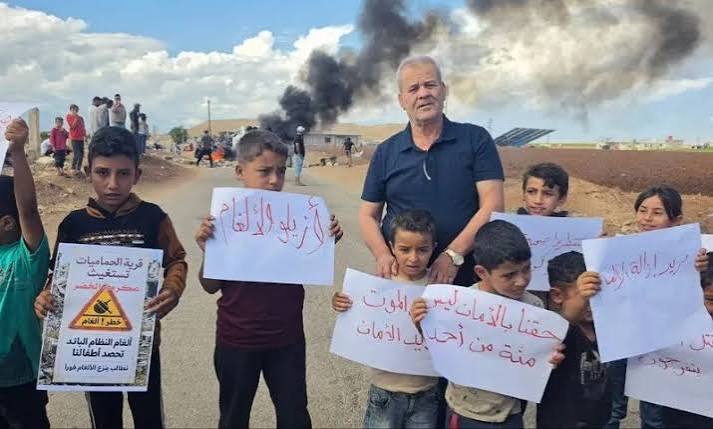
In the Syrian context, these transformations present a double challenge, as the generational experience in Syria is not only shaped by technology but also intersects with war, displacement, educational disruption, and the ongoing search for a national and societal identity.
Syrian children who will be living the beginnings of Generation Beta live in a reality unlike their peers in stable countries. This requires a critical reading to frame the concepts of generations within the Syrian fabric.
Generational Interactions with Identity, Education, and Technology:
Studies show that each generation interacts with the elements of life differently.
Generation Z prefers flexible education and freelance work and seeks to shape its identity within decentralized electronic networks. Meanwhile, Generation Alpha, and expectedly Generation Beta, will be more engaged with digitally designed education, artificial intelligence, and interactive games.
In Syria, the education system is experiencing chronic disruption, as many young people and children have been out of school for many years, creating an educational and cultural vacuum that impacts identity formation.
This prompts the family to act as a compensatory bridge that helps rebuild children’s self-perceptions and guide them toward cognitive and educational horizons that transcend the structural deficiencies in state institutions.
While the world opens the way for Beta children to live in an extended reality of interactive intelligence, the Syrian child lives in multiple geographies: their body at home or in the diaspora, their consciousness oscillating between the recent past and the murky present.
Hence, a deeper understanding of generational interaction is required, not as a technical phenomenon, but rather as an educational and sociological process.
The Syrian Family as a Field of Generational Diversity and Reconciliation:
The Syrian family faces unconventional challenges; it not only deals with differences in technological preferences or moral values between generations, but also experiences social fragmentation, psychological trauma, and economic fragility.
However, some family models demonstrate the ability to embrace this diversity, transforming it from a source of conflict into a resource for renewal.
Families’ acceptance of the idea of value pluralism among their children, where a child has a different opinion than their father regarding religion, the meaning of homeland, or how to express themselves, represents a qualitative shift in educational understanding.
Rather than imposing ready-made patterns, the family can redefine its role as a facilitator of dialogue, an environment for experimentation, and a place for moral and cognitive exploration.
Generational reconciliation within the family does not mean compromising principles, but rather agreeing on shared rules for dialogue and respect, leaving room for self-development.
Flexibility in redefining parental roles and accommodating children’s psychological and social changes is what will enable the contemporary Syrian family to regenerate rather than collapse.
From Family to Community Development:
In post-conflict environments, intergenerational dialogue within the family is one of the cornerstones of rebuilding social trust. The absence of family communication creates greater social divisions, while dialogue at home can produce new narratives about homeland, identity, and justice.
The family can transform from a consumer structure to an active participant in civic action by encouraging collaborative projects within the home, such as reading books together or engaging in group volunteering.
This opens the door to building a collective consciousness that forms the nucleus of civic networks and community initiatives that contribute to sustainable development.
While official discourse sometimes attempts to impose a ready-made identity on new generations, the family must enable them to formulate their identities within a variety of options, presenting education not as a set of rules, but rather as a process of emotional and intellectual formation that paves the way for mature engagement in society.
Conclusion:
Generation Beta is not a threat, but an opportunity. It is a generation that can leave a new mark on Syrian life if it is given the opportunity to express itself, learn freely, and engage in development.
The family here is not the barrier, but the gateway. If families succeed in building effective mechanisms for dialogue and support their children in forming their own identity, this will reflect positively on social stability and on society’s ability to overcome the legacy of conflict.
Therefore, we, at the Family Affairs Office of the Syrian Future Movement, recommend the following:
- Establish interactive home dialogue platforms that enable family members to share their diverse perspectives.
- Develop educational programs that take into account Syrian specificities and draw on global experiences in understanding generational diversity.
- Activating the role of religious and cultural institutions in supporting a family model that embraces diversity and believes in renewal.
- Directing media discourse toward celebrating Generation Beta as a lever for change rather than portraying it as a lost or scattered generation.
References:
- Beck, U. (2021). Risk Society: Towards a New Modernity. SAGE Publications. Activate the role of religious and cultural institutions in
- Syrian Center for Policy and Research. (2024). Challenges and Realities of Education After the Assad Regime: Where Do We Begin?. Damascus: Syrian Center for Policy and Research.
- Omran Center for Strategic Studies. (2023). Indicators of Civil Violence in Syria: A Psychosocial Approach to the Structure of Local Conflict. Istanbul: Omran Center.
- Twenge, J. M. (2023). Generations: The Real Differences between Gen Z, Millennials, Gen X, Boomers, and Silents—and What They Mean for America’s Future. Atria Books.
- Prensky, M. (2016). Education to Better Their World: Unleashing the Power of 21st-Century Kids. Columbia University Press.