
introduction:
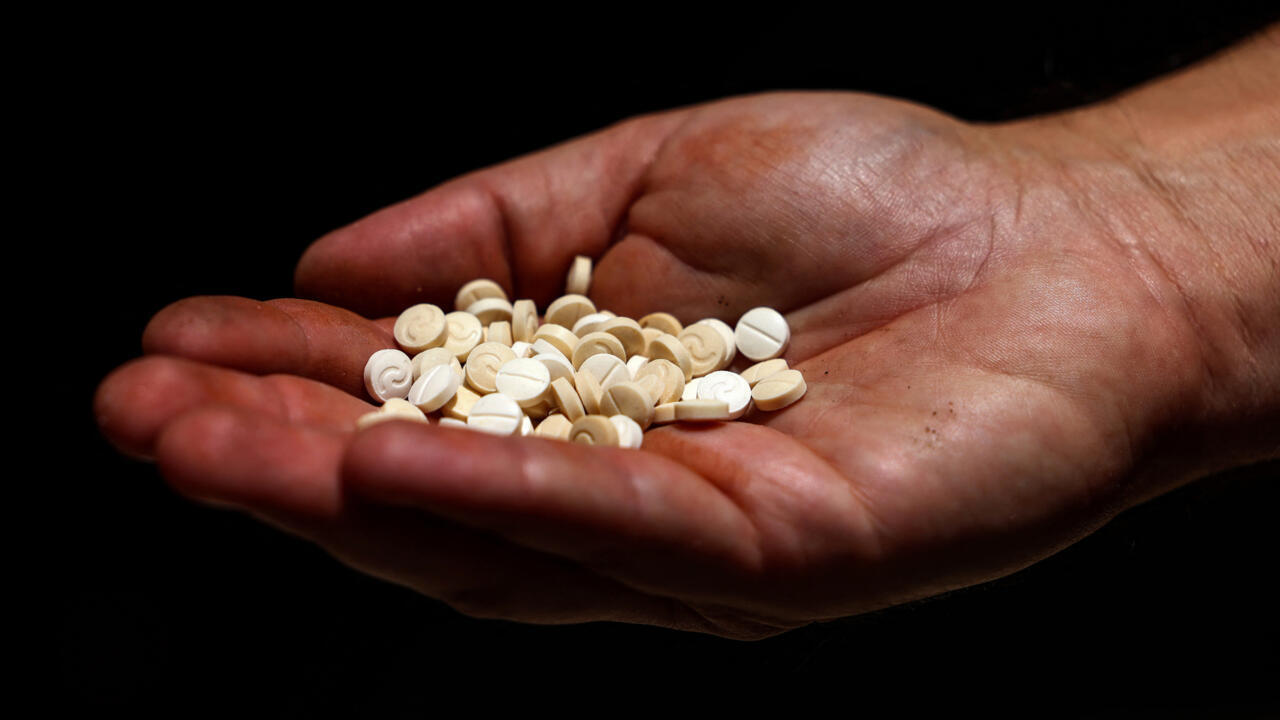
Over the past two decades, Captagon has transformed from a nearly unknown substance outside of medical practice into one of the most prominent products of the informal economy in the Middle East, particularly in Syria. Captagon has become more than just a drug; it has become a political tool, a source of funding for armed groups, and a tangled web of corruption, organized crime, and institutional collusion. This article aims to analyze the evolution of Captagon in Syria across three central phases: before Assad’s rule, during his reign, and after the collapse of his regime. It also examines the psychological, social, and economic impacts of the substance and offers a vision for dismantling its destructive legacy.
Captagon in Syria: A Statistical Analysis of the Drug Economy and Its Security and Social Implications
The Captagon trade in Syria is no longer merely a criminal matter; it has become one of the most telling indicators of the collapse of the state structure and the emergence of a war economy. Recent statistics issued by international institutions and official Syrian and Arab sources reveal the unprecedented scale of this trade, demonstrating how it was used as a financing tool for the former security regime and then as an economic lifeline for armed factions and cross-border smuggling networks.
1- Syria’s global production of Captagon:
Reports from the United Nations Office on Drugs and Crime (UNODC) indicate that, as of 2023, Syria was responsible for approximately 80% of global Captagon production. The French mission to the United Nations confirmed this figure in an official session, indicating that factories in Latakia and the Damascus countryside are the primary source of the pills that have flooded Gulf and European markets.
2- The market value of Captagon trade:
International reports estimated that the Captagon trade in Syria between 2020 and 2023 amounted to an annual value of between $8 and $10 billion. Although these figures vary depending on the estimation methodology, all sources agree that this trade exceeded a quarter of Syria’s GDP in some years.
According to the Wall Street Journal, the former Syrian regime generated profits of up to $2.4 billion annually from the Captagon trade, through networks run by the army and security services, particularly the Fourth Division.
3- Post-regime confiscations and networks:
From December 2024 until mid-2025, it was officially announced in Damascus:
- 320 million Captagon pills were confiscated, some of which were destined for export via Lebanon and Jordan.
- 121 tons of raw materials were seized, most notably chemicals from India and China.
- More than one million pills were destroyed at facilities in Sabboura and Kafr Sousa, in the presence of media and local monitoring.13 secret Captagon warehouses were also uncovered in Damascus, Aleppo, and Tartous, most of which were fronts for food factories or plastic workshops.
4- Regional and international smuggling:
- In Saudi Arabia alone, 65 million Captagon pills were seized in 2022, originating from Syria via the Jordanian border.
- In Italy, a shipment containing 84 million Captagon pills was intercepted in 2020, arriving from the port of Latakia in paper wrappers.
- Jordan carried out a series of airstrikes inside Syrian territory in 2025 against smuggling networks operating near Daraa and As-Suwayda.In the same context, a UNODC report issued in June 2025 warned of the relocation of some Captagon factories to Libya, given the similarities in the security collapse and the emergence of locally sponsored smuggling networks.
5- Social and health impacts:
- Health reports in Saudi Arabia revealed that approximately 40% of young people between the ages of 12 and 22 were exposed to Captagon, directly or indirectly.
- Testimonies from inside Syrian camps indicate an increase in cases of neurological poisoning due to the use of counterfeit pills containing high levels of fenethylline.
Press reports also documented the use of Captagon within armed factions as a psychological stimulant in battle, leading to symptoms of psychosis and nervous breakdown among fighters, particularly in the eastern countryside.These figures demonstrate that Captagon was not a marginal symptom in the previous Syrian phase, but rather one of the engines of the war economy and a tool for dismantling local communities from within. After the fall of the central regime, Syria inherited a production and distribution network that is difficult to dismantle without regional cooperation, the rebuilding of regulatory authorities, and a rehabilitative justice system that separates the victim from the perpetrator.
First, pre-Assad – a limited context for drug trafficking:
Syria prior to the 1970s was not a region with widespread drug use, including Captagon. The country relied on a traditional legal system regulating the sale of narcotic drugs within a purely medical context, based on the 1961 Drug Law, which prohibited the sale of psychotropic substances without a prescription.
Until the early 1970s, the use of Captagon was not documented in Syrian contexts, as its production and use were limited to Europe for the treatment of attention deficit disorder and narcolepsy.
Syria was not involved in manufacturing or distribution networks, and there was no environment conducive to its illicit use.
Second, the Assad Era – Captagon as a Security and Economic Tool:
With Hafez al-Assad’s rise to power in 1970 and the gradual contraction of the Syrian economy, a parallel system began to form within state institutions, in which smuggling and trafficking networks operated through the intelligence and security services.
However, Captagon’s entry into the equation did not become apparent until the last decade of Bashar al-Assad’s rule, particularly after 2011.
Analyzing the reality of Captagon after the revolution, reports issued by the United Nations Office on Drugs and Crime (UNODC) indicate that during the war, Syria became a regional center for Captagon manufacturing, particularly in regime-controlled areas. Investigations by The New York Times and The Guardian documented the involvement of the Syrian Army’s Fourth Division, led by Maher al-Assad, in organizing Captagon factories in Latakia and the Damascus countryside. Syrian ports, particularly Latakia, also served as a gateway for Captagon to the Gulf via disguised shipments. In the relationship between security and Captagon, Captagon was used inside prisons, and sometimes in military operations, to keep soldiers and fighters alert and aggressive. The substance became a tool for controlling behavior in areas outside of control or subject to weak security oversight.
Third, after the fall of the central regime – market fragmentation and privatization of corruption:
With the erosion of state authority and the decline of the regime’s ability to manage its networks, informal groups emerged that took on the task of manufacturing and distributing Captagon, both within former opposition areas and the autonomous administration areas in the north. Captagon became not only produced for smuggling purposes but also a popular substance among Syrian youth, especially in camps and besieged areas, as a source of energy or a mental escape from reality.
In the market dynamics after 2020, we see the presence of local networks in Idlib, Al-Bab, and Al-Hasakah that began manufacturing Captagon with limited capabilities, often at low quality but at low prices. Cheap Captagon became available to teenagers and workers in harsh economic conditions, and there was no institutional intervention to curb its spread. Similar substances containing varying levels of fenethylline, some of which were adulterated, also appeared, causing severe neurological symptoms and increasing cases of poisoning. The spread of Captagon in Syria after the collapse of Assad’s regime did not occur in a vacuum. Rather, it was exploited by international smuggling networks transporting the substance from Lebanon, Jordan, and Turkey. In addition to open borders and lax controls, Syria became a regional collection and distribution point.
Fourth, the psychological, social, and economic effects of Captagon:
1- Psychological effects:
- Captagon causes hyperactivity, exacerbates anxiety, and leads to intermittent psychosis in cases of chronic use.
- Severe withdrawal symptoms occur, including depression, confusion, and compulsive desire to use.
2- Social impacts:
- Captagon creates circles of youth delinquency, as it is circulated in neighborhoods and camps as an alternative currency or a tool for gaining loyalty.
- It has spread among high school students, some of whom use it as a study stimulant without realizing its psychological consequences.
- Family communication collapses in the presence of a Captagon addict, resulting in unjustified aggression and a lack of social responsibility.
3- Economic impacts:
- Captagon has become a parallel economy, sometimes equivalent to the profits from wheat or olive cultivation, making it a source of income for local groups.
- The prolonged cost of abuse depletes the resources of poor families and increases crime rates.
- The state loses its ability to regulate the market, undermining its legal and regulatory framework.
Fifth, strategies to eliminate the legacy of drugs in Syria:
There is no doubt that the reality of drugs, particularly narcotics, in Syria is a societal alarm bell. Therefore, we at the Family Affairs Office propose a comprehensive strategy to eliminate this harmful legacy:
- Establish an independent national anti-drug body, linked to a legislative oversight council rather than the security services. It relies on experts in medicine, law, and sociology, and operates according to realistic plans in a fragmented state.
- Reform Syrian drug law. The current law confuses drug use with trafficking and lacks the concept of rehabilitation. A model must also be adopted that differentiates between the user as a victim and the trafficker as a criminal.
- Build a treatment and rehabilitation system within Syria, including free, non-stigmatizing centers for addicts, and community reintegration programs, including vocational training and psychological support.
- Launch educational media campaigns. These should be delivered visually, using social media effectively, and engaging influential and realistic figures, avoiding the preaching approach.
- Regional cooperation: Captagon cannot be contained without coordination with Iraq, Lebanon, Jordan, and Turkey. It is also essential to establish a joint database on the substances and methods used in smuggling.
conclusion:
Captagon is not just a drug; it is a narrative of power, collapse, and exploitation.
In Syria, it has become a mirror that reveals the fragility of the state, the former regime’s manipulation of its people and society to maintain its crumbling throne, and the vacuum that has spawned alternative economies that do not recognize the rule of law.
Eliminating the Captagon legacy requires a national will that transcends security discourse and embraces a discourse of justice and societal recovery. A post-Captagon future is not only a healthy future; it is a necessary condition for the return of meaning to national life.
bibliography:
- United Nations Office on Drugs and Crime (UNODC). (2022). Synthetic Drugs in the Middle East. Vienna: UNODC. Available at: https://syntheticdrugs.unodc.org
- Hubbard, B. (2023, June 5). How Syria Became a Narco-State. The New York Times. Available at: https://www.nytimes.com/2023/06/05/world/middleeast/syria-captagon-drug.html
- Chulov, M. & McKernan, B. (2022, July 5). Captagon: Inside Syria’s multi-billion dollar drug industry. The Guardian. Available at: https://www.theguardian.com/world/2022/jul/05/captagon-inside-syria-billion-dollar-drug-industry
- BBC Arabic. (2023). Captagon: From Pill to Regional Crisis [Photo Investigation]. Available at: https://www.bbc.com/arabic/media-65921051
- United Nations Office on Drugs and Crime (UNODC). (2025, June). Captagon and Synthetic Drug Threat Assessment – Middle East Report. Vienna: UNODC.
- New Lines Institute. (2024). The Syrian Narco-State: An Investigation into Captagon Production and Trade. Washington DC: New Lines Institute for Strategy and Policy.
- Al-Quds Al-Arabi. (2025, May 21). Syria after Assad: 13 Captagon Factories Uncovered and Millions of Pills Seized. Available at: https://www.alquds.co.uk
- Wall Street Journal. (2022, December 14). Syria’s Drug Trade: How the Regime Profited from Captagon. Available at: https://www.wsj.com
- AFP Factbook. (2023). Drug Smuggling Trends in Syria and the Gulf. Paris: Agence France-Presse.
- Saudi Ministry of Interior. (2022). Official Report on Captagon Shipments Seized During the Year. Riyadh: Saudi Anti-Narcotics Department.
- Syrian Interim Ministry of Interior. (2025, June). Statement on the Confiscation of Captagon Manufacturing Facilities. Damascus.
- France 24 Arabic. (2023, October 9). Captagon on the Jordanian-Syrian Border: A Growing Security Threat. Available at: https://www.france24.com/ar
- Institute for Global Affairs. (2024). Middle East Drug Economies in Conflict Zones: Syria Case Study. London.