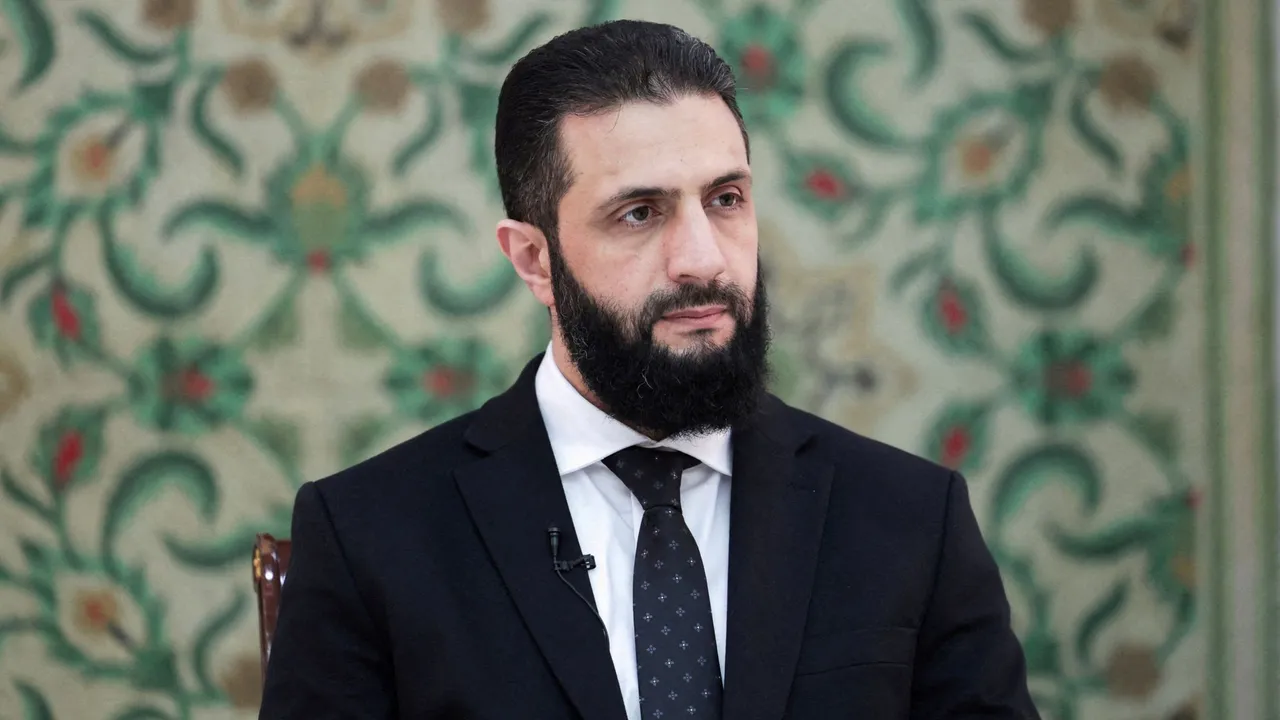
Since assuming the presidency of the transitional period on January 29, 2025, President Ahmed al-Sharaa has appeared before the Syrian people only on rare and infrequent occasions.
This article raises a fundamental question regarding the philosophy of governance during a transitional phase: is it sufficient for a president to appear only on major occasions, or does such a period require a consistent communicative presence—one that keeps Syrians informed about unfolding events, explains the challenges at hand, and acknowledges existing obstacles?
Political Communication in Transitional Periods:
Literature on political communication suggests that transitional phases are precisely when consistent communication is most vital, as they involve a convergence of three factors: an uncertain future, fragile trust, and heightened expectations.
In such a phase, political discourse functions not merely as a means of “informing,” but as a tool for “managing meaning”—helping citizens understand what is happening, interpreting decisions, and coming to terms with difficulties.
The concept of a “communicative contract” posits that the relationship between those who govern and those who are governed is built upon regular, reciprocal exchange, rather than sporadic, one-way rhetoric.
In this framework, the leader provides information, explanations, and an acknowledgment of limitations, while the citizen offers trust, participation, and patience.
If this contract collapses, it is replaced by a “communicative vacuum”—a void quickly filled by rumors, misinformation, and alternative narratives (such as those rooted in sectarianism, regionalism, or opposition agendas).
In contexts burdened by a long legacy of authoritarianism, establishing such a contract becomes even more challenging; citizens have grown accustomed to viewing all official discourse as propaganda, and any silence as an act of concealment. Therefore, regular communication serves as a tool for rebuilding trust through repetition, transparency, and the acknowledgment of limitations.
How has Al-Sharaa addressed the Syrian people?
To date, there has been no consistent, periodic communication from President Al-Sharaa.
The speeches he has delivered were tied to specific occasions, which can be summarized as follows:
- Inaugural Address (January 29, 2025): His first address to the Syrian people, lasting five minutes, in which he outlined a roadmap for the transitional phase.
- Speech on the Lifting of Sanctions (May 14, 2025): A brief address (nine minutes) in which he welcomed the lifting of U.S. sanctions.
- Speech on the Final Lifting of Sanctions (December 19, 2025): Delivered from the foothills of Mount Qasioun in Damascus, this address celebrated the complete removal of U.S. and European sanctions, with the President asserting that “Syria is returning to its rightful place.”
- Eid al-Fitr Address (March 20, 2026): A message in which he congratulated the Syrian people and outlined the government’s priorities (empowering citizens, closing refugee camps, managing the national budget, and addressing wages).
- United Nations General Assembly Address (September 23, 2026): An external address directed toward the international community.
- Remarks on religious and national occasions: Such as his address at the “Unity of Islamic Discourse” conference (February 2026), his Eid al-Fitr message, and his remarks on the anniversary of liberation.
While diverse, these speeches do not constitute a consistent pattern of communication. They occur after events—rather than before or during them—and serve to inform the public about what has been achieved, rather than engaging them transparently regarding the obstacles that remain. This raises the question: Can this pattern foster genuine trust between the state and its citizens during a highly complex transitional phase?
Does the practice of periodic address have historical roots?
In Islamic history:
Early Muslims did not wait for a “major occasion” to hear from their leader. In Medina, the Prophet (peace be upon him) would address the people every Friday. His sermons encompassed worship, politics, administration, and guidance; they often addressed political and military matters, explaining administrative and financial policies—along with their underlying rationales—and issuing executive directives.
Mentioning the ruler’s name during the sermon served as a weekly reaffirmation of the bay’ah (pledge of allegiance) and a public declaration of his legitimacy.
This model functioned as a mechanism for periodic political communication, keeping the ruler in direct contact with the public and subjecting him to a form of popular accountability—if only through the very act of the people’s presence and listening.
In the American experience:
In 1933, U.S. President Franklin D. Roosevelt launched a series of radio addresses known as “fireside chats.” Broadcast on Sunday evenings, they were designed to explain policies in simple language and provide reassurance to the American people amidst the Great Depression.
Sources indicate that between 1933 and 1944, Roosevelt delivered between 27 and 31 such addresses. They proved highly successful; the volume of presidential correspondence surged from 5,000 to 50,000 letters per week. The practice evolved into an institutional tradition that American presidents continue to this day. In contemporary experiences:
Not all such initiatives have been successful. In Venezuela, Hugo Chávez used his weekly program as a means to communicate directly with the public; however, it gradually devolved into a propaganda tool and drew criticism for its “lack of seriousness, excessive informality, and frequent dullness.”
In Ecuador, Rafael Correa employed his own weekly program in a similar fashion, yet he faced criticism for fostering polarization and populism.
The lesson here is that regular, recurring public addresses are a double-edged sword. They can serve as instruments for transparency and accountability—provided they remain open to dialogue, acknowledge existing problems, and welcome criticism.
Conversely, they can easily turn into tools for propaganda if they are one-sided, focus exclusively on touting achievements, and dismiss difficult questions.
Why do Syrians need a regular public address?
Because trust cannot be built through occasional, sporadic addresses:
Opinion polls indicate that the approval rating for the government’s performance fell from 25% in April 2026 to 20% in June 2026, while the disapproval rating rose from 44% to 52% during the same period.
Furthermore, a survey revealed that only 14% of respondents view the new People’s Assembly as truly representative of the Syrian people.
These figures do not necessarily mean that the government has lost its legitimacy, but they do indicate a widening gap between the authorities and the public—a gap that occasional, seasonal addresses are insufficient to bridge.
Because the Syrian public no longer accepts “pre-packaged” rhetoric:
Under the previous regime, official discourse… …pre-prepared, remaining unchanged regardless of unfolding events, and failing to acknowledge problems. This has fostered a “culture of distrust.” In his initial speeches, President Al-Sharaa attempted to break this culture; one analysis described his address as “simple, clear, and in tune with the pulse of the people.” However, such an approach is insufficient unless it is consistent and transparent.
This is because a transitional phase requires the “management of expectations.” Syria faces immense challenges: more than 80% of Syrians live below the poverty line, the unemployment rate exceeds 50%, 2.45 million children are out of school, and the cost of reconstruction is estimated at $216 billion. These figures cannot be hidden, nor can the problems be solved overnight. Periodic public addresses can serve as a tool for managing expectations—explaining what is and is not achievable, and acknowledging shortcomings where they exist.
Ultimately, the Syrian people have endured the horrors of war and made enormous sacrifices. They are not asking for miracles; they are asking for honesty.
If sincere, such periodic addresses can demonstrate respect for the people, acknowledge their suffering, and serve as a pledge to work on their behalf. Furthermore, they can help strengthen the government; a citizen who understands the challenges becomes a partner in addressing them, rather than an adversary.
Pros and Cons of Periodic Public Addresses:
First: Enhancing transparency and openness. The president can explain what has been accomplished, what has been stalled—and why—without disclosing details that could compromise national security. This helps curb rumors and misinformation.
Second: Building trust and legitimacy. Regular appearances foster a direct connection between the president and the citizens, ensuring that people feel their voices are heard, their concerns are recognized, and the government is not a source of intimidation.
Third: Managing expectations and mitigating public frustration. Acknowledging difficulties, delays, and mistakes—rather than ignoring them—can help alleviate public anger, as citizens feel that the government is not being dishonest with them. Fourth: Strengthening national unity. Addressing all Syrians, regardless of their affiliations, can serve as a tool to unify the national discourse and transcend sectarian or regional narratives.
Fifth: Improving Syria’s external image. Regular televised addresses can function as a diplomatic instrument, presenting a “new” Syria—one that is transparent and open, rather than closed and secretive.
As for the drawbacks and risks of such regular addresses:
First: The risk of “over-communication.” Excessive exposure can lead to “communication fatigue,” causing the discourse to lose its weight and impact, eventually becoming merely routine. The solution is not to discontinue the addresses, but to regulate their frequency and diversify their content.
Second: The risk of the discourse devolving into “propaganda.” If the communication is one-sided—focusing solely on achievements while rejecting criticism—it ceases to be a tool for transparency and instead becomes a propaganda instrument. The solution lies in establishing genuine mechanisms for interaction.
Third: The risk of “detachment from reality.” If the discourse is carefully curated to conceal difficulties and exaggerate accomplishments, it loses its credibility. The solution is honest, transparent disclosure—even when the truth is painful.
Fourth: The risk of it becoming “theatrical.” If the address turns into a spectacle—filled with applause and sycophantic praise—it loses its essential purpose. The solution is to maintain simplicity and avoid superficial displays.
Fifth: The risk of “presidential exhaustion.” Regular addresses require a significant investment of effort in both preparation and follow-up. In the absence of a professional communications team, such addresses can become a liability.
Practical Recommendations:
First: Launch a recurring (weekly or biweekly) address of a fixed duration. A live, 15–20 minute televised broadcast—aired at a consistent time (e.g., Thursday or Friday evening)—could become an event that Syrians look forward to.
Second: Establish a consistent structure for the address. This could include a summary of recent events, an explanation of government decisions, an acknowledgment of challenges or delays, and a message of hope. Such a structure makes the address easier to follow.
Third: Implement genuine mechanisms for engagement. It is not enough for the President to speak; he must also listen. An online platform could be created to collect questions from citizens, with a selection of these addressed during the broadcast.
Fourth: Distinguish between what can and cannot be disclosed. Not everything is suitable for public release—particularly regarding security or foreign affairs. In such cases, the President could state: “There are matters I cannot discuss at this time, but I assure you that we are working on them.”
Fifth: Involve institutions, rather than relying solely on the President. The broadcast could serve as a platform for ministers or officials to explain specific portfolios (such as health, education, or energy), sparing the President from bearing the entire burden himself.
Sixth: Periodically evaluate the impact. The effect of these addresses on public trust and the understanding of government policies should be measured through opinion polls and social media analysis.
Conclusion:
The question with which we began was: Why is there no regular televised address from the President? The answer is neither “because he does not want to” nor “because he cannot,” but rather “because we have yet to build a culture of transparent governance.”
Regular public addresses are an expression of a governing philosophy that views the people not as mere recipients, but as partners.
Historical precedents—from Friday sermons to “fireside chats”—demonstrate that leaders who spoke regularly to their people were closer to their hearts and better equipped to endure crises.
Syria, currently navigating a highly complex transitional phase, requires a form of governance that listens, rather than one that merely delivers speeches. If well-prepared and effectively executed, regular public addresses could serve as a small step in this direction—yet a significant one in building trust between the state and its citizens.
For the Syrian people, who have endured so much, deserve to be spoken to with transparency—not simply addressed from on high.