.First Background and Strategic Context:
Since the fall of the Assad regime in late 2024, Syrian-Lebanese relations have undergone a qualitative shift—moving from a state of mutual tension and caution toward a gradual process of reconstruction based on the principles of sovereignty and parity.
Lebanese Deputy Prime Minister Tarek Mitri visited Damascus in November 2025, followed by a visit to the Syrian capital by Prime Minister Nawaf Salam in May 2026.
These meetings resulted in partial progress regarding the return of refugees (with hundreds of thousands returning voluntarily) and the initiation of efforts to address the issue of Syrian detainees through limited judicial agreements. However, matters concerning security and border issues still require clearer implementation mechanisms.
The upcoming visit, scheduled for early November 2026, is part of this ongoing process and aims to transition from a phase of political engagement to one of institutional cooperation.
Nevertheless, the inclusion of Lebanese Minister of Labor Mohammad Haidar—who, according to various Lebanese media reports, is affiliated with Hezbollah—presents a sensitive challenge regarding the extent to which the relationship can navigate the influence of illicit militias in Lebanon.
.Second Specifics of the Visit:
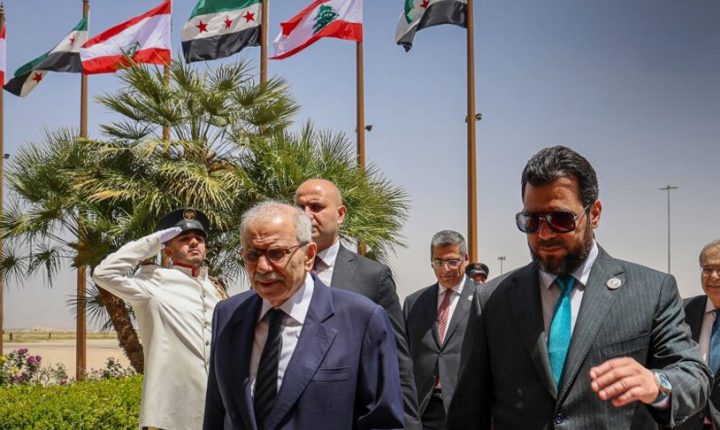
According to Lebanese diplomatic sources and consistent reports from both Syrian and Lebanese media, a delegation led by Deputy Prime Minister Tarek Mitri will visit Damascus on Monday, November 2, 2026. The delegation will include Minister of Interior Ahmad al-Hajjar, Minister of Education Rima Karami, Minister of Labor Mohammad Haidar, and Minister of Social Affairs Hanin al-Sayyed.
Issues on the agenda:
- Mechanisms for organizing the voluntary return of Syrian refugees, in coordination with regional and international partners.
- Border control, security coordination, and combating smuggling.
- The issue of Syrian detainees and prisoners held in Lebanese jails.
- Developing institutional cooperation mechanisms and reactivating bilateral agreements.
Mitri is expected to meet with President Ahmad al-Sharaa. This visit may pave the way for a potential visit by Prime Minister Nawaf Salam in late November, as well as a meeting of the Joint High Committee.
Third: Analysis of opportunities and risks:
Key opportunities:
The visit offers an opportunity to strengthen practical recognition of the new Syrian authority, address long-standing humanitarian and security issues, and establish a sustainable institutional framework.
It also sends a regional signal that Damascus is capable of building normal relations with its neighbors, independent of previous ideological alignments.
The issue of detainees could serve as a quick entry point for building trust, while border control directly serves Syria’s national security by curbing the influx of weapons, narcotics, and extremist elements.
Risks and challenges:
A primary risk lies in the participation of a minister affiliated with Hezbollah. Domestically and internationally, this could be interpreted as a partial normalization of militia influence, and it may undermine the government’s standing among the Syrian public—who reject any role for Hezbollah following decades of its interference.
Furthermore, the absence of clear implementation mechanisms and defined timelines could reduce the visit to a mere protocol-driven encounter, yielding no tangible results. There is a risk that certain Lebanese factions might exploit the visit for internal political maneuvering. Furthermore, there is a possibility of rising public criticism within Syria if the media messaging is not managed with precision.
Fourth: Practical Recommendations
Short-term recommendations (during the visit and the two weeks that follow):
Focus official Syrian discourse on the fact that the delegation represents the Lebanese government, while avoiding any emphasis on the role of Hezbollah.
Insist on the issuance of a joint statement that affirms the sovereignty of both states and rejects interference by militia groups.
Propose an urgent, joint judicial mechanism to address the issue of detainees within a period not exceeding sixty days.
Establish a Syrian technical team to document the proceedings of the visit and evaluate its initial outcomes within two weeks of its conclusion.
Medium-term recommendations (through the end of November and the beginning of December):
Link the outcomes of the visit to a clear agenda for a potential visit by Prime Minister-designate Nawaf Salam and a meeting of the Higher Committee; this agenda should encompass energy, water, and economic issues, in addition to security and the matter of refugees.
Request Syrian technical participation in any international mechanisms concerning the regulation of returns or border monitoring.
Develop specific success indicators, including: the number of detainees transferred or released; the establishment of a phased timeline for voluntary returns; and the creation of a formal, written border coordination mechanism involving only official state agencies.
Long-term recommendations:
Build a sustainable, institutional framework for relations based on mutual interest and mutual respect, while maintaining clear “red lines” to prevent any infiltration by militia groups or any concessions regarding national sovereignty. Utilizing the progress made in Lebanese-Syrian relations as a replicable model for engagement with other neighboring states, while safeguarding the independence of Syrian decision-making.
Fifth: Indicators of Success and Remaining Risks
The success of the visit will be measured by its transition from a political encounter to tangible, implementable outcomes within three months.
Key remaining risks include the potential for the visit to be exploited for media purposes by Lebanese or regional actors; the failure of the Lebanese side to adhere to agreed-upon mechanisms; or an escalation of domestic pressure within Syria should Damascus appear to be too lenient toward figures associated with Hezbollah.
Should there be a lack of concrete progress regarding the issues of detainees and border management, it would be advisable to postpone further symbolic gestures and focus exclusively on technical channels.
Sixth: Conclusion
The visit presents a genuine opportunity to re-establish a normalized Syrian-Lebanese relationship—grounded in sovereignty and mutual interest—following decades defined by distortion and hegemony.
Its success hinges on a cautious and astute approach by the Syrian side: prioritizing tangible results over symbolism, while upholding national constants in the face of any influence exerted by non-state militias.
We recommend that engagement with Lebanon remain strictly within the framework of official state-to-state relations. Furthermore, any progress on humanitarian or security-related issues should serve to bolster regional stability, provided that Syrian sovereignty and the independence of its decision-making remain fully intact.