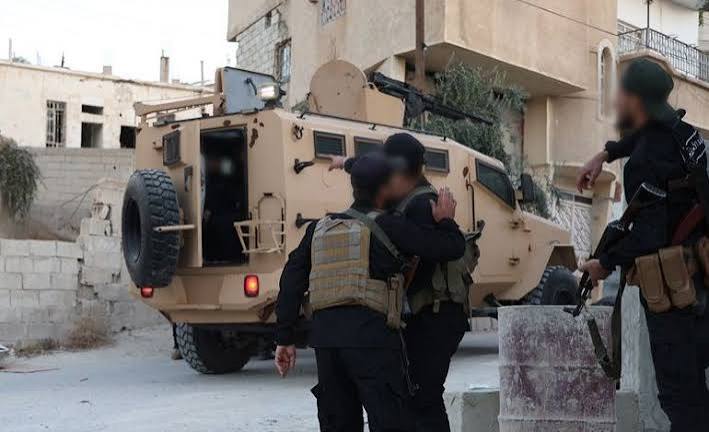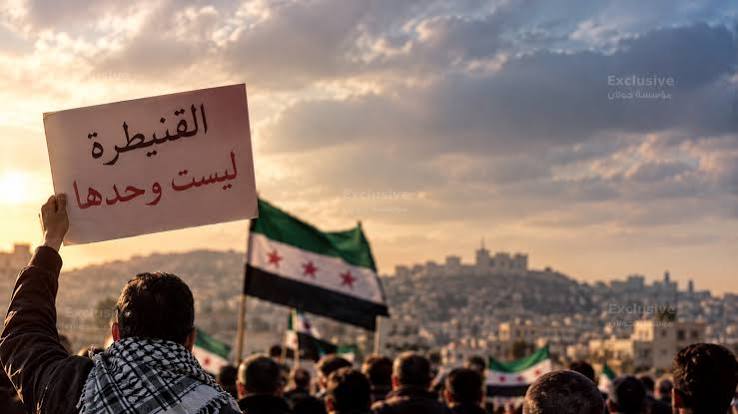
In October 2026, the Syrian Ministry of Information announced the arrest of a group in Homs Governorate, “accused of receiving funds from abroad to operate fictitious, sectarian-themed social media accounts.”
That same month, the Syrian Media Academy launched a campaign titled “Words Build” (Al-Kalima Tabni) to counter hate speech.
Though seemingly unrelated, these two events reveal a fundamental paradox: discourse that kills is not merely “words”—it is an act with tangible, material consequences for human lives.
Hate speech is an authoritarian practice that weaponizes language to exclude “the other,” justify violence against them, and undermine the foundations of a shared society.
This article does not aim to offer a moral condemnation of hate speech—a stance that has already achieved near-universal global consensus.
Instead, it seeks to deconstruct the philosophical and political complexities it presents: How can we distinguish between freedom of expression (a fundamental right) and hate speech (a violation of that right)? Who holds the authority to define this distinction? And what are the political implications of regulating hate speech within a society in transition, such as Syria?
First: When does speech become an act?
In 1962, the British philosopher J. L. Austin published How to Do Things with Words, in which he introduced the theory of “speech acts.”
The central idea is that speech is an action that alters reality, rather than merely describing it. When a judge declares, “I sentence you to prison,” they are not describing an existing state of affairs; they are creating a new reality. Similarly, when someone declares, “I declare war,” they are not simply conveying information—they are initiating a war. Although this theory was developed within the philosophy of language, it carries profound political implications when applied to hate speech.
Hate speech is not merely an “expression of opinion”; it is an “act of exclusion.” When a discourse labels a specific group as “traitors,” “agents,” or “unclean,” it does more than just describe them—it places them outside the bounds of society and creates the objective conditions for them to be targeted.
American philosopher Judith Butler further developed J. L. Austin’s theory in her book Excitable Speech (1997), arguing that hate speech “performs” the identity it attacks, rather than simply reflecting it.
Hate speech does not merely characterize a victim as “inferior”; it actively constructs this inferiority through social repetition, which grants the discourse its performative power.
This implies that hate speech is not just “words,” but a “corporeal practice,” as it produces material effects on the victim’s body—ranging from fear, anxiety, and withdrawal from the public sphere to, in extreme cases, physical violence. Butler noted that “speech can wound,” and that this injury is not merely metaphorical; it is as real as it is social, psychological, and physical.
Second: A Reading of the Public Sphere
In his book The Structural Transformation of the Public Sphere (1962), German philosopher Jürgen Habermas introduced the concept of the “public sphere” as a domain for rational communication among citizens—a space where public issues are raised and discussed freely, independent of the control of the state or the market. In this space, opinions are not weighed by the authority of the speaker, but by the strength of their argument.
However, Habermas himself, in his later work Between Facts and Norms (1992), acknowledged that the public sphere is not neutral; rather, it is contingent upon a set of preconditions—such as freedom, equality, and transparency—that do not emerge automatically.
Within this framework, hate speech poses a threat to the conditions of the public sphere, as it excludes certain citizens and transforms rational discourse into a conflict of identities.
This raises a question for the Syrian context: is the Syrian public sphere today conducive to rational discourse? Or have hate speech, polarization, and misinformation rendered such a sphere unattainable?
Conversely, the German philosopher Carl Schmitt, in his book The Concept of the Political (1932), offers an opposing perspective.
Schmitt argues that “the political” can only be understood through the “distinction between friend and enemy”—a distinction he views as the very essence of politics, rather than a mere deviation from it.
Under this interpretation, hate speech is not “outside of politics,” but rather an “expression of politics” in its purest form, as it defines who “we” are and who “the others” are.
Yet, despite its analytical power, this perspective carries an immense political danger: if politics is defined as the “distinction between friend and enemy,” then hate speech becomes “legitimate” rather than a “deviation.” Consequently, it becomes “impossible” to regulate hate speech without effectively “destroying politics” itself. This is the “Schmittian dilemma” that confronts any attempt to regulate hate speech: how can one “codify” what is supposedly the “essence of politics”?
The French philosopher Michel Foucault, in his works—most notably The Archaeology of Knowledge and Discipline and Punish—offers a more complex understanding of the relationship between discourse and power.
In Foucault’s view, discourse is a system that determines what can be said, who is permitted to say it, and what is deemed “truth.” Power does not merely suppress discourse; rather, it produces it, shaping the “conditions of its possibility.”
Within this framework, hate speech cannot be understood in isolation from the “discursive system” that gives rise to it.
In Syria, for instance, hate speech does not stem from “evil individuals,” but rather from a “discursive structure” entrenched by the former regime over decades—a structure in which “sectarian division,” “accusations of treason,” and “incitement” were woven into the “collective consciousness” cultivated by that regime. Dismantling hate speech, therefore, requires more than just “punishing individuals”; it necessitates “dismantling the discursive system” that produces it.
Third: Hate Speech in Transitional Societies
In societies emerging from conflict, hate speech is more dangerous than at any other time, because “identity” has effectively become “weaponized.” During a conflict, primordial affiliations—such as those based on sect, ethnicity, or region—are “mobilized” to serve the purpose of “polarization.” These affiliations shift from being “social identities” to becoming “political identities” rooted in “hostility.” In the post-conflict phase, these militant identities do not simply vanish; rather, they “reproduce themselves” through hate speech—reminding victims of their suffering, demanding vengeance, and inciting animosity toward “the other.”
In transitional societies, the public sphere is fragile because trust among citizens has collapsed, and the institutions that safeguard this sphere—such as the judiciary, the media, and civil society—are weak.
In this context, hate speech shifts from the margins to the center, filling the void left by absent institutions. “Sectarian discourse” becomes the dominant language in the public sphere, rather than the exception.
Trust cannot be rebuilt in a fractured society without addressing hate speech; trust is predicated on “mutual recognition,” which hate speech explicitly denies.
Conversely, hate speech cannot be suppressed without providing alternatives. Suppression alone merely conceals such discourse rather than eliminating it—and may even fuel it further. The solution is not a choice between freedom and repression, but rather the construction of a new public sphere rooted in recognition, accountability, and dignity.
Fourth: The Syrian Case
In Syria, hate speech was not merely a “social phenomenon”; it was a tool of governance employed by the former regime for decades.
The regime did not stop at suppressing the opposition; it actively cultivated a discourse that divided society into “loyalists” and “traitors,” framing any form of dissent as an external conspiracy.
This rhetoric permeated society, with accusations of treason and incitement becoming embedded in the prevailing political culture.
Following the fall of the regime, this discourse did not disappear; instead, it evolved and adapted. It persisted through fabricated sectarian accounts (as noted by the Ministry of Information in September 2026), inflammatory rhetoric targeting various social “components,” and disinformation campaigns designed to undermine trust in the transitional government.
Hate speech in Syria today is not one-dimensional; rather, it manifests in various forms:
- Sectarian discourse: This targets religious groups (Alawites, Druze, Christians, and Sunnis), portraying each group as a “threat” to the others.
- Regionalist discourse: This targets specific regions (the coast, the south, and the east), framing their inhabitants as agents or traitors.
- Political discourse: This targets either the government or the opposition, depicting the opposing side not merely as an adversary, but as an enemy.
This multifaceted nature makes countering hate speech particularly complex, as it requires a multidimensional strategy rather than a single, monolithic law. A transitional government faces a dilemma: on one hand, it is responsible for protecting the “public sphere” from hate speech and preventing incitement that could lead to violence.
On the other hand, it is obligated to uphold freedom of expression and must avoid repeating the practices of the former regime, which suppressed dissenting opinions. This dilemma is not unique to Syria; it is a global challenge faced by all democracies.
In the United States, for instance, the First Amendment provides near-absolute protection for hate speech. In contrast, Germany’s constitution strictly prohibits hate speech. The distinction between these two models is not merely legal but philosophical: do we view the citizen as a “rational being” capable of distinguishing right from wrong (the American model), or as a vulnerable individual in need of protection from harmful discourse (the German model)?
Fifth: Between Regulation and Repression
Hate speech cannot be “regulated” without a clear legal framework. This requires:
A precise definition of hate speech that distinguishes it from legitimate criticism.
- Objective criteria to differentiate between incitement (which should be criminalized) and the expression of an opinion (which should be protected).
- “Procedural safeguards” to protect the accused from arbitrary criminalization.
- However, criminalization alone is “insufficient,” as it addresses symptoms rather than root causes.
Hate speech stems from an environment of polarization, injustice, and fear; if this environment remains unaddressed, criminalization merely conceals the speech rather than eliminating it.
Furthermore, “counter-speech”—responding to hate speech with alternative discourse—offers arguments, options, and narratives that directly challenge hate speech. Studies have indicated that counter-speech can be “more effective” than criminalization in “reducing” the impact of hate speech, as it addresses ideas with other ideas, rather than through the law. However, counter-narratives are insufficient if the public sphere is not accessible to everyone, or if hate speech is supported by external actors (as is the case in Syria, where reports point to “foreign-based accounts” fueling “sectarian discourse”).
Furthermore, media literacy is a strategy aimed at empowering citizens to analyze media content, distinguish between accurate and misleading information, and resist hate speech.
UNESCO has described media literacy as a “fundamental right” in the “information age” and an essential “tool” for “peacebuilding.”
In the Syrian context, media literacy could play a pivotal role; it does not rely solely on the law, but rather on “building awareness”—an approach that is far more sustainable than “repression.”
Conclusion:
Based on this analysis, the Syrian Future Movement (Tayyar al-Mustaqbal al-Suri) recommends the following:
First: The adoption of legislation to combat hate speech, based on a “precise definition” and “objective criteria.” Such legislation should simultaneously safeguard “freedom of expression” and ensure “accountability”—modeled, for instance, on the German approach, which criminalizes “incitement” without criminalizing “opinion.”
Second: The establishment of an independent national body to monitor hate speech. This body should include representatives from the government, civil society, academia, and the media, and be tasked with “monitoring,” “analyzing,” and “issuing recommendations”—ensuring it does not become a “tool of repression” in the hands of the executive branch.
Third: The launch of a national media literacy strategy—integrated into “school curricula,” “media programs,” and “social media platforms”—aimed at “empowering” citizens to… “Resisting” hate speech.
Fourth: Supporting “counter-narratives” by funding civil society initiatives that produce alternative content, and by training media professionals on how to cover issues of diversity and coexistence without fostering polarization.
Fifth: Addressing the “root causes” of hate speech—such as injustice, poverty, and marginalization—through transitional justice, economic development, and political representation; hate speech stems from these conditions, and it cannot be overcome without addressing them.
Sixth: Building a regional and international coalition to combat hate speech by exchanging expertise with countries that have succeeded in this area (such as Germany, Canada, and South Africa) and by collaborating with international organizations (such as UNESCO and the Council of Europe) to develop legislative and educational tools.
Hate speech is more than just words; it is a weapon that uses language to exclude “the other,” justify violence against them, and undermine the foundations of a shared society.
In Syria, where the public sphere is fragile and trust has collapsed When group affiliations become weaponized, hate speech becomes more dangerous than ever.
Yet, confronting it is not impossible—provided we shift from a “logic of repression” to a “logic of construction.”
This entails building a fair legal system, an open public sphere, an aware citizenry, and institutions capable of protecting diversity and acknowledging differences.
At its core, “citizenship” is not about dissolving into a single, monolithic identity; rather, it is a form of mutual recognition among diverse citizens—bound together by a common “social contract” and protected by a unified “law.” It guarantees the right to express one’s differences without fear of exclusion or violence. Hate speech is the antithesis of this recognition, as it denies the “other” their right to exist and justifies their exclusion from the public sphere.
Therefore, confronting hate speech is a prerequisite for building the “state of citizenship” to which we aspire.