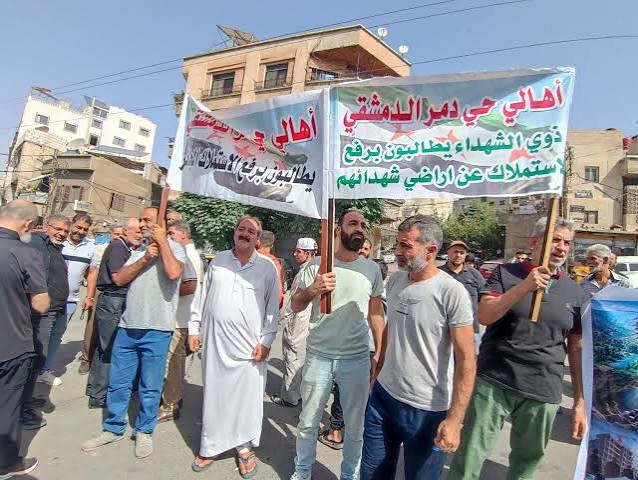


The Syrian Future Movement is monitoring with deep concern and close attention the rapidly unfolding developments in Al-Hasakah Governorate. Since the night of Thursday, October 8, 2026, and continuing into Friday, October 9, 2026, the city has witnessed serious security tensions. These events involved movements by the “Revolutionary Youth” (affiliated with the Democratic Union Party—PYD), who raised party flags and attacked public property before Internal Security Forces intervened, arresting several individuals and confiscating the flags. Meanwhile, thousands of Al-Hasakah residents staged massive demonstrations following Friday prayers. Marching from the Ghwayran, Al-Nashwa, and Al-Aziziyah neighborhoods toward Freedom Square, they raised the Syrian flag and demanded the extension of state sovereignty, the strengthening of state institutions, and the acceleration of efforts to uncover the fate of detainees. The demonstrations saw instances of friction, including some protesters burning the Kurdish flag and chanting slogans described as “inciting hatred against Kurds.” These actions drew widespread condemnation from eight Kurdish parties and civil society organizations, which warned against the continuation of “unilateral demonstrations” and the deepening of social tensions.
The Syrian Future Movement notes that the events in Al-Hasakah reflect a complex crisis. It is a situation where the legitimate demands of various segments of the population intersect with subversive attempts by factions that reject national integration, all amidst a dangerous escalation of hate speech and incitement by various parties. The Syrian Future Movement believes that this crisis requires a comprehensive national approach—one that goes beyond merely condemning one party or supporting another, and instead places Syria’s supreme interest above all other considerations.
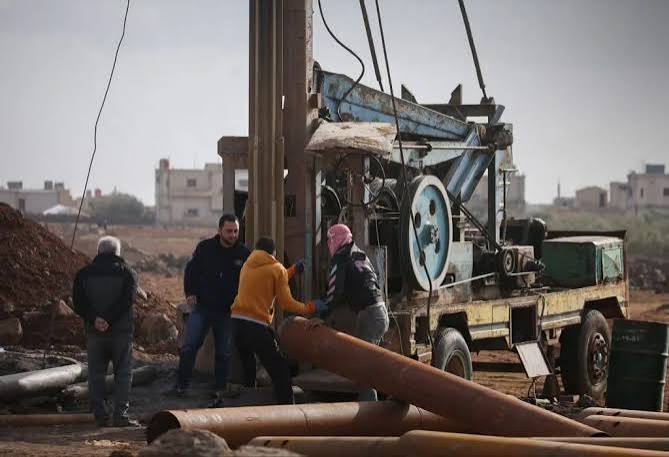
The Syrian Future Movement regards the peaceful protests in Al-Hasakah—which called for the extension of state sovereignty, the reactivation of public service institutions, the opening of recruitment for Internal Security Forces, and the launch of major development projects—as legitimate demands and fundamental rights guaranteed by the constitution and the law.
The Syrian Future Movement emphasizes that these demands do not conflict with the rights of any other community; rather, they constitute an essential step toward building a state of equal citizenship—a goal for which all Syrians are striving.
The Syrian Future Movement condemns in the strongest terms the actions of certain demonstrators who burned the Kurdish flag and chanted inflammatory slogans. It warns that such practices constitute a flagrant violation of the rights of the Kurdish community, threaten civil peace, and provide a pretext for forces hostile to national unity to escalate their separatist rhetoric.
The Syrian Future Movement considers the burning of any symbol belonging to any Syrian community a crime against the national fabric that warrants legal accountability; we believe that “diversity in Syria is a source of richness, not conflict, and that national unity stands above all other considerations.”
Furthermore, the Syrian Future Movement reiterates that protecting the rights of the Kurdish community—and preserving its language and culture—is an integral part of building the new Syria. Accordingly, we reject any attempt to portray the demand for state sovereignty as being directed against our Kurdish brethren, just as we reject any attempt to frame the demand for Kurdish rights as an act of national treason.
We affirm that justice and equality for all components of society, without discrimination, constitute the only guarantee for Syria’s unity.
The Syrian Future Movement holds the “Revolutionary Youth” (affiliated with the Democratic Union Party) largely responsible for the current escalation. This group has transformed from a purported youth organization into a source of serious concern, facing documented accusations of child recruitment, involvement in arbitrary arrests, and attempts to impose a fait accompli by force.
The Syrian Future Movement views the actions of this group—specifically their attempts to display partisan flags and stage demonstrations in the streets of Al-Hasakah—as nothing more than an effort to obstruct the agreement of January 29, 2026, and to derail the integration process, which represents a national and popular demand.
The Syrian Future Movement reiterates its steadfast position—published on its official website on August 17, 2026, under the headline “Barkhdan’s Statements Regarding Integration with the Syrian State”—in which it welcomed the remarks made by the SDF commander in Ayn al-Arab concerning the disbanding of the units and their integration into state institutions, while noting that “declaring intentions is merely a first step, and the true test lies in implementation.”
The Syrian Future Movement believes that the recent escalation by the “Revolutionary Youth” reveals the existence of parties opposed to the success of this integration—parties actively working to undermine it by all possible means—a situation that necessitates a firm national stance. The Syrian Future Movement commends the efforts of the Internal Security Forces to protect peaceful demonstrators, counter armed activities that threaten security, and prevent friction between demonstrators and other community groups.
It reiterates that protecting citizens and guaranteeing their right to peaceful expression is a state obligation, not a favor granted by anyone. We call upon all parties to exercise restraint, refrain from provocation, work to calm tensions, and prioritize reason and wisdom.
Acting upon its national responsibility, the Syrian Future Movement recommends the following:
First: We call on the transitional government to accelerate the integration of “Autonomous Administration” institutions into the Syrian state, activate official and service-providing departments in Al-Hasakah, open recruitment for the Internal Security Forces to the governorate’s youth, and ensure fair representation for all community groups within these institutions.
Second: Curb hate speech and hold accountable those responsible for assaults—as well as anyone proven to be involved in burning flags, chanting inflammatory slogans, or vandalizing property, regardless of the party involved—ensuring that no entity escapes punishment. The Syrian Future Movement emphasizes that protecting national symbols and the symbols of various community groups is a collective responsibility.
Third: Form a local dialogue committee comprising representatives from all community groups (Arabs, Kurds, Syriacs, Turkmens, Yazidis, and others)—including notables, intellectuals, youth, and women—to develop a joint roadmap for addressing service, development, and security issues, and to guarantee the rights of all community groups. Fourth: The immediate release of all individuals detained in connection with recent events who have not been convicted, and the expediting of efforts to determine the fate of the missing and forcibly disappeared in Al-Hasakah—in line with the calls made by the National Commission for the Missing.
The Syrian Future Movement reaffirms that Al-Hasakah has been and will remain a model of peaceful coexistence among all its constituent groups, and that current events…
These tensions stem from the accumulated legacy of the defunct regime and the ensuing period of conflict, as well as from the machinations of parties hostile to national unity and the absence of strong state institutions capable of protecting everyone.
The Syrian Future Movement affirms that Syria’s unity and sovereignty are red lines and that the rights of all its constituent groups are guaranteed; any attempt by any party to undermine the social fabric will be met with categorical national rejection.
The Syrian Future Movement calls upon all the people of Al-Hasakah—Arabs, Kurds, Syriacs, and Turkmens—to act responsibly, to avoid being drawn into hate speech, and to pursue dialogue and reconciliation; for the new Syria is built through reason and participation, not through strife and division.