

The Syrian Future Movement, based on its national responsibility to address the critical issues facing the Syrian people, and its commitment to documenting facts and presenting an objective perspective that takes into account the delicate transitional phase the country is undergoing, issues this statement regarding the issue of missing children and the children of detainees and the forcibly disappeared. This statement is based on documented reports and established facts, and is issued within the framework of its commitment to the values of truth, justice, and national reconstruction.
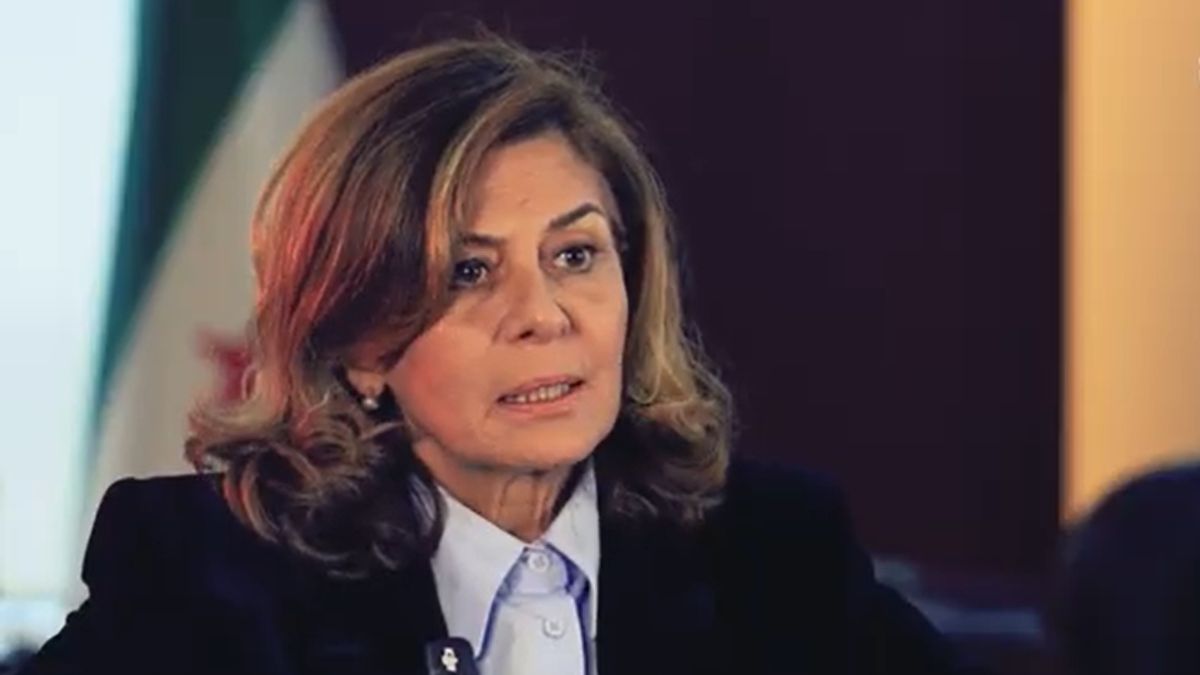
The Syrian Future Movement is following with great interest the announcement made by the Syrian Minister of Social Affairs and Labor, Ms. Hind Qabawat, on Friday, April 10, 2026, regarding the findings of the committee investigating the fate of the children of detainees and the forcibly disappeared. These findings included the following:
- Documentation of 314 cases of children of detainees who were placed in the care of the Ministry.
- Return of 194 children to their families after their fate was determined.
- Follow-up on 612 cases of children placed with other families in accordance with Syrian law. Verification is underway to ensure that none of these children are detainees.
- The investigation into cases from 2011-2015 has been completed, with work continuing to cover the remaining years.
The Syrian Future Movement appreciates these efforts and considers them a positive first step in addressing one of the most heinous crimes of the former regime: the separation of children from their families under the guise of “protection,” the alteration of their lineage, and the concealment of their true identities, all with the aim of erasing any trace of their existence.
The committee itself indicated that the most significant challenges it faced included the alteration of some children’s lineage, the destruction of a number of files, and the haphazard documentation of data within the offices of the former regime.
However, the Syrian Future Movement points out that, according to Minister Qabawat’s statements, the committee’s work is limited to cases of children placed in the ministry’s care facilities and does not include investigative or criminal inquiries.
This means that the broader issue of abducted and detained children who were not placed in formal care facilities still requires independent and more comprehensive investigative mechanisms.
The Syrian Future Movement bases its vision on this issue on a number of documented reports issued by specialized national and international bodies, including, but not limited to:
- The Syrian Network for Human Rights (SNHR) report issued on March 24, 2026, on “Transitional Justice in Post-Assad Syria,” which recommended the establishment of an independent commission for missing persons with an independent administrative structure and mechanisms for collecting testimonies, filing complaints, and providing legal and psychological support.
- The International Commission on Missing Persons (ICMP) report issued on May 20, 2025, which welcomed the establishment of the National Transitional Justice Commission and the National Commission for Missing Persons by presidential decree on May 17, 2025, noting that estimates of the number of missing persons in Syria reach 200,000, a figure that includes those missing as a result of summary executions, arbitrary detention, abduction, and kidnapping.
- The UN Commission of Inquiry report, issued on March 13, 2026, commended the broad political transition initiated in Syria, including the establishment of the National Commission for Transitional Justice and the National Commission on Missing Persons, and the national investigations into the mass killings that occurred in the coastal, central, and southern regions in March and July 2025.
- Statements by Ms. Carla Quintana, head of the Independent Institute on Missing Persons in Syria (IIMP), in October 2025, affirmed that the search for missing persons is a “collective endeavor” that no single entity can undertake alone. She indicated that the Institute is pursuing several lines of inquiry to search for those missing at the hands of the former regime, as well as for missing children.
She also confirmed on November 4, 2025, that she had credible information suggesting that some missing children may still be alive.
The Syrian Future Movement recognizes that the transitional phase Syria is undergoing, which began with the fall of Bashar al-Assad’s regime on December 8, 2024, is passing through a delicate and complex period.
The Constitutional Declaration Drafting Committee was formed on March 2, 2025, and the National Transitional Justice Committee and the National Committee for Missing Persons were established on May 17, 2025.
On February 22, 2026, the formation of a joint working group between the National Transitional Justice Committee and the United Nations to support the transitional justice process was announced.
Despite these positive steps, significant challenges remain for the transitional justice process, most notably:
- The weakness of the mechanisms for vetting and verifying information, as pointed out by the Committee for Missing Children itself.
- The limited powers of the national committees compared to the scale of the crimes committed.
- The need to build specialized institutional and legislative capacities to address the issue of missing persons.
- The absence of a comprehensive legal framework to protect the rights of victims and their families.
The Syrian Future Movement emphasizes that addressing the issue of missing children and the children of detainees cannot be done in isolation from the comprehensive process of transitional justice, given its human rights, political, and social dimensions.
In this context, we present our vision, which is based on the following points:
- Expanding the Committee’s Mandate: The powers of the Committee for Uncovering the Fate of Missing Children must be expanded to include criminal aspects, in coordination with the Ministries of Justice and Interior, to ensure that those responsible for the crimes of kidnapping and disappearing children are held accountable.
- Establishing a Unified National Database: Working to establish a secure and unified national database to document cases of missing persons, including DNA fingerprinting, while adopting international standards for data preservation and privacy protection.
- International Cooperation: Strengthening cooperation with the Independent Institution on Missing Persons (IIMP) of the United Nations and the International Commission on Missing Persons (ICMP) to benefit from international expertise in the areas of archiving, criminal investigation, and identifying missing persons.
- Supporting Victims’ Families: Developing psychological, social, and economic support programs for the families of missing persons, similar to those offered to other victims.
- Issuing specific legislation: Working towards the enactment of a law specifically addressing the missing and forcibly disappeared, guaranteeing the families’ right to know the truth and receive appropriate compensation.
- Engaging civil society: Ensuring the effective participation of civil society representatives and families of the missing in search and investigation mechanisms, thereby guaranteeing transparency and strengthening public trust in these mechanisms.
The Syrian Future Movement reiterates its call to all national and international parties to cooperate seriously and effectively to uncover the fate of all the missing, ensure accountability for those responsible for these heinous crimes, and deter any attempt to normalize the legacy of the former regime’s human rights abuses.
The Syrian Future Movement also commends the resilience of the families of the missing, who have continued to search for their loved ones throughout the past years, pushing forward towards truth and justice. It affirms that these families represent the living conscience of the Syrian people, and that their rights to know the truth and achieve justice are a red line that cannot be compromised.
The Syrian Future Movement announces its full readiness to provide intellectual and advisory support to any serious efforts moving in this direction, and calls on all Syrian political and civil forces to overcome current differences and work to build a national consensus on the basic principles of transitional justice, in order to ensure a stable and just future for Syria and its people.