
Abstract:
This study critically analyzes the phenomenon of employing prophetic texts and eschatological foundations (end-times doctrines) to frame the ongoing conflict between the United States and Israel on one side, and Iran on the other.
The study examines Christian (evangelical) prophecies related to the Battle of Armageddon, Jewish prophecies concerning the annihilation of Amalek, and Shiite prophecies related to the advent of the Mahdi and the establishment of a state of divine justice, offering a systematic and critical analysis of each in light of its original historical and interpretive contexts.
The study also employs a comparative religious discourse analysis methodology, observing how sacred texts have been transformed from the realm of metaphysical doctrine into tools for political mobilization and the justification of contemporary conflicts, while warning against the dangers of turning diplomacy into a dogmatic ideology.
Furthermore, the study includes an analysis of the socio-economic contexts that constitute fertile ground for the acceptance of these discourses, along with a meticulous examination of hadiths and narrations according to established hadith methodologies.
Introduction: Eschatology and Politics in the Middle East:
The Middle East is witnessing an unprecedented military escalation between the United States and Israel on one side, and Iran on the other. However, what is striking in the media and political discourse accompanying this escalation is the strong presence of religious language and prophecies related to the end times and the end of days.
This intersection of the religious and the political raises a central research question: How are sacred texts and religious prophecies employed to frame contemporary political conflicts?
What are the limits of the transition from metaphysical belief to political ideology?
And what dangers arise from transforming diplomacy into a rigid dogma?
Perhaps the importance of this study lies in its move beyond a superficial observation of religious discourses to an analysis of the deep structures that make these discourses socially acceptable. This is achieved through an examination of what can be termed the “fertile ground” of eschatological discourse, which includes the social, economic, and psychological factors that prepare societies to accept prophetic interpretations of current events.
The study also relies on a meticulous methodology for classifying hadiths and narrations according to the principles of hadith science, distinguishing between authentic, weak, and fabricated hadiths.
The study aims to identify and analyze Christian, Jewish, and Islamic (Sunni and Shia) prophecies related to the current war, offering a systematic critical reading of each based on:
The original historical context of the prophetic text.
The evolution of interpretation throughout the ages.
How it is employed in contemporary discourse.
Then, a critique of this employment in light of authentic religious methodology.
Then, an analysis of the social and economic factors that explain the spread of these discourses.
Section One: The Christian Prophecy – Armageddon and the Return of Christ in American Evangelical Discourse:
1/1 The Biblical Basis for the Battle of Armageddon:
Christian prophecies about the end times are linked to what is mentioned in the Book of Revelation, the last book of the New Testament, written by John the Beloved around 95 AD on the island of Patmos, where he was exiled by Emperor Domitian.
The primary text upon which the prophecies are based is found in Revelation 16:12-16: “Then the sixth angel poured out his bowl on the great river Euphrates, and its waters dried up, to prepare the way for the kings from the east… He gathered them together to the place which in Hebrew is called Armageddon.”
Armageddon is a Hebrew word composed of two parts: “Har,” meaning mountain, and “Megiddo,” an ancient Canaanite city located in the Jezreel Valley (modern-day Tell el-Mutasallim).
Then the sixth angel poured out his bowl on the great river Euphrates, and the waters dried up, to prepare the way for the kings from the east… He gathered them together to the place which in Hebrew is called Armageddon.
Then the sixth angel poured out his bowl on the great river Euphrates, and the waters dried up, to prepare the way for the kings from the east… He gathered them together to the place which in Hebrew is called Armageddon.
Then the sixth angel poured out his bowl on the great river Euphrates, and the waters of the Euphrates dried up. Furthermore, the Bible Dictionary defines Armageddon as the site of the final battle between the forces of good and evil, based on its strategic importance throughout history (Abdul Malik, 1990, p. 245).
2.1 Interpretive Development and the Shift Towards Politics:
Evangelical interpretation underwent a fundamental development in the nineteenth century at the hands of the evangelical minister John Nelson Darby, who developed the concept of “dispensationalism.” This concept divides history into stages and considers the establishment of the modern State of Israel as the beginning of the end times and a sign of the imminent return of Christ (Burke, 2025).
In the twentieth century, this discourse spread through televangelists in the United States.
Here, American author Grace Halsell, in her book “Prophecy and Politics,” points to a study by the Sun-Lens Foundation published in October 1985, which showed that 61 million Americans regularly listened to broadcasters on television predicting the imminent arrival of the Battle of Armageddon and that it would be a nuclear battle (Halsell, 1988, p. 92).
3.1 The Contemporary Political Use of Prophecy:
The modern era has witnessed an increasing engagement of American politicians with Armageddon rhetoric.
Following the American airstrikes on Iran, the evangelical pastor Robert Jeffress declared to his congregation that “opposing Israel is rebelling against God,” and his sermon was met with enthusiastic applause and a standing ovation (Burke, 2025).
President Trump also appointed Mike Huckabee, the former governor of Arkansas and a prominent evangelical leader, as the United States ambassador to Israel.
Huckabee texted Trump, saying that God had protected him from two assassination attempts, “making him the most influential president of a century—perhaps ever” (Burke, 2025).
Polls indicate that 39% of Americans believe we are living in the end times, according to a study by the Pew Research Center (Pew Research Center, 2025; Zed, 2025).
Another study showed that 87% of Republicans trust Trump’s decisions regarding the use of force against Iran (Burke, 2025).
4.1 Methodological Analysis and Theological Critique:
From a critical academic perspective, several observations can be made regarding the contemporary political use of the Armageddon prophecy:
First, the problem of selective quoting, where Armageddon discourse focuses on a limited number of texts.
The first interpretation is from the Book of Revelation, ignoring the book’s integrated theological structure.
Second, it ignores the historical context. The Book of Revelation was written in the context of Christian persecution by the Roman Empire, and its purpose was to comfort and strengthen believers, not to provide a geopolitical map of the future.
Most biblical scholars point out that the word “rapture” does not appear in most Bible translations, and that the Book of Revelation is an anti-Roman manifesto that uses coded language (Burke, 2025).
Diana Butler-Bass describes the belief in the Rapture as “a completely fabricated theology” and “one of the most successful heresies in the history of Christianity” (Burke, 2025).
Scholar Farzad Dehvar also notes that evangelicals have split into two groups:
A passive majority that focuses on moral and cultural values.
A radical minority believes that contemporary events are the fulfillment of biblical prophecies and exerts a disproportionate influence on American policy (Didehvar, 2025).
Researchers warn that policy driven by prophecy could destabilize the Middle East by neglecting considerations of real security and long-term geopolitical stability (Didehvar, 2025).
Chapter Two:
The Jewish Prophecy – Amalek and the Existential Conflict with Iran:
1/2 The Biblical Concept of “Amalek”:
Israeli Prime Minister Benjamin Netanyahu’s reference to “Amalek” in the context of aggression against Iran marked a turning point in Israeli political discourse.
In remarks made during a visit to a site targeted by Iranian missile strikes, Netanyahu said: “We read in this week’s Torah passage: ‘Remember what Amalek did to you.’ We remember and we act” (Euronews, 2026; Didehvar, 2025).
The Amalekites were an ancient people mentioned in the Torah as a sworn enemy of the Israelites. Their name is associated with religious texts that command the eradication of their memory, most notably Deuteronomy (25:17-19): “Remember what the Amalekites did to you on the way when you came out of Egypt… You shall blot out the memory of the Amalekites from under heaven. Do not forget” (Deuteronomy 25:17-19).
2/2 Interpretive Development and Contemporary Use:
In Jewish tradition, the Amalekites represent the epitome of absolute evil, and this expression is used to refer to peoples who threaten the Jewish existence.
Netanyahu has used this concept more than once, invoking the same narrative in the context of discussing Hamas during the Gaza war (Anadolu Agency, 2026).
The ritualistic dimension of this usage was evident in the statement by Israeli Settlement Minister Orit Strock, who said: “Netanyahu spoke with me yesterday morning at the start of the operation, and I told him that this was very fitting for Shabbat Zakor (the Sabbath of Remembrance). He replied that this time we are not only remembering the destruction of Amalek, but we are also destroying Amalek” (Euronews, 2026).
Shabbat Zakor is the Saturday preceding the Jewish holiday of Purim, during which the Torah passage concerning the commandment to remember what the Amalekites did is read in synagogues.
Here, researcher Farzad Dehvar questions whether Netanyahu, intentionally or unintentionally, aligns more closely with radical evangelicals than with mainstream Jewish thought (Didehvar, 2025).
This reflects a shift in Israeli political discourse toward the religious dimension of the conflict, rather than its secular dimension, as he describes it.
3/2 Methodological Analysis and Religious Critique:
The use of the concept of “Amalek” transforms the political and military conflict with Iran from a dispute over interests into a holy war of existence, making any political settlement difficult and turning “annihilation” into a non-negotiable religious objective.
Furthermore, there are interpretative disagreements within the Jewish tradition regarding whether the commandment to annihilate Amalek is applied literally in every era, or whether it was limited to that specific historical group.
Rabbi Allen Maller argues that religious texts must be read within their historical context, and that transforming them into tools for contemporary conflict constitutes “the deification of politics” and a distortion of authentic religious values (Maller, 2025).
Chapter Three:
The Shi’a Prophecy – The Imam Mahdi and the Preparation for His Appearance:
1/3 The Mahdist Doctrine in Twelver Shi’ism:
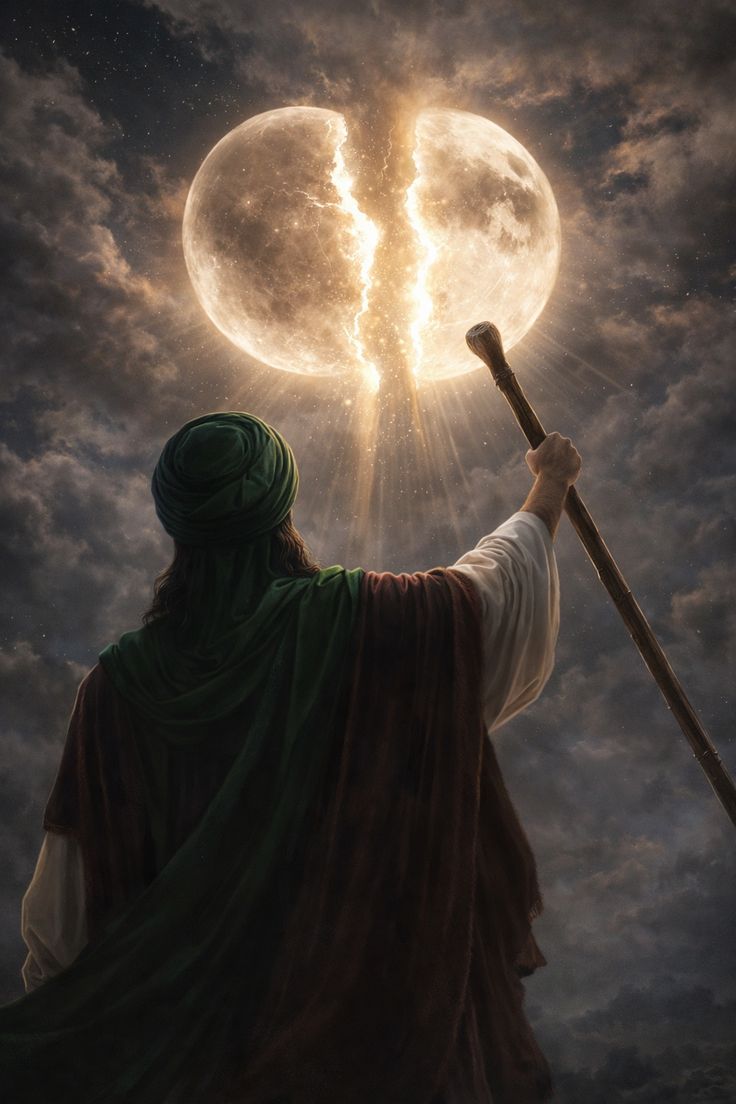
The doctrine of the awaited Imam Mahdi is a fundamental pillar of Twelver Shi’a theology. Shi’a Muslims believe that Imam Muhammad ibn al-Hasan al-Askari was born in 255 AH, entered a minor occultation followed by a major occultation, and that God will send him at the end of time to fill the earth with justice and equity as it was filled with injustice and oppression.
Imam al-Sadiq (peace be upon him) said: “Before the Mahdi, there will be signs from God Almighty for the believers” (al-Majlisi, Bihar al-Anwar, vol. 52, p. 215).
These signs form the basis for a Mahdist interpretation of contemporary events.
2/3 Authentication of Hadiths and Narrations Related to the Events:
First, the Hadith of “A Man from Qom”: It is narrated in several Shi’a sources on the authority of Imam al-Sadiq (peace be upon him): “A man from Qom will call people to the truth. A group of people will gather around him whose hearts are like iron, unmoved by winds and storms. They will not tire of war, nor will they be cowardly. They will rely on God, and the ultimate victory belongs to the righteous.”
This hadith was narrated by al-Majlisi in Bihar al-Anwar (vol. 57, p. 215) from the book “al-Ghaybah” by Sheikh al-Tusi.
Some hadith scholars have deemed it weak due to the presence of unreliable narrators in its chain of transmission, but it is accepted by many as an indication of the virtue of Qom and its people.
Second, the Hadith of “Black Banners from Khorasan”: It is narrated in hadith sources among both Sunni and Shi’a scholars: “Black banners will emerge from Khorasan, and nothing will stop them until they are raised in Jerusalem.” It was narrated by Nu’aym ibn Hammad in his book “Al-Fitan” (p. 43). He is a narrator whose reliability is disputed; he was deemed weak by al-Dhahabi and Ibn Hajar. However, the hadith has multiple chains of transmission, some of which strengthen others.
The Orientalist Jean-Pierre Filiu points out that this hadith was pivotal in shaping the Mahdist imagination throughout the centuries (Filiu, 2010, p. 32).
3/3 Interpreting the Major Signs in Light of Contemporary Events:
The Shi’a narrative relies on Quranic verses and hadiths to interpret current events.
In interpreting verses 4-6 of Surah Al-Isra, which speak of the corruption of the Children of Israel twice: {And We decreed to the Children of Israel in the Scripture, “You will surely cause corruption on the earth twice, and you will surely reach [a degree of] great haughtiness”} [Al-Isra: 4], the Mahdist discourse sees these verses as referring to the gathering of Jews in Palestine and their control over the Al-Aqsa Mosque, and that the fourth stage will be the leadership of the Imam Mahdi over the Muslims in the final war (Center for Mahdist Studies, 2026).
Several prominent Shi’a scholars have expressed their belief in the imminent reappearance of the Imam Mahdi. Among them are Imam Khomeini, who stated after the victory of the revolution that our children and grandchildren would witness the reappearance of the Imam Mahdi; President Ahmadinejad, who declared that you would soon witness the demise of Israel; and Sheikh Bahjat, who stated that the elderly of this era would witness the Imam’s reappearance (Al-Anwar Library, 2026).
4/3 Methodological Analysis and Internal Critique:
From the perspective of Shi’a religious methodology itself, several observations can be made:
First, the problem of determining the time: Shi’a hadiths emphasize that “time” is one of God’s secrets, known only to Him, and that specifying the time of the reappearance is forbidden. Imam al-Sadiq (peace be upon him) said: “Those who set times are liars; time is with Us” (Al-Saduq, Kamal al-Din, p. 649).
This text strongly warns against rushing to determine the time of the reappearance.
Secondly, the problem of interpreting the signs: There are differences among scholars in interpreting and verifying the signs. The signs are divided into definitive and non-definitive, and they may change.
The definitive signs, such as the emergence of the Sufyani, the Yamani, and the Cry, have not yet been definitively fulfilled.
Thirdly, the warning against haste: Shi’a hadiths warn against being hasty in the appearance of the Imam, considering it a characteristic of the weak.
There is a difference between “paving the way” for the appearance and “the state being the state that paves the way.”
Researcher Mujtaba al-Sadah points out that “whoever’s interests conflict with the principles of divine justice and equity, and whoever fears the divine savior, will not wish for his emergence” (al-Sadah, 2024, p. 88).
Fourth, an analysis of the fertile ground: The spread of messianic discourse in Iran can be understood in light of socioeconomic factors, including: ongoing wars (the First Gulf War, Israeli threats), economic sanctions that create a sense of siege, frustration with the current political situation, and the need for a collective hope to compensate for present suffering.
These factors constitute a “fertile ground” for the acceptance of eschatological discourses.
Chapter Four:
The Sunni Perspective – Between Prophecies and Caution:
1/4 The Mahdi Doctrine in Sunni Islam:
The Sunnis believe in the appearance of the Mahdi at the end of time as one of the major signs of the Hour, based on numerous prophetic hadiths, including one narrated by Abu Dawud, al-Tirmidhi, and Ibn Majah from the Prophet (peace and blessings be upon him), who said: “If there remained of this world but one day, Allah would lengthen that day until He sends forth a man from my family whose name will be the same as mine and whose father’s name will be the same as my father’s” (Abu Dawud, Sunan Abi Dawud, Book of the Mahdi, Hadith 4282).
However, the Sunni view differs from the Shia view in several aspects: For Sunnis, the Mahdi is an ordinary human being born at the end of time, not an Imam who has been in occultation for centuries.
There is no “occultation” followed by “appearance,” but rather he is a figure who will appear as the Hour approaches.
There is strong caution against linking specific political events to the signs of his appearance.
2/4 The Sunni Perspective on Contemporary Events:
Official Sunni religious institutions have not adopted the Mahdist discourse in analyzing the ongoing conflict. Instead, Sunni discourse focuses on the Palestinian issue as a national liberation struggle, not as a sign of the end times. It rejects the political exploitation of prophecies and calls for Islamic unity rather than preoccupation with the signs of the Hour.
In his book “The End of the World in Islam,” Orientalist Jean-Pierre Filiu points out that Sunni scholars throughout history have approached the signs of the Hour with caution. For example, Ibn Khaldun was skeptical of many hadiths concerning battles and tribulations (Filiu, 2010, pp. 41-44).
Furthermore, Jalal al-Din al-Suyuti explicitly criticized Mahdist claims (the setting of a time for the end of the world) in a fatwa (Filiu, 2010, pp. 44-48).
3/4 Methodological Analysis:
Contemporary Mahdist interpretations can be critiqued from a Sunni perspective on the following grounds:
First, the uncertainty in applying the texts. All texts concerning the Mahdi are open to interpretation and do not definitively identify individuals and events.
Second, the warnings of the early generations (Salaf) against delving into the signs of the Hour and determining their timing. Imam Ibn Hajar al-Asqalani said: “As for determining the time of his (the Mahdi’s) emergence, this is something unknown; rather, it is part of the unseen realm that God has not revealed to anyone.”
Third, the priority of action over theorizing. Focusing on the duties of Muslims today is more important than being preoccupied with prophecies of tomorrow.
Chapter Five:
Analysis of the Fertile Ground for Eschatological Discourse:
1/5 Socioeconomic Factors:
Researcher Michael Smith indicates that the spread of eschatological discourses is linked to three main factors:
- Protracted economic crises.
- Ongoing wars.
- A feeling of losing control over the future (Smith, 2025).
This is confirmed by a 2025 Pew Research Center study of 36 countries, which found that 57% of citizens in Western countries believe their grandchildren will be worse off (Copenhagen Institute for Futures Studies, 2026).
This collective pessimism creates fertile ground for discourses that offer a dramatic “end” as a solution to the current crisis.
2/5 Psychological and Cognitive Factors:
Cognitive psychology research reveals that humans tend to favor simple catastrophic explanations over complex analyses when faced with existential threats. “Apocalyptic” discourse oversimplifies complex conflicts, dividing the world into “pure good” and “pure evil,” thus fulfilling a psychological need for clarity in an ambiguous world (Ehrman, 2023, p. 156).
3/5 The Role of New Media:
Social media platforms have contributed to the spread of eschatological discourse through what are called “confirmation bubbles,” where users are exposed only to content that confirms their pre-existing beliefs.
Researchers have observed a doomsday-related content surge on platforms like YouTube and Facebook during periods of military escalation (Didehvar, 2025).
Conclusion:
From the foregoing, we can conclude the following:
First, we observe a fundamental shift in the function of religious prophecies, moving from the realm of metaphysical and devotional belief to a political ideology used for mobilization and justifying conflicts.
Second, contemporary interpretations of prophecies rely on extracting texts from their historical and interpretive contexts, selecting only those that align with political objectives.
Third, these interpretations transform political and military conflicts into existential holy wars, hindering political settlements and solutions and turning diplomacy into dogma (Smith, 2025).
Fourth, there is a significant gap between the original prophetic texts and their contemporary applications, as these applications lack a scientific methodology in interpretation.
Fifth, eschatological discourses proliferate in environments characterized by protracted crises and a loss of hope for the future, making them more indicative of a socio-economic predicament than genuine religious predictions.
Researchers warn that policies driven by prophecy could destabilize the Middle East by neglecting considerations of real security and long-term geopolitical stability (Didehvar, 2025).
Rabbi Allen Maller also emphasizes that prophecy, however compelling, should not replace compassion, and that peace, however fragile, remains the most sacred pursuit (Maller, 2025).
Based on this conclusion, the Religious Office of the Syrian Future Movement recommends the following:
First, a return to authentic interpretive methodologies when dealing with prophetic texts, within the framework of the established interpretive methodologies of each religious tradition, with meticulous verification of hadiths and differentiation between authentic and weak narrations.
Second, restoring the distinction between the realm of metaphysical belief and the realm of politics and worldly interests, and separating prophecy from politics.
Third, opening channels of dialogue between religious leaders of different faiths to dismantle hate speech based on prophecies and promote alternative interpretations that focus on shared values such as compassion, justice, and peace.
Fourth, encouraging critical academic studies of contemporary eschatological discourses, with a focus on analyzing the fertile ground in which these discourses take root, and addressing them through social and economic policies that restore hope for the future.
Fifth, developing an alternative religious discourse that focuses on human responsibility in the present, rather than being preoccupied with the details of the unseen future, based on the foundational texts of each religion that call for peace and coexistence.
List of References:
First, Arabic References:
A. Religious Sources:
- The Holy Qur’an.
- The Holy Bible (Old and New Testaments). Bible Society of the Middle East, 1999.
- Abu Dawud, Sulayman ibn al-Ash’ath al-Sijistani. Sunan Abi Dawud. Edited by: Muhammad Muhyi al-Din Abd al-Hamid. Al-Maktabah al-‘Asriyyah, Beirut, n.d.
- Al-Tirmidhi, Muhammad ibn Isa. Sunan al-Tirmidhi. Edited by: Ahmad Muhammad Shakir. Mustafa al-Babi al-Halabi Library and Press, Egypt, 1975.
- Ibn Hammad, Nu’aym. Al-Fitan. Edited by: Majdi ibn Mansur. Dar al-Kutub al-‘Ilmiyyah, Beirut, 2014.
- Al-Saduq, Muhammad ibn Ali ibn Babawayh al-Qummi. Kamal al-Din wa Tamam al-Ni’mah. Edited by: Ali Akbar al-Ghaffari. Islamic Publishing Foundation, Qom, 1405 AH.
- Al-Majlisi, Muhammad Baqir. Bihar al-Anwar al-Jami’ah li-Durar Akhbar al-A’immah al-Athar. Al-Wafa Foundation, Beirut, 1983.
B. Books and Studies:
- Abdul Malik, Butrus. Dictionary of the Bible. Dar Al-Thaqafa, Cairo, 1990.
- Halsell, Grace. Prophecy and Politics. Translated by: Center for Political and Strategic Studies, Cairo, 1988.
C. Media Reports:
- Anadolu Agency. “Talking about Amalek… Netanyahu puts aggression against Iran in a bloody biblical context.” March 4, 2026. Available at: https://www.aa.com.tr
- Euronews. “End-times battles: How religious doctrines influence the confrontation between Iran and Israel.” June 18, 2025. Available at: https://arabic.euronews.com
- Euronews. “Remember what Amalek did to you… Netanyahu invokes history and compares Iran to an ancient biblical enemy.” March 4, 2026. Available at: https://arabic.euronews.com
D. Websites:
Center for Mahdawi Studies. “The Secret War Against Imam Mahdi.” Available at: https://m-mahdi.net
Anwar Library. “You Are Now in the Time of the Appearance of Imam Mahdi.” Available at: https://www.fnoor.com
Second, foreign references:
A- Books:
- Ehrman, Bart D. Armageddon: What the Bible Really Says about the End. Simon & Schuster, New York, 2023.
- Filiu, Jean-Pierre. The Apocalypse in Islam. Translated by M. B. DeBevoise. University of California Press, Berkeley, 2010.
- Hitchcock, Mark. Iran and Israel: Wars and Rumors of Wars. Harvest House Publishers, Eugene, Oregon, 2012.
- Hitchcock, Mark. Iran: The Coming Crisis: Radical Islam, Oil, and the Nuclear Threat. Multnomah Books, Colorado Springs, 2006.
- Hitchcock, Mark. Showdown with Iran: Nuclear Iran and the Future of Israel, the Middle East, and the United States in Bible Prophecy. Emanate Books, Nashville, 2020.
- Hitchcock, Mark. ISIS, Iran, Israel and the End of Days. Harvest House Publishers, Eugene, Oregon, 2015.
B- Academic Articles and Reports:
- Copenhagen Institute for Futures Studies. “Faith in Progress Has Lost Its Footing.” FARSIGHT Quarterly, January 2026. Available at: https://www.linkedin.com/posts/cphfutures
- Didehvar, Farzad. “Apocalyptic Evangelicals and Middle Eastern Conflicts: Religion, Politics, and Geopolitical Risk.” PhilArchive, 2025.
- Pew Research Center. “Belief in