Based on Article 1 of the Universal Declaration of Human Rights, which states that “all human beings are born free and equal in dignity and rights,” Syria faces a crucial question as it transitions from collapse to reconstruction: how can this country forge a comprehensive national identity, one not based on elite slogans, but on the actual and inclusive practice of equal citizenship rights? This question forms the core of the human rights challenge facing the country at this highly sensitive historical juncture.
From a contemporary human rights perspective, national identity is no longer merely an emotional affiliation or a static cultural heritage, but rather a vital product of the principle of democratic citizenship. It means that the individual is an active citizen, with guaranteed rights and defined duties, within a social contract that ensures dignity, freedom, and equality for all, regardless of their sub-affiliations.
The Legacy of Discrimination: Decades of Dismantling the Social Fabric
From 1963 until the fall of the former regime, the Syrian state governed according to an authoritarian model based on discrimination, exclusion, and repression. The accumulated legacy of this era was not merely a collection of individual human rights violations, but rather a comprehensive system of exceptional legislation that legitimized repression, security practices that placed citizens under constant threat, and sectarian rhetoric that deliberately dismantled the social fabric and reinforced narrow loyalties.
In light of this, it becomes impossible to build any genuine national identity while these laws, or their remnants, remain in effect. Identity is not built in a vacuum; it grows and flourishes within a just legal framework that protects dignity and achieves equality, and under the auspices of security and judicial institutions that are all subject to the rule of law alone.
The Gap Between Text and Reality: From Constitutional Citizen to Subject Citizen
The fundamental problem in Arab experiences in general, as many researchers point out, lies in the stark gap between the “constitutional citizen,” whose rights are enshrined in constitutions, and the “subject citizen” in actual practice. While constitutional texts abound with affirmations of equality, reality produces citizens of varying degrees, some first-class citizens and others second- or third-class citizens. In Syria, this gap has been significantly exacerbated by decades of despotism that established a vertical relationship of dependency between the individual and the regime, rather than a horizontal relationship of citizenship among the people. Therefore, building a unified national identity today inevitably requires a radical reform of the entire legal system. Repealing all exceptional and discriminatory laws that have legitimized violations and exclusion over the past decades is not merely a technical procedure; it is fundamentally a foundational act that redefines the relationship between the state and the citizen on a solid basis of rights and dignity, not on the basis of political loyalty, sectarian affiliation, or ethnicity.
Towards Just Legislation: From Threat to Protection
However, the desired legal reform cannot be limited to repealing outdated laws. It extends to drafting new legislation that conforms to international human rights standards. Syria still retains many unjust laws, most notably the reservations to the Convention on the Elimination of All Forms of Discrimination against Women (CEDAW), which relegate women to second-class citizenship in personal status, nationality, and penal laws.
Revising these laws, not to import Western concepts but to restore the essence of justice and dignity as enshrined in international conventions and consistent with the higher objectives of Islamic Sharia, is a necessary step. Only just legislation can make citizens feel that the state protects them, not threatens them.
Reforming Security Institutions: A Prerequisite for Trust and Identity
Alongside legal reform, reforming the security and military sector stands out as an essential and indispensable condition for building national identity. International reports, such as the report of the Independent International Commission of Inquiry on Syria, have concluded that ending impunity and restoring trust between all communities and security forces are fundamental to breaking the cycle of violence.
The March 2023 atrocities in the Syrian coastal region, which claimed the lives of more than 1,400 civilians, mostly Alawites, are a dangerous indication that the culture of impunity and the perpetuation of sectarian violence persist, a fact partially acknowledged by the new Syrian leadership. Herein lies the necessity of purging security institutions of elements implicated in crimes, training new personnel to respect human rights, and ensuring fair representation of all segments of society within these institutions. An army and national security apparatus that do not reflect the diversity of society and do not protect all citizens equally cannot serve as a foundation for a unified national identity.
The Missing: A Deep National Wound and a Prerequisite for Reconciliation
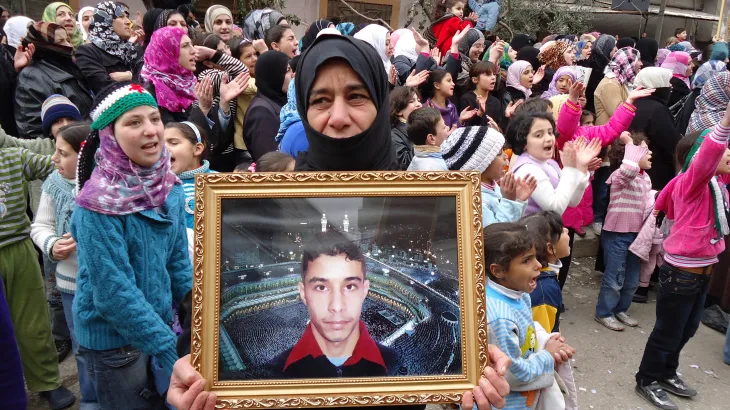
At the heart of this complex process lies the issue of the missing and forcibly disappeared, a deep national wound and a true test of the seriousness of any national project. The United Nations established the Independent Institution on Missing Persons in Syria to determine the fate and whereabouts of all missing persons.
Activating cooperation with this institution and establishing an independent, complementary national mechanism are not merely gestures of goodwill, but essential prerequisites for national reconciliation. National identity cannot be built on the ruins of thousands of families searching for their loved ones. Therefore, acknowledging the suffering, uncovering the truth, and providing reparations are indispensable pillars for any genuine national reconstruction.
Transitional Justice: Rewriting the Social Contract
This is where the Transitional Justice Bill derives its paramount importance, serving as a “foundational framework for rewriting the social contract.” In this context, the law plays a dual role: regulating behavior and disciplining perpetrators on the one hand, and contributing to the reconstruction of a value and moral system damaged by decades of violence on the other.
Including precise definitions of international crimes such as enforced disappearance, torture, and forced displacement in this law, expanding the powers of the Public Prosecutor to investigate them automatically, and incorporating the vast amount of digital evidence…
These are all mechanisms that Syrians have documented throughout the years of the revolution, mechanisms essential for transforming the scattered popular memory into a documented national memory, subject to accountability and prosecution.
The desired societal reconciliation is not a traditional peace council that ends with a dinner and then forgets. Reconciliation, within the context of transitional justice, is a long-term societal and legal process aimed at restoring trust between individuals and the state through four pillars: acknowledging the truth, reparations, accountability, and guarantees of non-recurrence. This requires a strict distinction between societal reconciliation in civil conflicts and grave crimes. War crimes and crimes against humanity do not have a statute of limitations and cannot be covered by any amnesty or settlement. True reconciliation is that which builds a future on the foundations of justice, not on its ruins.
Lessons from International Experiences: Rwanda as a Model
It is essential here to draw inspiration from international experiences, while taking into account the specificities of the Syrian situation. Rwanda’s experience after the 1994 genocide offers a valuable lesson in how to rebuild a state torn apart by the most horrific forms of sectarian violence. Rwanda adopted an integrated strategy combining justice (through traditional people’s courts and international tribunals), reconciliation (through official policies to reject ethnic rhetoric and remove sectarian identities from national identity cards), and development (through building a modern economy and a unified, inclusive education system). Rwanda’s economic growth and social development, transforming it into the “Singapore of Africa,” prove that rebuilding national identity after the genocide is possible, but it requires genuine political will, a long-term strategic vision, and, most importantly, reconciliation with the past through mechanisms of justice, not through forgetting and concealment.
Practical Recommendations for Building a New Syria
Based on the preceding analysis, and in light of international human rights standards and the experiences of countries in transitional phases, the following recommendations can be offered, taking into account the current circumstances in Syria:
First: Expedite the issuance of a comprehensive transitional justice law that includes a precise definition of international crimes and stipulates the establishment of an independent national truth and reconciliation commission tasked with documenting violations and uncovering the fate of the missing. This law must also ensure that societal reconciliation is separate from general amnesty, and explicitly stipulate that serious crimes are not subject to any statute of limitations and are not covered by any reconciliation.
Second: Launching a comprehensive security and judicial reform process, including a thorough review of the structure of the security and military institutions, establishing rigorous human rights auditing mechanisms for all personnel, and subjecting new leaders to intensive training on international standards. This must be accompanied by the formation of an independent oversight body to monitor the performance of these institutions and ensure they do not revert to past practices of repression.
Third: Repealing all exceptional and discriminatory laws and decrees issued by the former regime, conducting a comprehensive review of existing Syrian legislation to amend or repeal all provisions that conflict with international human rights standards, and working towards acceding to international conventions without reservations that compromise the principle of equality.
Fourth: Establishing an independent national mechanism for the missing and forcibly disappeared, tasked with coordinating with the United Nations, providing psychological, social, and legal support to victims’ families, and creating a unified and open national database of the missing, with the participation of civil society organizations and victims’ families in its work. Fifth: Launching a comprehensive national program for rebuilding trust and achieving societal reconciliation. This program should not be limited to traditional reconciliation councils, but should include broad community awareness campaigns about the dangers of sectarian rhetoric, the development of educational curricula that promote the values of citizenship and pluralism, and the launch of joint youth and cultural initiatives among the various communities, translating these initiatives into tangible development projects that serve all regions equally.
Conclusion: Identity as a Lived Experience
In conclusion, building a national identity in post-regime Syria is not a secondary project that can be postponed until conditions stabilize. Rather, it is an existential priority and a prerequisite for stability itself. It is an ambitious project that requires consensus and integration among three major spheres: the sphere of legal reform to frame the relationship between the state and the citizen with justice; the sphere of institutional reform to guarantee security and dignity for all; and the sphere of transitional justice to uncover the truth, achieve reconciliation, and ensure non-recurrence.
Ultimately, people do not judge national identity based on what is written in constitutions or delivered in speeches, but rather on what they see and experience in their daily lives. Does the law protect me? Is my voice heard? Is my dignity protected? Will my son’s blood not be shed in vain? Only when the answer is yes can we truly say that a new Syria has been born.